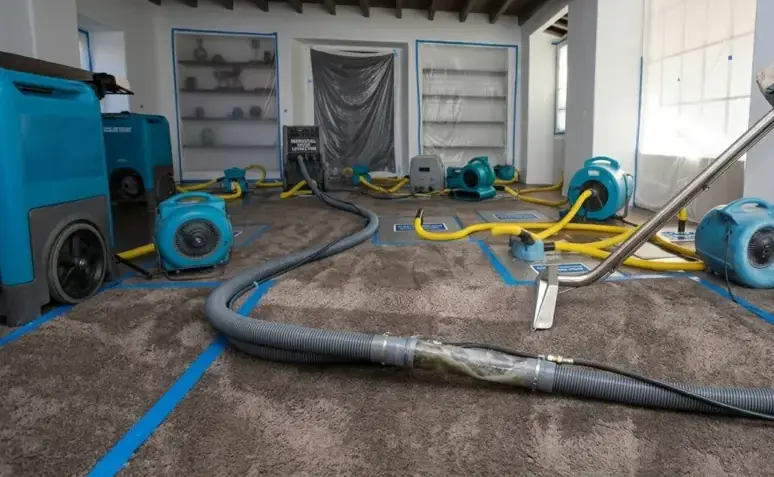
First steps for water extraction and removal in Ramsey
- 1
Stop the source
Close the water valve or stop what is feeding the flood, and stay out of standing water if anything electrical is wet.
- 2
Gauge the depth
Note how deep the water is and whether it looks clean, cloudy or dark, because that drives the choice of pumps and protective gear.
- 3
Lift what you can
Raise small items, rugs and electronics out of the water and photograph the damage before anything is discarded.
- 4
Call for extraction
Tell the crew the source, the depth and the rooms involved so the right pumps, extractors and protection are loaded.
Water that is left standing keeps working on a building. Ramsey water can come from flash flooding, local flooding along the Mississippi River, a plumbing failure or a sewer backup, and each source changes the equipment, the protection and how much material can stay.
What does water extraction and removal cost in Ramsey, MN?
Pulling water out of one room or a hallway costs between $400 and $1,000. A basement or several rooms runs $1,000 through $2,500, and deep or contaminated water starts at $2,500 once pumps and protective handling are needed.
One room or hallway
$400 to $1,000
- Portable extractor is enough
- Water caught while still clean
- Quick moisture check
Basement or several rooms
$1,000 to $2,500
- Truck-mounted and weighted tools
- Carpet and pad pulled up
- Moisture map after removal
Deep or dirty water
$2,500 and up
- Pumps run before extractors
- Gray or black water protocol
- Inches of standing water
Ranges are typical, not a quote: the water category, square footage, material class and how fast drying started move the number most. Run the water damage cost calculator for a closer range.
Where Ramsey water comes from
Surface water in Ramsey drains mainly to the southeast and usually flows into the Rum River or the Mississippi River. When rain falls faster than that drainage can move it, low spots fill. On July 23, 2016 a Highway 47 intersection flooded to the height of vehicle hoods after 4.50 inches of rain.
Inside homes, the same water shows up as a flooded basement, a garage floor under several inches, or a soaked finished room. The first question is always which category of water it is.
Matching equipment to the water
- Submersible pumps for inches of standing water
- Truck-mounted extractors for large areas of carpet
- Weighted wands that press water out of pad
- Portable units for small rooms and hallways
Pumps go in first because every inch of standing water adds weight and wicking. Extractors follow for carpet and pad, and weighted tools press water out of the pad where the carpet can stay. The pad itself usually cannot be saved once it has soaked.
Clean, gray and black water
Clean water from a supply failure allows more materials to be dried in place. Gray water from appliances is removed more aggressively, and black water from sewage or river flooding calls for protective gear, containment and disposal of porous materials. See sewage backup cleanup for that process.
The crew checks the category at the start, not the end, because it decides what goes in the bags and what goes back on the floor.
After the water is gone
Extraction is only the first stage. A moisture map after removal shows which walls, subfloors and slabs are still wet, and structural drying then brings them down with dehumidifiers and air movers. Skipping that stage leaves damp framing, and mold can begin to grow after 24 to 48 hours of wet conditions.