First steps for sewage backup cleanup in Anoka
- 1
Stop using water
Stop flushing, showering and running the washer or dishwasher. Every gallon down a drain can come back up through the floor drain.
- 2
Keep people and pets out
Keep everyone, especially children and pets, away from the affected area, and do not track the water through the house.
- 3
Shut the furnace if it sits there
If the furnace or its return vents sit in the affected basement, turn the system off so it does not pull contaminated air through the house.
- 4
Photograph, then step back
Photograph the drain, the water and damaged items. Leave the cleanup of sewage itself to a crew in protective gear.
In an Anoka home a sewer backup almost always comes up through the lowest drain first: the basement floor drain, then a shower, tub or toilet on that level. It happens when the public main or the private sewer lateral cannot carry the flow, and it often happens in the same heavy storms that fill sump pits. The mitigation team treats everything the water touched as contaminated from the first minute.
What does sewage backup cleanup cost in Anoka, MN?
Sewage backup cleanup in Anoka typically runs $2,500 to $12,000. A small backup on bare concrete sits at the low end; a finished basement with carpet, drywall and furniture runs higher because more porous material comes out.
Small, bare concrete
$2,500 to $4,500
- Backup near the floor drain
- Removal, disinfection and drying
- Little porous material
Finished basement
$4,500 to $12,000
- Carpet, pad and drywall removed
- Containment and HEPA air scrubbing
- Antimicrobial, then drying
Large or repeat backup
$12,000 and up
- Water spread across the level
- Contents and full tear-out
- Extended drying and checks
Ranges are typical, not a quote: the water category, square footage, material class and how fast drying started move the number most. Run the Anoka water damage cost calculator for a closer range.
Why basement floor drains back up
A floor drain is the lowest opening in the plumbing, so it is where pressure in the sewer shows up. The usual causes:
- Heavy rain and snowmelt that get into the sewer system and fill the mains
- Tree roots inside an older clay or cast iron lateral
- Grease, wipes and paper towels that build into a clog
- A lateral that sagged or cracked as the ground settled
A plumber clears or repairs a private lateral, and the city handles the public main. The mitigation team handles the water, the removal, the disinfection and the drying.
Category 3 cleanup, step by step
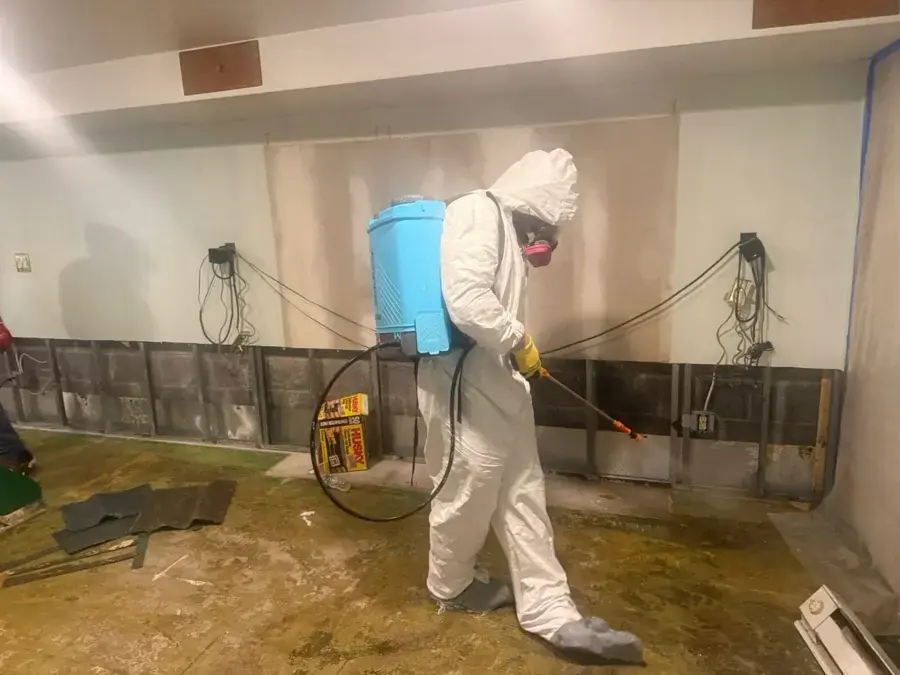
Sewage is Category 3 water under the IICRC S500 standard the moment it backs up, so the work follows a fixed order. The crew sets up containment with plastic sheeting and runs HEPA air scrubbers so the rest of the house stays clean. Everyone working wears a respirator, gloves, boots and a protective suit.
- Bulk water and solids come out first with pumps and extractors
- Porous materials the water touched come out: carpet, pad, drywall above the highest wet reading, insulation
- Hard surfaces get cleaned, then treated with an EPA-registered antimicrobial at its labeled dwell time
- Drying starts only after the cleaning and treatment are done
What can be saved after a sewer backup
Non-porous items such as metal, glass and hard plastic can usually be cleaned and disinfected. Concrete floors, block walls and framing get cleaned, treated and dried in place. Upholstered furniture, mattresses, cardboard boxes, paper and carpet that sat in sewage are generally discarded, and the restoration team photographs and lists each item for the claim before it leaves the house.
If the backup came with groundwater from a failed sump pump, the drying plan on the sump pump failure cleanup page applies once the sewage work is done.
Health, ventilation and insurance
Keep children, pets and anyone with a weak immune system out of the area, and keep the furnace off if its return pulls air from the affected basement. The EPA explains how sanitary sewer overflows happen and why they carry health risks, and OSHA's flood cleanup guidance covers protective gear for contaminated water.
Many homeowners policies cover a sewer backup only with a water backup endorsement. Coverage depends on your policy, so check with your own insurer.