First steps for frozen pipe water damage in Anoka
- 1
Shut the main valve
Turn off the water at the main before the thaw finishes, or right away if water is already running from a wall or ceiling.
- 2
Open the faucets on that run
Open the faucets fed by the frozen pipe to relieve pressure and let water drain out as it thaws.
- 3
Skip the open flame
Never thaw a pipe with a torch or open flame. A hair dryer or a space heater kept clear of anything that burns is the safer choice.
- 4
Catch and photograph
Set buckets and towels under drips, then photograph the wet ceiling, wall and floor before anything is moved.
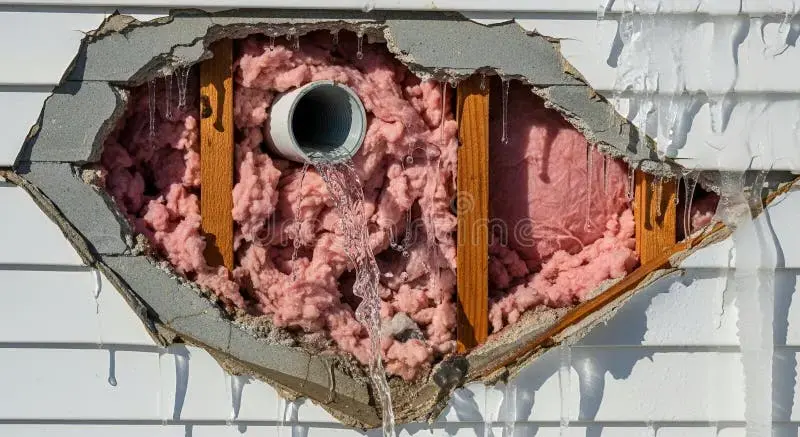
Anoka winters drop well below zero, and the pipes that freeze are the ones in outside walls, unheated garages, crawl spaces and sink cabinets on exterior walls. Ice expands inside the pipe, the pressure splits copper or cracks a fitting, and nothing leaks until the thaw. Then the split pipe pours water into a wall or ceiling cavity until someone shuts the main.
What does frozen pipe water damage cost in Anoka, MN?
Frozen pipe water damage in Anoka typically runs $1,200 to $7,000. One split pipe caught at the thaw sits at the low end; a pipe that ran into a finished ceiling and the basement below costs more.
One wall or cabinet
$1,200 to $2,800
- One split pipe, found fast
- Small wall or cabinet opening
- Extraction and cavity drying
Wall plus ceiling below
$2,800 to $7,000
- Water ran through two levels
- Ceiling drywall and insulation out
- Drying across both floors
Several freeze points
$7,000 and up
- Splits on more than one pipe run
- Finished basement soaked too
- Larger tear-out and drying
Ranges are typical, not a quote: the water category, square footage, material class and how fast drying started move the number most. Run the Anoka water damage cost calculator for a closer range.
Why pipes freeze in Anoka homes
Cold reaches a pipe wherever insulation is thin or missing. In Anoka the same spots come up winter after winter, in old homes and newer ones alike:
- Kitchen and bath supply pipes on exterior walls, in older homes near Main Street and on Christian Hill
- Pipes over or beside an unheated garage in split-level and rambler homes
- Hose bibs without frost-free valves, with a garden hose still attached
- Homes where the furnace quit or the heat was turned down during a cold snap
Wind matters as much as the thermometer. A pipe behind a north-facing wall can freeze in a windy cold snap even when the rest of the house stays warm.
Finding the water inside the wall
The leak rarely shows where the pipe split. Water runs down the stud bay and shows up as a stain on the ceiling below, a wet baseboard or a puddle in the basement. The tech who does the walkthrough traces it with thermal imaging and pinless moisture meters before anything gets opened.
That map lets the restoration team cut the smallest opening that reaches the wet framing and insulation. Soaked fiberglass comes out, the cavity gets air movers and an LGR dehumidifier, and a soaked ceiling below gets opened along the wet joist bays and dried in place.
Keeping the same pipe from freezing next winter
A pipe that froze once usually sits where it will freeze again. The restoration team notes the location and the cause in the file, so the repair can fix the exposure instead of only the split.
- Pipe insulation or heat cable on runs in garages, crawl spaces and rim joists
- Sealing gaps where cold air reaches the pipe at sill plates and wall penetrations
- Moving a supply pipe off an exterior wall during the repair when the wall is already open
- Keeping the thermostat at 55 degrees or higher when the home sits empty in winter
Those fixes cost far less while the wall is open than after it is closed and painted.
Frozen pipe damage or a burst pipe from age?
Freeze damage happens in a cold snap and often splits the same pipe run in more than one place. A pipe that fails from age, corrosion or water pressure can let go in any season, and that work is covered on the burst pipe water damage page.
Insurers often treat the two differently too. Many policies cover sudden freeze damage in a heated home but limit it when a home sat empty with the heat off. The National Weather Service cold-weather safety page and Ready.gov's winter weather checklist both cover keeping pipes warm before the next cold snap.