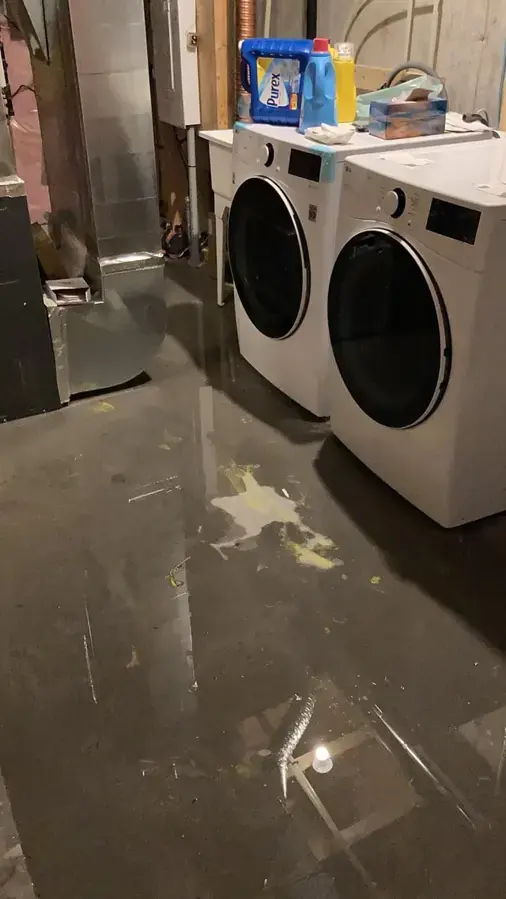
First steps for appliance and water softener leaks in Anoka
- 1
Shut the appliance valve
Close the shutoff behind the washer, under the sink or behind the refrigerator, or the main valve if you cannot reach it.
- 2
Unplug only if it is dry
Unplug the appliance only if the outlet and the floor around it are dry.
- 3
Open the cabinet doors
Open sink base doors and pull out what is stored inside so the cabinet floor starts to air out.
- 4
Photograph the failed part
Photograph the hose, valve or fitting that failed and the wet floor before anything gets replaced.
In many Anoka homes the washer, the water softener and the water heater share the basement, and the dishwasher, the refrigerator ice maker and the kitchen sink sit over cabinets and subfloor that hide water well. Appliance leaks are often slow. By the time the floor feels wet, the water has spread under flooring, into cabinet bases and onto the ceiling below.
What does appliance and water softener leaks cost in Anoka, MN?
Appliance and water softener leak cleanup in Anoka typically runs $800 to $5,000. A fresh leak on tile or concrete sits at the low end; a slow leak under kitchen cabinets that reached the basement ceiling costs more.
Fresh leak, hard floor
$800 to $1,800
- Water on tile, vinyl or concrete
- Extraction and quick drying
- Clean or gray water
Under cabinets or floors
$1,800 to $5,000
- Cabinet bases and subfloor wet
- Toe kicks off, cavity drying
- Flooring readings first
Two levels or slow leak
$5,000 and up
- Basement ceiling soaked too
- Cabinets or flooring replaced
- Extended drying
Ranges are typical, not a quote: the water category, square footage, material class and how fast drying started move the number most. Run the Anoka water damage cost calculator for a closer range.
The appliance leaks that do the most damage
- Washing machine supply hoses, especially older rubber hoses
- Dishwasher supply and drain connections under the kitchen sink
- Refrigerator ice maker supply tubing behind the fridge
- Water softener brine tanks and drain hoses in the basement
- Sink and toilet supply hoses that crack at the fittings
A hose that bursts at full pressure can put a lot of water on the floor quickly, while a dripping connection can run for weeks behind a cabinet before anyone sees it.
Water softener leaks in the basement
Water softeners are common across the Twin Cities area, where much of the groundwater is hard. A softener sends water to the drain during each regeneration cycle, and two failures put that water on the basement floor: a float or valve that sticks and overfills the brine tank, and a drain hose that slips out of the floor drain or standpipe. The water heads for the lowest point, often under a finished wall.
Drying cabinets, subfloor and the ceiling below
Kitchen leaks hide in layers. The drying team removes the toe kicks, opens the cabinet bases and pushes dry air into the space under the cabinets, then checks the subfloor and the basement ceiling below with moisture meters. Hardwood and laminate that cupped get readings before anyone decides to pull them.
Particleboard cabinet bases that swelled usually have to be replaced, while solid wood and plywood often dry in place. Water that soaked a basement ceiling gets the same treatment as a burst pipe leak through the floor above.
Slow leaks, fast leaks and the claim
Insurers often treat a sudden hose burst differently from a slow leak that ran for weeks, so the moisture map and photos of the failed part matter. The EPA WaterSense program explains how to check the water meter for hidden leaks, and the Minnesota Commerce Department covers how homeowners claims work in the state. A failed tank instead belongs on the water heater leak cleanup page.