24/7 water damage help for Anoka and the river cities Dried to the IICRC S500 standard Basements, frozen pipes, sewer backups Call (888) 432-4933
Dried to readings, not looks

Structural Drying and Dehumidification in Anoka, MN

Wet framing, subfloor, plaster and concrete hold water long after a floor feels dry. The drying team sizes air movers and LGR dehumidifiers to the class of loss and dries every material to a measured standard.

(888) 432-4933Start Anoka structural drying
IICRC S500 dryingLGR and desiccant drying Daily moisture logs
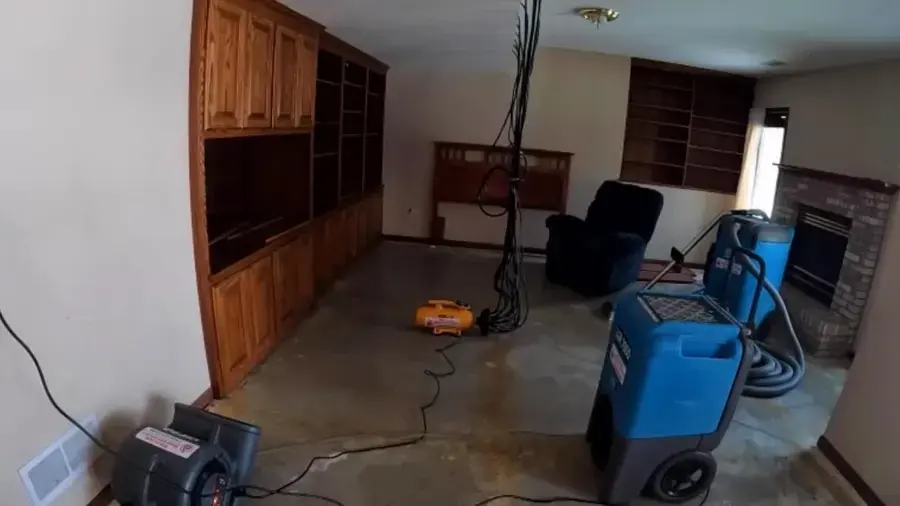
Dehumidifiers and air movers drying a living room down to the bare floor, structural drying in Anoka
StandardIICRC S500
Drying goal2 to 4 points of dry
EquipmentAir movers, LGR, desiccant
RecordsDaily psychrometric logs

First steps for structural drying and dehumidification in Anoka

  1. 1

    Leave the equipment running

    Air movers and dehumidifiers work around the clock. Switching them off at night adds days to drying.

  2. 2

    Keep windows and doors closed

    Outside air adds humidity in summer and cold in winter, and both slow drying.

  3. 3

    Keep the heat on

    A warm space dries faster. Keep the thermostat at a normal setting unless the drying team asks for a change.

  4. 4

    Leave the cuts open

    Do not close up flood cuts or put baseboards back until the readings say the framing is dry.

Structural drying is the part of a water loss nobody sees finish. The drying team takes a dry reading from an unaffected part of the same home, then dries every wet material until it reads within 2 to 4 points of that reference. In Anoka that often means a basement slab, block walls, framing and subfloor, each giving up water at its own pace.

What does structural drying and dehumidification cost in Anoka, MN?

Structural drying in Anoka typically runs $1,000 to $6,000, set by how many rooms and materials are wet, the class of loss and the days of equipment it takes. Dense materials such as hardwood and concrete take the most equipment days.

One or two rooms

$1,000 to $2,500
  • Class 1 or 2 loss
  • A few air movers and one LGR
  • Three to four days typical

Dense materials

$6,000 and up
  • Hardwood, plaster or concrete
  • Desiccant or specialty drying
  • Longer equipment runs

Ranges are typical, not a quote: the water category, square footage, material class and how fast drying started move the number most. Run the Anoka water damage cost calculator for a closer range.

Class of loss sets the equipment

The IICRC S500 standard sorts a loss by how much water the materials took on and how hard it will be to evaporate. The class decides how many air movers and dehumidifiers a space needs:

  • Class 1: part of a room, mostly low-porosity materials
  • Class 2: a whole room, with carpet and the lower walls wet
  • Class 3: water from above, with walls and ceilings saturated
  • Class 4: bound water in dense materials such as hardwood, plaster and concrete

Still wet under the surface?

The Anoka response team dispatches day or night.

(888) 432-4933Start drying the Anoka framing

Air movers and dehumidifiers, sized to the room

Air movers sweep air across wet surfaces so water evaporates faster, and dehumidifiers pull that water back out of the air before it settles somewhere else. Most losses run LGR dehumidifiers, which keep removing water at lower humidity than standard units. Cold basements and dense materials often call for a desiccant dehumidifier, which keeps working at low temperatures.

Plastic containment walls shrink the space the equipment has to dry, which speeds up the job and keeps the rest of the house comfortable.

Psychrometry and the daily log

Every day the drying team records temperature, relative humidity and grains per pound inside the drying area and outside it, plus readings on each wet material. Falling numbers show the equipment is working, and a stall shows something needs to change: more airflow, another dehumidifier or a wall cavity that needs opening.

Those logs go into the claim file, which is how an adjuster sees why each piece of equipment ran for each day. The first step before any of it is water extraction.

Drying through a Minnesota season

Anoka's seasons change the plan. In winter a cold basement slows evaporation, while dry furnace air helps upstairs. In a humid summer, outside air carries more moisture in, so doors and windows stay closed. Spring brings both damp air and a high water table under basement floors.

The EPA explains how to protect indoor air after water damage, and the National Weather Service Twin Cities office posts the humidity and temperature outlook the drying team plans around.
How it works

How structural drying and dehumidification is handled in Anoka

1

Set the reference

The drying team reads a dry, unaffected material in the same home as the target.

2

Size and place

Air movers and dehumidifiers are sized to the class of loss and set inside containment.

3

Read daily

Temperature, humidity and material readings go into the log, and the setup is adjusted.

4

Release at dry

Equipment comes out when every material reads within 2 to 4 points of the reference.

What you get

What every structural drying and dehumidification job in Anoka includes

Rapid local response

Active water in Anoka is treated as urgent around the clock, holidays and subzero nights included.

IICRC S500 drying

The drying team sizes air movers and LGR dehumidifiers to the class of loss, then dries to readings, not looks.

Claim-ready file

Moisture maps, daily psychrometric logs and timestamped photos are built as the job runs.

Local water know-how

Wet springs, hard freezes and high river water set the drying plan in Anoka.

Service area

Structural Drying and Dehumidification across Anoka and the river cities

The Anoka response team covers this service day and night.

Anoka, MN

Anoka Water Damage Restoration covers ZIP 55303 and every Anoka neighborhood, from Downtown Main Street and Christian Hill along the Mississippi to Whiskey Flats, Green Haven and the streets east of the Rum River.

Nearby coverage reaches Champlin, Coon Rapids, Dayton, Andover, Ramsey, Brooklyn Park and Elk River.

See every Anoka neighborhood and nearby city covered ›
Structural Drying and Dehumidification in Anoka right now? (888) 432-4933
FAQ

Structural Drying and Dehumidification questions in Anoka, MN

How does the drying team know a wall is dry inside?

Moisture meters read the drywall and framing, and the readings are compared with a dry reference material in the same home. Touch and appearance are not part of the test.

What is an LGR dehumidifier?

LGR stands for low grain refrigerant. An LGR dehumidifier keeps pulling water out of the air at lower humidity levels than a standard unit, which drives drying further.

When is a desiccant dehumidifier used?

In cold basements and on dense materials such as hardwood and concrete, where a desiccant unit keeps working at low temperatures and very low humidity.

How noisy is the drying equipment?

Air movers and dehumidifiers run constantly and are noticeable, much like several box fans. The drying team places them to keep walkways clear.

Is drying equipment covered by insurance?

Drying is part of mitigation, which most policies cover when the water damage itself is covered. Daily logs show the adjuster why each piece of equipment ran. Check your policy with your own insurer.

What does the drying log show?

Temperature, relative humidity and grains per pound inside and outside the drying area, plus moisture readings on each material, day by day until the dry standard.

Anoka dispatch, 24/7

Wet walls or floors in Anoka? Get them dried to readings.

Framing and concrete hold water long after a floor feels dry. The drying team dries every material to a measured standard.

(888) 432-4933Anoka drying team, 24/7
Anoka Water Damage Restoration Anoka, MN (888) 432-4933 Open 24 / 7 / 365
Call (888) 432-4933 · 24/7 dispatch