First steps for water extraction and removal in Anoka
- 1
Stop the source
Shut off the water at the main or at the fixture so the extraction crew is not chasing new water.
- 2
Clear a path
Move furniture, boxes and rugs out of the wet area and leave room for hoses from the door to the water.
- 3
Stay off wet carpet
Walking on soaked carpet pushes water deeper into the pad and can tear the carpet backing loose.
- 4
Point out the drains
Show the crew the floor drain, the sump pit and any low spot so they know where water can go.
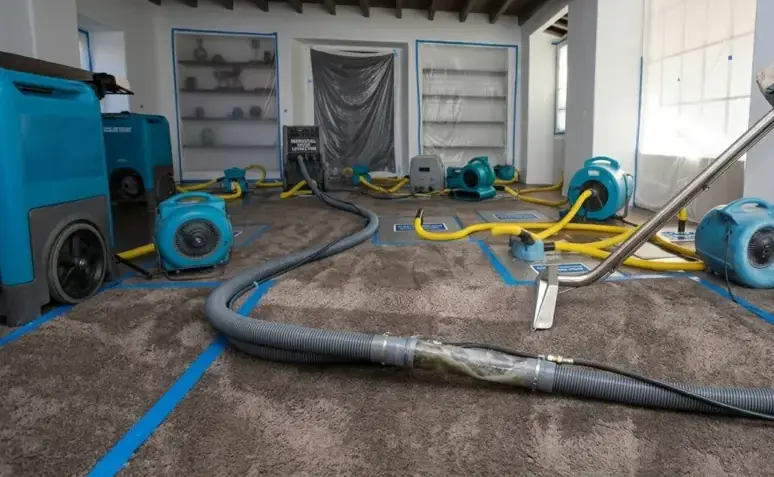
Extraction removes far more water than any amount of drying can, and it decides how long the rest of the job takes. In Anoka the extraction crew often works below grade, in a basement with carpet over concrete, so the plan starts with where the water can go: a floor drain, a sump pit or a hose run out to the yard.
What does water extraction and removal cost in Anoka, MN?
Water extraction in Anoka typically runs $400 to $3,500, depending on the square footage, the depth of the water and whether carpet and pad are involved. Drying, removal and repairs are priced separately, and most jobs include them.
Small area
$400 to $1,000
- One room or a hallway
- Portable or truck-mounted extraction
- Clean water, caught early
Basement or several rooms
$1,000 to $2,500
- Carpet and pad over concrete
- Truck-mounted and weighted extraction
- Moisture map after removal
Deep or contaminated water
$2,500 and up
- Inches of standing water
- Pumps first, then extractors
- Category 2 or 3 handling
Ranges are typical, not a quote: the water category, square footage, material class and how fast drying started move the number most. Run the Anoka water damage cost calculator for a closer range.
Truck-mounted and portable extractors
Each tool fits a different part of the job, and most losses use more than one:
- Submersible pumps move inches of standing water first
- Truck-mounted extractors bring the most suction, with hoses run in from the driveway
- Portable extractors reach upper floors, tight rooms and buildings with long hose runs
- Weighted extraction tools press water out of carpet and pad under the operator's weight
Weighted extraction pulls much more water out of carpet and pad than a hand wand alone, which takes days off the drying.
Carpet and pad decisions
Carpet pad acts like a sponge and costs little to replace, so it usually comes out. Carpet itself can often stay when the water was clean and extraction started fast: the crew extracts it, lifts it off the tack strip and floats it with air underneath. Carpet that delaminated, or that sat in gray water for days or in any sewage or flood water, is removed.
Moisture mapping right after extraction
Once the liquid water is out, the tech who does the walkthrough maps what soaked in. Pin and pinless meters and a thermal camera find wet drywall, bottom plates and subfloor past the visible edge of the water, and the edges get marked on the walls and floor.
That map becomes the drying plan and a page in the claim file. It also shows where flood cuts are needed, which is the hand-off to structural drying.
Why fast extraction matters in a basement
Concrete and block soak up water quickly, and a basement stays cooler and more humid than the floors above, so slow removal means slow drying. Clean water that sits can also shift to Category 2, and mold can start within 24 to 48 hours on wet materials. For a flooded basement the full plan sits on the basement flooding cleanup page.
The EPA's flooding page covers safe cleanup after high water, and OSHA's flood cleanup guidance covers electrical and slip hazards in wet rooms.