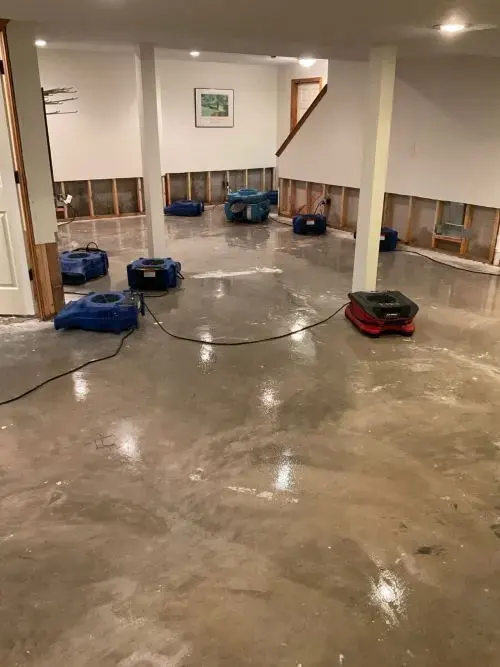
First steps for basement flooding cleanup in Anoka
- 1
Stop the source if you can
Shut the main valve for a pipe or water heater leak. For a sump overflow, check that the pump has power and the float moves freely.
- 2
Keep clear of the water and the panel
Do not wade into a basement where water touches outlets, cords or the furnace. If the electrical panel sits in the wet area, leave it alone.
- 3
Photograph the waterline
Photograph the water depth on the walls, the source and every wet box before moving anything. The waterline helps set the flood cut later.
- 4
Lift the irreplaceable first
Move paper, photos and electronics to a dry floor. Leave wet carpet in place until the crew decides what can be dried.
Most Anoka homes sit on a full basement, and most basement water comes from one of four places: a failed sump pump, groundwater pushing up in a wet spring, a floor drain backup, or a pipe or appliance upstairs. The extraction crew sorts out the source first, because a sump overflow, a supply leak and a sewer backup get cleaned three different ways.
What does basement flooding cleanup cost in Anoka, MN?
Basement flooding cleanup in Anoka typically runs $1,500 to $8,500. An unfinished basement with clean water sits at the low end; a finished basement with carpet, drywall or a sewer backup sits at the top or beyond.
Unfinished basement
$1,500 to $3,500
- Concrete floor and block walls
- Pump-out, extraction and drying
- Clean water or groundwater
Finished basement
$3,500 to $8,500
- Carpet, pad and lower drywall
- Flood cuts and structural drying
- Clean or gray water
Contaminated basement
$8,500 and up
- Sewer backup or river water
- Containment and full removal
- Antimicrobial, then drying
Ranges are typical, not a quote: the water category, square footage, material class and how fast drying started move the number most. Run the Anoka water damage cost calculator for a closer range.
How water gets into basements on the Anoka Sand Plain
Anoka is built on the Anoka Sand Plain, a spread of sandy glacial outwash. The sand drains fast, but the water table often sits only three to eight feet down, and it climbs after snowmelt and a rainy April. Basement floors and footings sit right in that zone.
When the ground is saturated, water finds the weakest point. The tech who does the walkthrough checks each one before any equipment goes down:
- The sump pit, when the pump stalls, loses power or cannot keep up
- The cove joint, where the basement wall meets the floor slab
- Window wells that fill with snowmelt and leak at the frame
- The floor drain, when the sewer surcharges in a heavy storm
A pit that overflowed gets its own plan on the sump pump failure cleanup page.
Finished basements: what stays and what comes out
A finished basement holds water in layers. Carpet pad soaks up like a sponge, drywall wicks water upward, and fiberglass batts behind it stay wet long after the surface looks dry. The restoration team decides each layer by the water category and how long it sat.
- Clean water caught early: carpet can often be floated and dried, and drywall may stay
- Gray water: pad comes out, and drywall is cut above the wet readings
- Sewer backup or river water: carpet, pad, drywall and insulation it touched come out
The flood cut usually lands at 2 or 4 feet so new sheets fit cleanly, and moisture mapping sets the height, not the visible waterline.
Belongings, the furnace and the water heater
Basements hold the things that are hardest to replace and the equipment that runs the house. The restoration team moves boxes, furniture and stored items out of the wet area first, sets aside anything that can be cleaned and dried, and photographs what cannot be saved for the claim.
Water that reached the furnace, the water heater or the electrical panel changes the order of work:
- Gas appliances that took water get checked by a heating contractor before they run again
- A panel or outlets that got wet stay off until an electrician clears them
- A soaked water heater base or burner area gets flagged in the file for replacement or service
Keeping those items on record from the first walkthrough keeps the claim file complete.
Drying a basement slab and block walls
Concrete gives up water slowly, and a basement slab sits against cool ground, so it dries slower than the rooms upstairs. The drying team pairs air movers with LGR dehumidifiers, keeps the space closed and warm, and takes readings on the slab, the block walls and the bottom plates every day.
Equipment stays until the materials read within 2 to 4 points of a dry reference, the goal behind structural drying in Anoka. Before the next thaw, Ready.gov's flood checklist covers what to move up and unplug, and the EPA explains how to protect indoor air during flood cleanup.