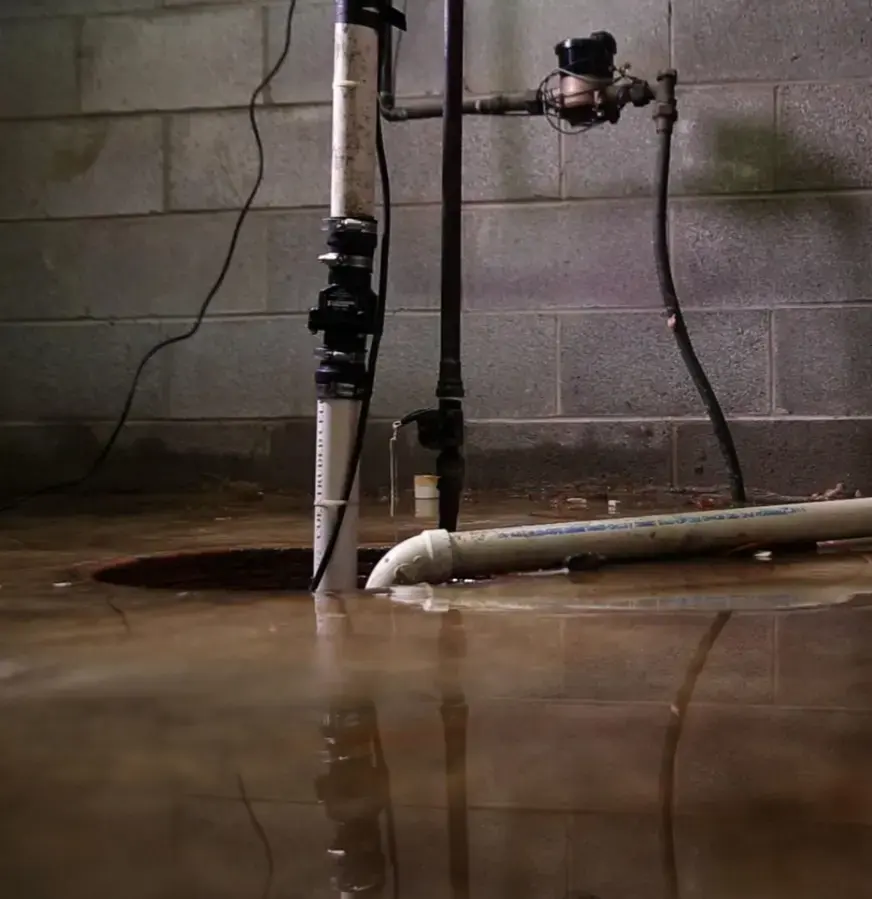
First steps for sump pump failure cleanup in Anoka
- 1
Check power and the float
If the pump is silent, check the outlet and breaker, and see whether the float hangs up on the pit wall or the cord.
- 2
Stay off a flooded floor
Keep out of standing water if it reaches outlets, extension cords or the furnace, and never unplug a pump while standing in water.
- 3
Slow the water coming in
Stop laundry and long showers, and point downspouts away from the house so less water reaches the pit.
- 4
Photograph the pit and floor
Photograph the pit, the pump, the water on the floor and anything stored down there before it moves.
A sump pump is the last thing between Anoka groundwater and a basement floor. When it stalls, loses power in a storm or simply cannot keep up during a spring thaw, the pit fills and water spreads across the slab. The extraction crew pumps the basement out, the tech who does the walkthrough checks what the water reached, and the drying team dries the floor, walls and anything finished.
What does sump pump failure cleanup cost in Anoka, MN?
Sump pump failure cleanup in Anoka typically runs $1,200 to $7,500. A shallow overflow on bare concrete sits at the low end; deep water in a finished basement with carpet and drywall costs more.
Shallow overflow
$1,200 to $2,800
- Water near the pit, bare concrete
- Pump-out, silt cleanup, drying
- Usually Category 1 or 2
Finished basement
$2,800 to $7,500
- Carpet, pad and drywall reached
- Removal and structural drying
- Moisture map for the file
Deep or mixed water
$7,500 and up
- Floor drain backed up too
- Category 3 handling
- Larger tear-out and drying
Ranges are typical, not a quote: the water category, square footage, material class and how fast drying started move the number most. Run the Anoka water damage cost calculator for a closer range.
Why sump pumps fail when Anoka needs them most
Pumps fail at the worst time because the worst time is when they run hardest. On the Anoka Sand Plain the water table rises after snowmelt and April rain, and a pump that cycles all spring wears out faster.
- A float switch that sticks against the pit wall or the cord
- A power outage during the same thunderstorm that fills the pit
- A discharge pipe frozen solid outdoors in late winter
- A motor past its service life, often around ten years
- A pump too small for the water coming into the pit
A battery backup or a water-powered backup pump covers the outage gap, and a plumber can size the main pump to the inflow.
Cleaning up after a sump overflow
Sump water starts as groundwater, but it carries silt from the pit and anything on the basement floor. The mitigation team treats most sump overflows as Category 1 or 2, depending on what the water touched and how long it sat, and steps up to Category 3 handling when the floor drain backed up at the same time, a job covered on the sewage backup cleanup page.
Silt and debris get cleaned off the slab before drying, because drying over dirt leaves a smell behind. Carpet pad that soaked comes out, and drywall that wicked water gets a flood cut above the wet readings.
Cutting down the water that reaches the pit
A pump that never fails still struggles when too much water reaches it. Much of that water starts at the roof and the yard, not in the ground, and a few changes lower the load before the next Anoka thaw:
- Downspout extensions that carry roof water well away from the foundation
- Soil graded to slope away from the house instead of toward it
- Covers on window wells so snowmelt does not collect against basement windows
- A clear discharge pipe that empties away from the house, protected from freezing
The tech who does the walkthrough notes the grading, the downspouts and the discharge in the file, so the homeowner and any contractor see the whole picture.
Drying the basement and checking the pit
Air movers and LGR dehumidifiers dry the slab, the block walls and the bottom plates, with readings logged every day. The drying team also notes the pit, the pump and the discharge in the file, so the cause is on record for the claim.
Many homeowners policies do not cover a sump overflow without a water backup endorsement, so the Minnesota Commerce Department's insurance pages and your own policy are worth a read before the next thaw. Ready.gov's power outage checklist covers the backup power side, and the broader cleanup sits on the basement flooding cleanup page.