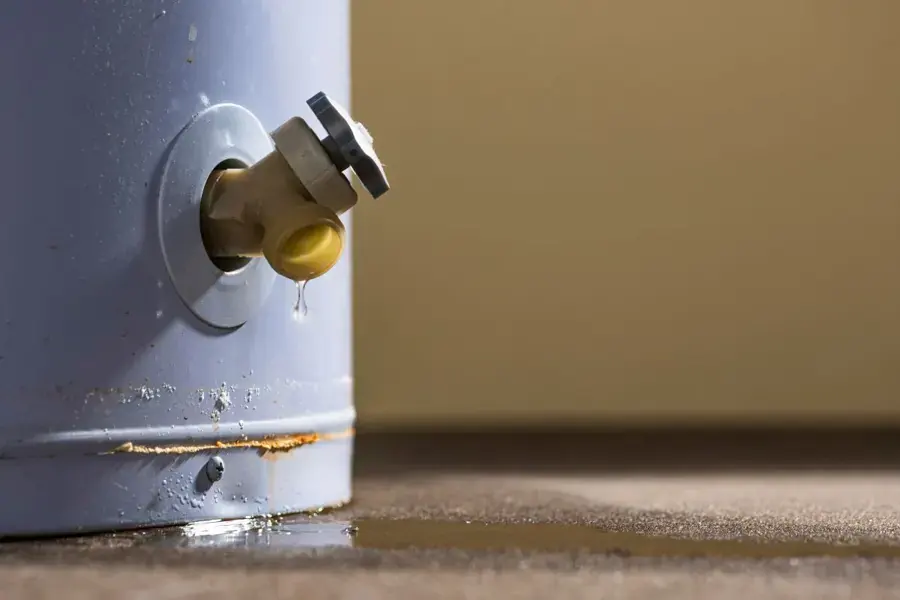
First steps for water heater leak cleanup in Anoka
- 1
Shut the cold supply
Close the cold water valve on top of the tank, or the main valve if that one will not turn.
- 2
Turn off the power or gas
Switch off the breaker for an electric tank, or set a gas tank's control to off, so it does not heat an empty tank.
- 3
Keep clear of hot water
Water near the tank and the relief valve can be scalding. Let it cool before stepping into it.
- 4
Photograph the tank label
Photograph the tank, its label and serial number, the leak point and the wet area for the claim and the plumber.
Most Anoka homes keep the water heater in the basement, often in a utility room next to the furnace, the softener and the floor drain. When a tank rusts through or a valve fails, it empties the whole tank and keeps refilling from the cold supply until the valve is shut. In a finished basement that water slides under walls into carpet and storage before anyone hears it.
What does water heater leak cleanup cost in Anoka, MN?
Water heater leak cleanup in Anoka typically runs $1,000 to $5,500, not counting the new tank. A leak caught in an unfinished utility room sits at the low end; water that ran under walls into a finished basement costs more.
Utility room only
$1,000 to $2,200
- Water on concrete near the tank
- Extraction and floor drying
- Clean, Category 1 water
Into finished rooms
$2,200 to $5,500
- Carpet, pad and bottom plates wet
- Flood cuts where readings call for it
- Drying across the basement
Long-running leak
$5,500 and up
- Leak ran for days unnoticed
- Category 2 handling
- Larger removal and drying
Ranges are typical, not a quote: the water category, square footage, material class and how fast drying started move the number most. Run the Anoka water damage cost calculator for a closer range.
Why water heaters fail
A tank water heater wears out from the inside. Sediment settles on the bottom, the anode rod that protects the steel gets used up, and corrosion eats through the tank. Many tanks last around 8 to 12 years. The failures that put water on the floor:
- A tank that rusts through at the bottom seam
- A temperature and pressure relief valve that opens or drips
- A drain valve that leaks or was left partly open
- Supply connections and flex pipes on top of the tank
Signs a tank is about to let go
Rust streaks or flaking at the base, water in the drain pan, rumbling or popping during heating, and rusty hot water all point to a tank near the end. Moisture around the fittings on top often shows up first. The serial number on the label usually encodes the manufacture date, which tells a plumber how old the tank really is.
Cleaning up after a tank failure
Water from a tank starts as clean supply water, but sediment from the bottom of the tank can stain carpet and drywall, and water that sits for a day or two can shift to Category 2. The restoration team extracts the floor first, then checks under the walls next to the utility room, because carpet and bottom plates on the other side are usually wet too.
Pad that soaked comes out, drywall gets a flood cut where the readings call for it, and air movers with an LGR dehumidifier dry the slab and framing. A plumber replaces the tank; the full basement plan sits on the basement flooding cleanup page, and the extraction step on the water extraction page.
Protecting the space around the new tank
A drain pan piped to the floor drain, a water leak alarm or an automatic shutoff valve, and storage kept off the floor near the tank all limit the next leak. Minnesota's plumbing code is administered by the Minnesota Department of Labor and Industry, and the Department of Energy's Energy Saver pages cover water heater choices and upkeep.