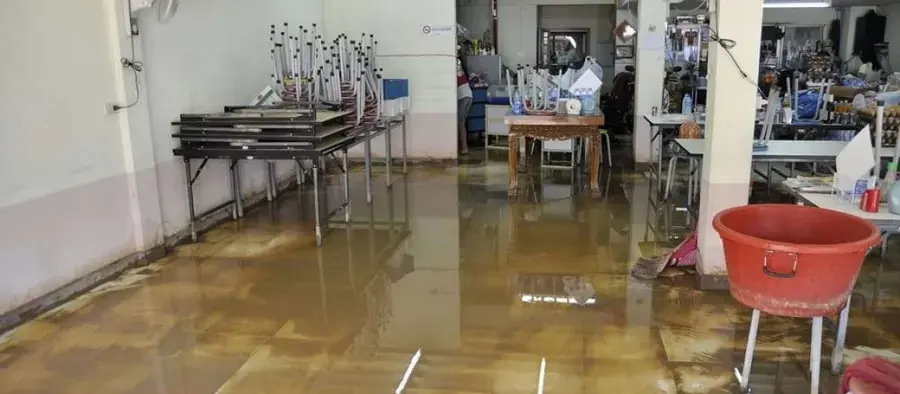
First steps for commercial water damage in Anoka
- 1
Shut the water and isolate
Close the valve feeding the leak. For a sprinkler pipe, call the sprinkler contractor and the alarm company too.
- 2
Protect people and power
Keep people out of wet areas near electrical equipment, and switch off wet circuits if the panel sits in a dry spot.
- 3
Move inventory and files
Lift inventory, files and electronics off wet floors and out of the path of dripping water.
- 4
Notify the right people
Tell the property manager, affected tenants and the insurer, and photograph every affected space before cleanup.
Commercial water damage in Anoka ranges from the brick blocks on Main Street, with shops below and apartments above, to offices, churches, schools and apartment buildings across town. Each one has more people to coordinate than a house: owners, tenants, property managers and often more than one insurer. The restoration contractor who responds sets the plan around keeping as much of the building open as it safely can.
What does commercial water damage cost in Anoka, MN?
Commercial water damage cleanup in Anoka typically runs $3,000 to $25,000 or more, set by the square footage, the number of suites or floors involved, the water category and how much work has to happen after hours.
One suite or storefront
$3,000 to $8,000
- One space, clean water
- Extraction and drying
- After-hours scheduling
Several suites or a floor
$8,000 to $25,000
- Water crossed shared walls
- Phased drying by space
- Per-tenant documentation
Large or contaminated
$25,000 and up
- Backup or multi-floor loss
- Containment and removal
- Extended drying
Ranges are typical, not a quote: the water category, square footage, material class and how fast drying started move the number most. Run the Anoka water damage cost calculator for a closer range.
Common commercial water losses
- Fire sprinkler pipes that freeze in a cold stairwell or get struck
- Flat roofs and roof drains that back up under snow and ice
- Restroom and break room supply leaks that run overnight
- Lower-level backups in older downtown buildings
- Boiler, water heater and HVAC condensate failures
Phased drying to keep doors open
A restaurant, a shop or an office loses money every day it is closed, so commercial drying runs in phases. The crew builds containment walls to separate the work area, schedules extraction and loud work after hours where it can, and dries one suite or floor while the rest of the building stays in use.
Equipment gets placed to keep exits and walkways clear, and the drying team shares the plan with the property manager so tenants know what to expect each day.
Older downtown buildings
Older brick buildings along Main Street often have wood floors, plaster walls and shared walls between storefronts. Water from an apartment above can reach the shop below through the floor, and plaster and old wood floors hold water longer than drywall. The tech who does the walkthrough checks every floor and every neighboring space in the water's path, not just the room where it started.
Documentation for owners, tenants and insurers
A commercial loss often produces more than one claim. The restoration team keeps moisture maps, daily logs, photos and a line-item scope by suite, so each owner, tenant and insurer sees the part that belongs to them. The same drying science applies as in a home, laid out on the structural drying page.
OSHA's flood cleanup guidance covers worker safety around water and electrical hazards, and the EPA explains how to protect indoor air during cleanup in occupied buildings.