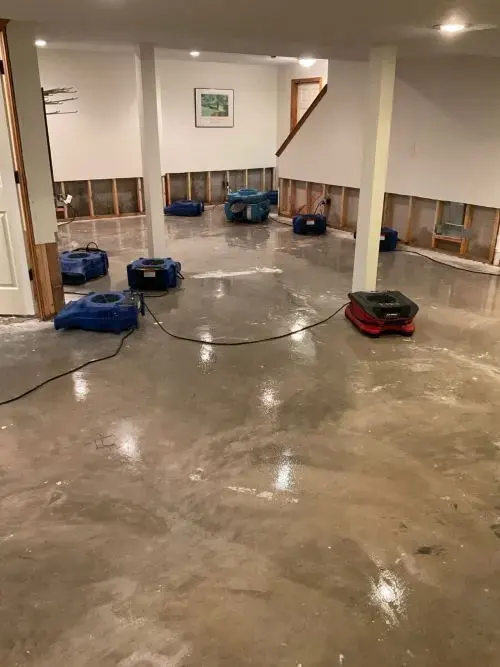
First steps for basement flooding cleanup in Ramsey
- 1
Stop the water source
Shut the main valve if a pipe or appliance is leaking, and keep the sump pump running if it still works and the power is safe.
- 2
Make the room safe
Stay out of standing water if outlets, cords or the electrical panel are wet, and cut power from a dry spot only.
- 3
Move and photograph contents
Lift small items, rugs and boxes to dry surfaces, and photograph the damage and the water height before anything gets thrown out.
- 4
Call for pump-out help
Describe how deep the water is and whether it came from rain, a sump pump or a sewer drain so the crew brings the right pumps and protection.
A flooded basement in Ramsey is rarely just a puddle. Most of the watershed covering the city is sandy outwash soil, the water table generally sits close to the surface, and a storm like July 23, 2016 shows how fast a low spot fills. Cleanup begins by stopping the water and ends with dry, documented walls.
What does basement flooding cleanup cost in Ramsey, MN?
A bare concrete basement usually lands between $1,500 and $3,500. Add carpet and drywall and the figure moves to $3,500 through $8,500, and sewage or river water starts at $8,500 and climbs from there.
Bare concrete floor
$1,500 to $3,500
- Block walls, no finishes
- Pump-out and fan drying
- Groundwater or rainwater
Carpeted or finished
$3,500 to $8,500
- Carpet and pad removed
- Wet drywall cut and dried
- Dehumidifiers for several days
Sewage or river water
$8,500 and up
- Black water present
- Containment and full tear-out
- Disinfect first, then dry
Ranges are typical, not a quote: the water category, square footage, material class and how fast drying started move the number most. Run the water damage cost calculator for a closer range.
Why water reaches Ramsey basements
The Lower Rum River Watershed Management Organization, whose plan covers all of Ramsey, describes sandy soil and a water table generally close to the ground surface. Basements sit lowest, so that combination gives groundwater an easy route in.
- Heavy rain that outruns the sump pump or the yard drainage
- Groundwater pushing up through the slab joint and block walls after a long wet spell
- A pump that loses power or quits partway through a storm
- A floor drain that backs up when the sewer is overloaded
Ramsey requires a building permit to finish a basement, and a finished space holds drywall, insulation, carpet and trim that water can reach. Those layers decide how much comes out. Pump trouble is a frequent trigger, and it has its own plan under sump pump failure cleanup.
Removal comes before drying
The extraction crew sets a submersible pump in the deepest spot and runs it until the slab shows, then switches to truck-mounted and weighted extractors for carpet and pad. Materials that wicked water upward come out next, because drying a soaked layer in place wastes days and keeps moisture against framing.
Drywall is cut a few inches above the highest wet mark so the tech can see whether insulation behind it is soaked. Clean water lets more material stay; gray or black water, such as a sewer backup, does not, and the tech sorts each layer before any cut is made.
Drying slab and block walls
Slabs and block walls release moisture slowly, so the drying team sets LGR dehumidifiers and air movers in a closed space and logs readings every day. A surface that feels dry is not proof that the wall behind it is dry, which is why meters, not touch, decide.
Mold can begin to grow after 24 to 48 hours of wet conditions, which is why equipment is set at the first visit. Most basements need three to five days, and machines come out only when readings match an unaffected reference.
Records for the insurance file
Photos, moisture maps and daily logs are saved as the work moves along, so an adjuster sees the basement as it was found and as it dried. A short basement flood risk check can help owners spot weak points before the next storm.
Keep receipts for pumps, cleanup and damaged contents, and list items with photos before anything is thrown out. A basement that took on water once may do so again, so the tech notes the entry points, such as floor joints, window wells, the sump pit and drains, and lists them in the report. The same process applies across the basement flooding cleanup service.