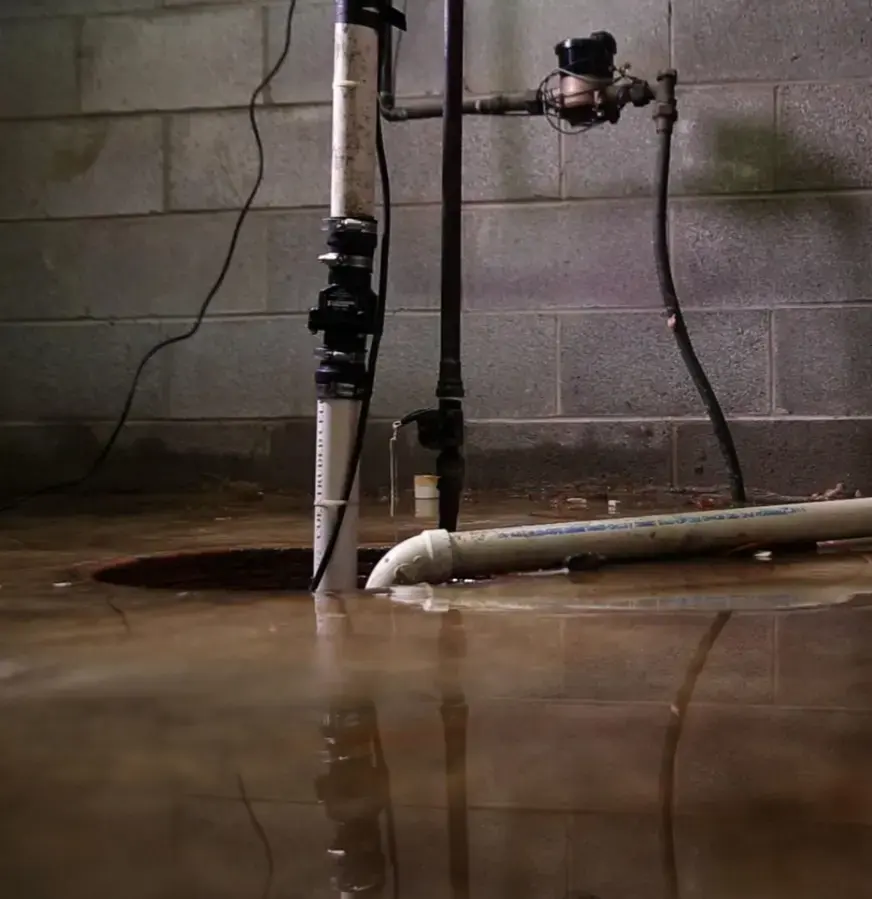
First steps for sump pump failure cleanup in Ramsey
- 1
Stay out of the water
If outlets, cords or the panel are wet, do not wade in. Shut off power only from a dry spot, and leave the rest to the crew.
- 2
Slow what feeds the pit
Turn off washers and hose spigots, and clear the outside discharge of snow, ice or leaves if that can be done from dry, safe footing.
- 3
Lift and photograph
Raise boxes, rugs and electronics off the floor, then photograph the water, the pump and the damaged items before cleanup begins.
- 4
Call for pump-out
Tell the dispatcher whether the water is groundwater only or whether a floor drain also backed up, so the right protection comes along.
A sump pump only matters on the day it stops. In Ramsey that day is often a storm, when the ground is already soaked and the pit fills faster than a tired motor can empty it. What follows is groundwater across the slab, then wet walls, wet carpet and a long list of stored belongings.
What does sump pump failure cleanup cost in Ramsey, MN?
A shallow overflow near the pit costs between $1,200 and $2,800. A finished basement with wet carpet and drywall runs $2,800 through $7,500, and a floor drain backup or deep water begins at $7,500.
Shallow seep or overflow
$1,200 to $2,800
- Water limited to the pit area
- Silt wash and fan drying
- Mostly groundwater
Finished lower level
$2,800 to $7,500
- Wet carpet, pad and wall bases
- Removal, then structural drying
- Moisture readings kept on file
Deep water or drain backup
$7,500 and up
- Floor drain also overflowed
- Sewage-grade handling
- Wider removal and longer drying
Ranges are typical, not a quote: the water category, square footage, material class and how fast drying started move the number most. Run the water damage cost calculator for a closer range.
Why pumps fail when needed most
Rain, snowmelt and groundwater all end up in the same pit. A pump carrying that load for hours can overheat, and a power outage ends the job entirely unless a battery backup is in place.
- A float switch that sticks, tangles or jams against the pit wall
- A discharge pipe that is frozen, crushed or clogged outside
- A pump that is old, undersized or worn out from constant use
- A power outage with no battery backup to take over
The watershed organization that covers all of Ramsey says groundwater here generally sits close to the surface, so pumps may run often. On July 23, 2016 a trained spotter logged 4.50 inches of rain near Ramsey, the kind of day that tests every pit.
What the water leaves behind
Sump water is usually groundwater, which can carry silt, sand and soil. That is cleaner than sewage but not clean enough to ignore, so carpet pad is removed and anything porous that stayed wet for long is cut out. Silt left on the slab is washed away before drying begins.
If a floor drain backed up during the same storm, the water may carry sewer content and the job moves to Category 3 handling. The tech checks the drain, the pit and the lower walls for that before deciding how much material comes out.
Drying after the pit is pumped out
Once the water is out, the crew sets air movers and LGR dehumidifiers, opens wall bases where readings show moisture, and runs the equipment until concrete, block and framing read dry. Daily psychrometric logs show when that point is reached, and the readings go into the claim file.
Because Ramsey requires a building permit before a basement is finished, rebuilding afterward may involve city paperwork. Drying has to be complete before new drywall goes up, or the new finish traps moisture against the wall.
Records and prevention
The moisture map, dated photos and daily readings go into one file, along with notes on the pit, the pump and the discharge. That record shows an adjuster what failed and how far the water traveled through the lower level.
Owners can lower the odds of a repeat by testing the pump at the start of each wet season, clearing the outside discharge, and adding a battery backup. Some owners also install a second pump with its own float switch as a spare. For a bigger loss that spread past the pit, see basement flooding cleanup.