24/7 water damage help for Anoka and the river cities Dried to the IICRC S500 standard Basements, frozen pipes, sewer backups Call (888) 432-4933
Ramsey structural drying

Structural Drying and Dehumidification in Ramsey, MN

Drying is a measured process, not a guess. The drying team sets air movers and LGR dehumidifiers to the class of the loss, checks readings daily and removes equipment only when walls, floors and framing reach a dry standard.

(888) 432-4933Schedule Ramsey drying
IICRC S500 classesLGR dehumidifiers Daily psychrometric logs
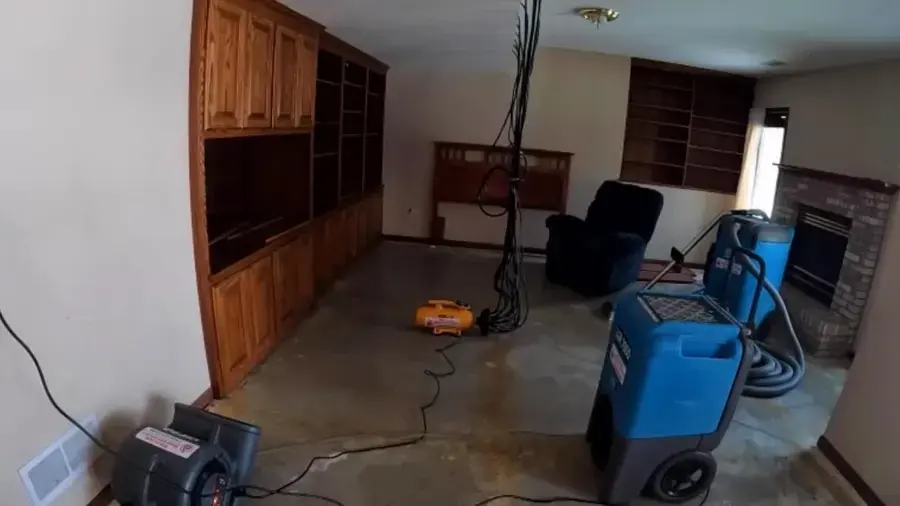
Air movers and a dehumidifier running in a living room stripped to the bare floor, structural drying in Ramsey
CoversRamsey, ZIP 55303
MethodAir movers and LGR units
RecordsTemperature, humidity, moisture daily
Price band$1,000 to $6,000 and up

First steps for structural drying and dehumidification in Ramsey

  1. 1

    Keep the space closed

    Close doors and windows to the wet area, leave heating or cooling on and avoid opening wet walls without meters.

  2. 2

    Pull up what is loose

    Remove wet rugs, books and boxes from the area, and prop furniture on blocks so air can move beneath it.

  3. 3

    Photograph the damage

    Photograph the wet surfaces and any visible stains so the first readings can be compared with the final ones.

  4. 4

    Book the drying plan

    Describe the source, the rooms affected and how long materials have been wet so the class of loss can be estimated.

Water damage ends when the structure is dry, not when the surface looks dry. In Ramsey, where homes range from 1970s construction to homes built in the 2010s, the drying plan is set by what the building is made of and how wet it got.

What does structural drying and dehumidification cost in Ramsey, MN?

Drying one or two rooms costs between $1,000 and $2,500. A basement or a full floor runs $2,500 through $6,000, and dense materials such as hardwood, plaster or concrete start at $6,000 because equipment runs longer.

A room or two

$1,000 to $2,500
  • Light to moderate wetting
  • Several air movers, one dehumidifier
  • Around four days of drying

Hardwood, plaster or slab

$6,000 and up
  • Dense materials hold water
  • Desiccant or specialty equipment
  • Longer runs and rechecks

Ranges are typical, not a quote: the water category, square footage, material class and how fast drying started move the number most. Run the water damage cost calculator for a closer range.

How the S500 classes set the plan

The IICRC S500 sorts water losses into classes by how much moisture the wet materials will release. Class 1 is a small area of low-porosity materials, Class 2 is a larger area with wet carpet and cushion, and Class 3 is water that came from above and soaked ceilings, walls and insulation.

Class 4 covers dense materials such as hardwood, plaster and concrete, which hold water deep inside and call for slower drying and sometimes desiccant equipment.

Wet walls or floors in Ramsey?

The Ramsey response team dispatches day or night.

(888) 432-4933Schedule the drying visit

Equipment, matched to the room

  • Air movers that sweep dry air across floors and walls
  • LGR dehumidifiers that pull moisture out of closed rooms
  • Desiccant units for dense or cold materials
  • Thermal camera and moisture meter checks each visit

Doors and windows stay shut so the dehumidifiers work on the air in the room, not the air outside. Equipment placement changes as readings change, which is why a drying job is never set once and forgotten.

Older and newer Ramsey homes

The Census Bureau counts about 2,171 Ramsey homes built from 1970 to 1979 and about 2,130 built from 2010 to 2019, with the median year built at 1996. Framing, flooring and finishes differ across those decades, so the drying team plans from meter readings rather than assumptions about the building.

Foundation types differ from house to house, so each property is mapped with a meter on the first visit, and the plan is adjusted as the numbers come in.

Daily logs and the finish

Each visit records temperature, relative humidity and moisture content, and the numbers are compared with an unaffected reference. Drying ends when readings match it, not after a fixed number of days. Mold can begin to grow after 24 to 48 hours of wet conditions, so equipment goes in at the first visit.

See water extraction for the step before drying and basement flooding cleanup for a common case. Three to four days is typical for a small loss, and larger basements run longer.
How it works

How structural drying and dehumidification is handled in Ramsey

1

Classify the loss

Source, materials and wet area set the S500 class and the target for each room.

2

Place the equipment

Air movers, LGR dehumidifiers and any desiccant units go in where the readings are highest.

3

Monitor every day

Temperature, humidity and moisture content are recorded and equipment is moved as the numbers change.

4

Confirm and remove

When readings match the dry reference, equipment leaves and the logs go to the owner and adjuster.

What you get

What every structural drying and dehumidification job in Ramsey includes

Rapid local response

Active water in Ramsey is treated as urgent around the clock, holidays and subzero nights included.

IICRC S500 drying

The drying team sizes air movers and LGR dehumidifiers to the class of loss, then dries to readings, not looks.

Claim-ready file

Moisture maps, daily psychrometric logs and timestamped photos are built as the job runs.

Local water know-how

Wet springs, hard freezes and high river water set the drying plan in Ramsey.

Service area

Structural Drying and Dehumidification across Ramsey and nearby cities

The Ramsey response team covers this service day and night.

Ramsey, MN

Drying jobs run across ZIP 55303, including Hall-Anderson Acres, Carol-Rose Acres and Countryside Estates, along with the townhomes, apartments and business parks that make up the rest of Ramsey.

The same service nearby: structural drying and dehumidification in Anoka, Dayton, Andover.

Water damage restoration in Ramsey ›
Structural Drying and Dehumidification in Ramsey right now? (888) 432-4933
FAQ

Structural Drying and Dehumidification questions in Ramsey, MN

How long does structural drying take?

Most losses need three to five days. Dense materials such as hardwood, plaster and concrete take longer, and the daily readings, not the calendar, decide when equipment leaves.

Why do the dehumidifiers run with the doors closed?

A closed space lets the dehumidifiers remove moisture from the air in the room instead of the outdoor air. Opening doors and windows slows the drying and can add humidity.

What do the S500 classes mean?

Classes 1 to 4 describe how much moisture release is expected, from small areas of low-porosity materials to deep saturation in dense materials. The class sets how much equipment goes in.

Does the age of a Ramsey home matter?

It can. Ramsey has about 2,171 homes from the 1970s and about 2,130 from the 2010s, and framing and finishes differ by era, so the plan comes from meter readings instead of assumptions.

How does the team know the structure is dry?

Moisture content and humidity are compared with an unaffected reference, usually a dry wall or floor in the same property. When the wet areas match it, equipment comes out.

Ramsey dispatch, 24/7

Dry structure, logged and verified

The drying team classifies the loss, sets air movers and LGR dehumidifiers, and logs readings each day until the numbers match.

(888) 432-4933Plan the Ramsey dry-down
Anoka Water Damage Restoration Anoka, MN (888) 432-4933 Open 24 / 7 / 365
Call (888) 432-4933 · 24/7 dispatch