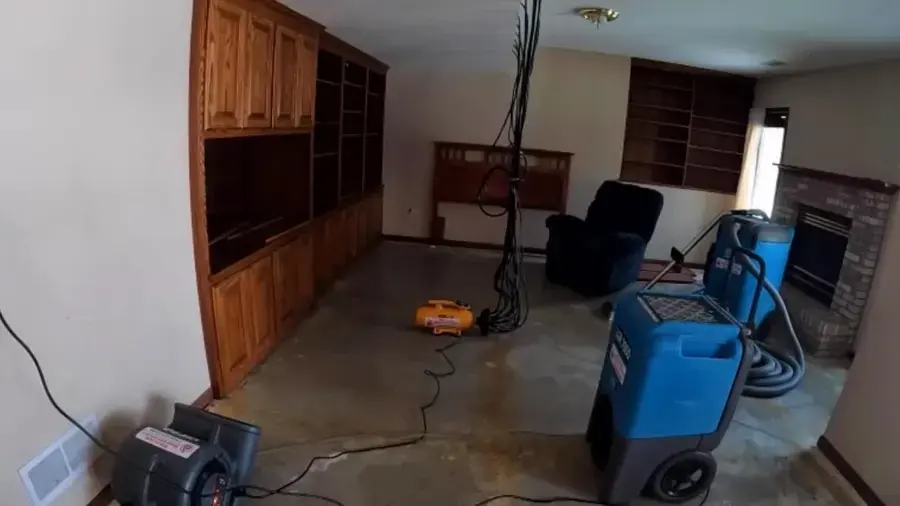
First steps for structural drying and dehumidification in Andover
- 1
Measure and classify
Temperature, humidity and moisture content are recorded, the loss is classed 1 to 4, and a dry reference is taken from an unaffected area.
- 2
Size the equipment
Equipment is chosen for the room's volume and the materials: air movers for surfaces, LGR dehumidifiers for the air, injection ports for closed cavities.
- 3
Monitor daily
The tech returns daily, reads the marked spots and room humidity, and moves or adds units as readings change.
- 4
Confirm and remove
Equipment comes out only when every point matches the dry reference, and the logs and photos go to the file.
Drying is not just running fans. Water moves into framing, subfloors and the back of drywall, and the air has to be dry enough to pull it back out. Structural drying sets the equipment to the room's size and the material's density, then checks the result with a meter each day.
What does structural drying and dehumidification cost in Andover, MN?
Expect between $1,000 and $2,500 for one or two rooms with a Class 1 or 2 loss, between $2,500 and $6,000 for a basement or whole floor, and $6,000 or more once hardwood, plaster or concrete is involved.
A room or two
$1,000 to $2,500
- Class 1 or 2 moisture load
- Several air movers, one LGR unit
- Roughly three to four days
Whole basement or floor
$2,500 to $6,000
- Class 2 or 3 moisture load
- Multiple LGR units running
- Psychrometric log each visit
Hardwood, plaster, concrete
$6,000 and up
- Slow-drying dense materials
- Desiccant or specialty gear
- Equipment stays longer
Ranges are typical, not a quote: the water category, square footage, material class and how fast drying started move the number most. Run the water damage cost calculator for a closer range.
What a drying plan includes
After extraction the tech measures temperature, humidity and moisture content, classifies the loss from Class 1 to Class 4 and records a dry reference from an unaffected area. Those numbers set how many air movers and dehumidifiers the room needs.
- Air movers that sweep moist air off wet surfaces
- LGR dehumidifiers that pull water out of the air
- Injection ports for closed wall and cabinet cavities
- Desiccant or heat for hardwood, plaster and concrete
The equipment list changes as the loss dries. Units are moved, added or removed after each reading, so nothing keeps running longer than the numbers justify.
Why drying takes days
Wet materials release moisture slowly. Drywall dries in a few days, while framing, subfloor and concrete hold water longer, and dense hardwood or plaster can take longer still. Pushing the air too hard dries the surface and traps moisture inside.
Mold can begin growing on wet drywall and framing in 24 to 48 hours, which is why the equipment goes in early. The goal is to bring each material back to its dry reference, not to make the room feel dry.
Daily monitoring and logs
Each visit the tech reads the same marked spots on the slab, plates, studs and drywall, and records temperature and relative humidity in the room and at the dehumidifier. Those psychrometric logs show whether the drying is on track.
When every point matches the dry reference, the equipment comes out, and the logs, photos and final readings go to the adjuster as the record of what was done.
Rebuilding after drying
Dry framing and subfloor are ready for repair. Andover requires a building permit for work such as basement finishes and re-roofing, so a rebuild after drying may need one. The drying time estimator gives a first range for the drying phase, and structural drying in Anoka runs the same way.