24/7 water damage help for Anoka and the river cities Dried to the IICRC S500 standard Basements, frozen pipes, sewer backups Call (888) 432-4933
Measured drying for wet structures

Structural Drying and Dehumidification in Coon Rapids, MN

Once the standing water is gone, the structure still holds moisture in framing, subfloors and walls. Air movers and LGR dehumidifiers dry it on a measured schedule, with readings logged until wet materials match a dry reference.

(888) 432-4933Start drying a Coon Rapids structure
LGR dehumidifiersAir mover placement Daily psychrometric logs
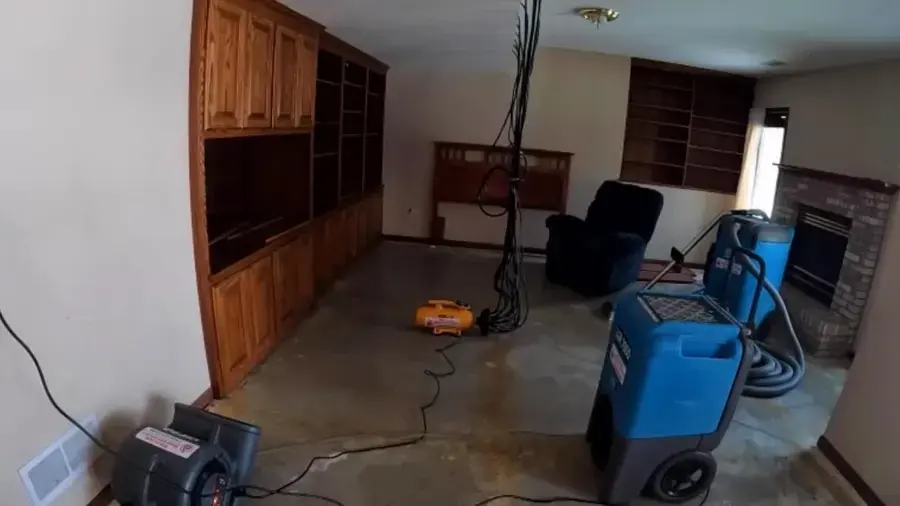
Dehumidifiers and air movers running in a living room stripped down to the bare floor, structural drying in Coon Rapids
EquipmentAir movers and LGR units
ChecksReadings every visit
Typical runThree to four days
Price starts$1,000 for one or two rooms

First steps for structural drying and dehumidification in Coon Rapids

  1. 1

    Stop the source

    Make sure the leak is fixed or the water is shut off, and that standing water has been extracted.

  2. 2

    Open the space

    Keep interior doors and closets open so air can move, and clear furniture away from walls the team needs to reach.

  3. 3

    Let equipment run

    Air movers and dehumidifiers run around the clock. Leave the units plugged in and the thermostat where the drying team set it.

  4. 4

    Keep the visits

    Daily readings tell the team when to move or remove equipment, so skipping a visit can leave a wet spot behind.

Taking the standing water out does not make a building dry. Framing, subfloors, plaster and concrete hold moisture long after the surface feels fine, and drying them is a matter of airflow, dehumidification and patience, tracked with readings rather than by feel.

What does structural drying and dehumidification cost in Coon Rapids, MN?

One or two rooms usually run $1,000 to $2,500 for structural drying. A basement or full floor runs $2,500 to $6,000, and hardwood, plaster or concrete that needs specialty drying starts at $6,000.

One or two rooms

$1,000 to $2,500
  • Class 1 or 2 loss
  • A few air movers, one LGR
  • Three to four days typical

Hardwood, plaster, concrete

$6,000 and up
  • Dense, slow-drying materials
  • Desiccant or specialty drying
  • Longer equipment runs

Ranges are typical, not a quote: the water category, square footage, material class and how fast drying started move the number most. Run the water damage cost calculator for a closer range.

How a structure dries

Air movers push dry air across wet surfaces so moisture leaves the material. LGR dehumidifiers pull that moisture out of the air and drain it away, which keeps the room from simply recycling it. Heat helps both steps, and the drying team balances all three.

  • Airflow across wet surfaces and into wall cavities
  • Dehumidification sized to the volume of the space
  • Temperature that keeps evaporation steady
  • Readings that show whether the plan is working

Temperature matters because warm air holds more moisture, so the drying team keeps rooms warm without overheating finishes.

Wet walls or floors in Coon Rapids?

The Coon Rapids response team dispatches day or night.

(888) 432-4933Start the Coon Rapids drying plan

Why equipment runs after floors feel dry

Surface moisture leaves first. Water held in framing, subfloor sheathing and the bottom of walls leaves slowly, and stopping early sends it back out into the room. The meter, not the touch test, decides.

That is also why the equipment is moved during the job. Air movers shift as the wettest spots change, and units come out when the area they serve reads dry.

Dense materials take longer

Hardwood, plaster and concrete release moisture slowly. Desiccant or specialty drying may be used for them, and the plan allows longer equipment runs and more readings before anything is closed in.

Coon Rapids has single family homes, twinhomes, townhomes, apartments and senior living units, so the materials vary from one building to the next, and so does the drying plan.

Readings, logs and closing out

A drying plan is written before the first machine is placed, with the classes of water loss, the materials involved and the readings that will count as dry.

Daily psychrometric readings track temperature, humidity and moisture in the materials. Those logs, with photos and a moisture map, show the adjuster that the drying was done to the S500 standard. Basement flooding cleanup in Coon Rapids and water extraction lead into this step.
How it works

How structural drying and dehumidification is handled in Coon Rapids

1

Place and start

Air movers and LGR dehumidifiers are sized to the volume and set to push air across wet surfaces.

2

Read daily

The drying team records temperature, humidity and material moisture at the same points each visit.

3

Adjust and move

Equipment shifts as the wettest areas change, and units leave as their areas reach the dry goal.

4

Verify and document

Final readings are compared with an unaffected area, and the full log goes to the homeowner and adjuster.

What you get

What every structural drying and dehumidification job in Coon Rapids includes

Rapid local response

Active water in Coon Rapids is treated as urgent around the clock, holidays and subzero nights included.

IICRC S500 drying

The drying team sizes air movers and LGR dehumidifiers to the class of loss, then dries to readings, not looks.

Claim-ready file

Moisture maps, daily psychrometric logs and timestamped photos are built as the job runs.

Local water know-how

Wet springs, hard freezes and high river water set the drying plan in Coon Rapids.

Service area

Structural Drying and Dehumidification across Coon Rapids and nearby cities

The Coon Rapids response team covers this service day and night.

Coon Rapids, MN

Structural drying runs in ZIP 55433 and 55448, from older homes in the Northdale Addition to the Oaks of Shenandoah, Port Riverwalk, Woodland North Apartments and the Riverdale Boulevard corridor.

The same service nearby: structural drying and dehumidification in Anoka, Champlin, Andover.

Water damage restoration in Coon Rapids ›
Structural Drying and Dehumidification in Coon Rapids right now? (888) 432-4933
FAQ

Structural Drying and Dehumidification questions in Coon Rapids, MN

What does LGR mean on a dehumidifier?

LGR stands for low grain refrigerant. These units keep pulling moisture from the air even when the air is already fairly dry, which is why they are used for structural drying.

How many days will the equipment run?

Small losses often finish in three to four days. A basement or a whole floor takes longer, and each day's readings decide when the equipment can be shut off.

Why is the equipment so loud and warm?

Air movers and dehumidifiers run hard to move moisture, and dehumidifiers give off heat as they work. The room warms up and the noise stays steady until the readings say dry.

What is a dry goal?

The goal is a moisture reading in each material that matches an unaffected sample of the same material in the same building. The team logs the goal and the final readings so the claim file shows the result.

What happens if the equipment is turned off early?

Moisture left in framing and subfloor can migrate back to the surface and the room can turn musty. Shutting units off before the team confirms dry readings risks a repeat visit.

Coon Rapids dispatch, 24/7

Coon Rapids structural drying runs on readings, not guesses

Anoka Water Damage Restoration sizes the equipment to the space, takes readings every visit and keeps the log going until the structure reads dry.

(888) 432-4933Set up the Coon Rapids dryers
Anoka Water Damage Restoration Anoka, MN (888) 432-4933 Open 24 / 7 / 365
Call (888) 432-4933 · 24/7 dispatch