24/7 water damage help for Anoka and the river cities Dried to the IICRC S500 standard Basements, frozen pipes, sewer backups Call (888) 432-4933
Measured drying for Champlin buildings

Structural Drying and Dehumidification in Champlin, MN

Extracted water still lives inside framing, subfloors and drywall. The drying team places LGR dehumidifiers and air movers to a plan and reads moisture every day until Champlin materials reach the dry goal.

(888) 432-4933Call about Champlin structural drying
IICRC S500 dryingLGR dehumidification Daily moisture logs
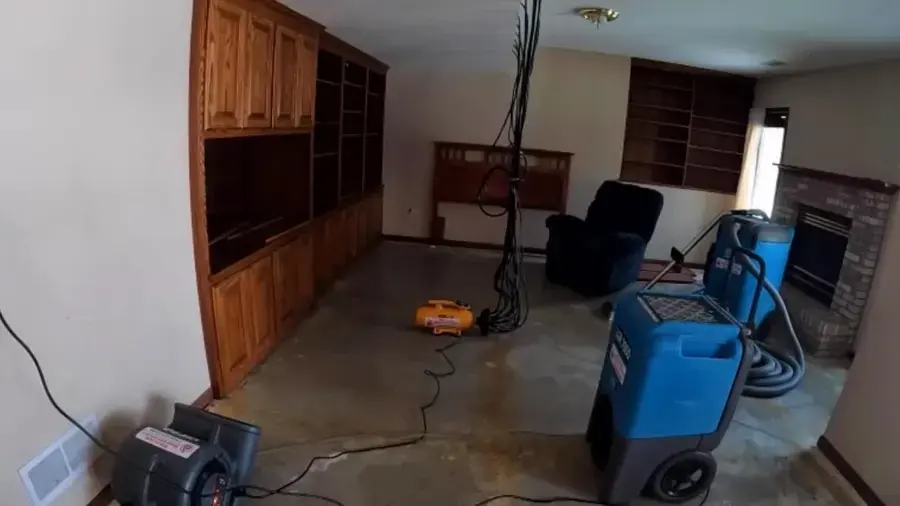
Dehumidifiers and air movers set across a living room stripped to the bare subfloor, structural drying in Champlin
StandardIICRC S500 drying classes
EquipmentLGR dehumidifiers, air movers
Measured byMoisture readings every day
Ends whenReadings match the dry reference

First steps for structural drying and dehumidification in Champlin

  1. 1

    Keep the heat on

    Hold the house at a normal indoor temperature, because warm air carries moisture out faster than cold air.

  2. 2

    Open the space

    Open cabinet doors and closets, and lift furniture and rugs off wet floors so air can reach every surface.

  3. 3

    Do not seal it up

    Skip painting, new flooring and closing opened walls until readings confirm the materials are dry.

  4. 4

    Leave the equipment running

    Equipment is placed to a plan, so moving or switching it off can stall the dry-out and extend the schedule.

Water that is extracted still lives inside framing, subfloors and drywall, and that moisture will not leave on its own. Structural drying is the measured process of pulling it out, using air movement, dehumidification and daily readings instead of guesses.

What does structural drying and dehumidification cost in Champlin, MN?

Structural drying in Champlin usually costs $1,000 to $2,500 for one or two rooms, $2,500 to $6,000 for a basement or one floor, and $6,000 and up when hardwood, plaster or concrete needs longer, specialized drying.

One or two rooms

$1,000 to $2,500
  • Light, Class 1 or 2 loss
  • A few air movers, one LGR
  • Short run, a few days

Dense materials

$6,000 and up
  • Hardwood, plaster or concrete
  • Desiccant or specialty units
  • Longer equipment runs

Ranges are typical, not a quote: the water category, square footage, material class and how fast drying started move the number most. Run the water damage cost calculator for a closer range.

How drying is planned

The tech starts with a dry reference reading from an unaffected part of the home, then records temperature, humidity and moisture content in each wet material. Those numbers set the equipment count and the target. The usual toolkit includes:

  • LGR dehumidifiers that remove moisture from the air
  • Air movers that push dry air across wet surfaces
  • Desiccant units for dense materials and cold spaces
  • Containment that keeps drying air where it is needed

Equipment count follows the size and class of the loss, not a fixed rule. More air movers do not help if the dehumidification cannot keep up, so the crew balances both.

Wet framing in your Champlin home?

The Champlin response team dispatches day or night.

(888) 432-4933Start the Champlin dry-out

Housing mix and drying challenges

The city counted 8,641 housing units in 2016, including 6,597 detached single family homes, 1,186 townhomes, 685 apartment units and 173 duplex, triplex or quad units. Each type dries differently, and shared walls and floors in multi-unit buildings need balanced airflow so one unit's drying does not push moisture into the next.

The city also says many apartment units date from the 1960s and 1970s, and homes from 1960 to 1980 are being renovated. Renovation opens walls, which is a useful moment to check them for hidden dampness.

Dense materials and longer runs

Hardwood, plaster and concrete hold water far longer than drywall. They respond to desiccant or specialty drying rather than a standard dehumidifier alone, and equipment may run several days longer.

Concrete floors and block walls are checked with a meter on the surface and, where needed, with a humidity probe. A basement floor that reads dry on top can still be wet below, so the crew re-checks before shutting the equipment down.

Logs, goals and release

Every visit adds an entry to the drying log: room temperature, humidity, grains per pound of moisture in the air and meter readings for each wet material. The log shows the trend, and a stalled reading is a sign to change the setup.

Equipment is removed only when every wet material reaches the dry goal. The final log goes to the insurance file, and it also backs up water extraction in Champlin or commercial water damage in Champlin work done on the same loss.
How it works

How structural drying and dehumidification is handled in Champlin

1

Set the reference

Dry readings from an unaffected room become the goal each wet material must reach.

2

Place the equipment

LGR dehumidifiers and air movers go where the materials are wet, sized to the loss class.

3

Read every day

Temperature, humidity and material readings are logged each visit, and the setup changes if one stalls.

4

Release at the goal

Equipment comes out once every material meets the dry reference, and the final log goes to the file.

What you get

What every structural drying and dehumidification job in Champlin includes

Rapid local response

Active water in Champlin is treated as urgent around the clock, holidays and subzero nights included.

IICRC S500 drying

The drying team sizes air movers and LGR dehumidifiers to the class of loss, then dries to readings, not looks.

Claim-ready file

Moisture maps, daily psychrometric logs and timestamped photos are built as the job runs.

Local water know-how

Wet springs, hard freezes and high river water set the drying plan in Champlin.

Service area

Structural Drying and Dehumidification across Champlin and nearby cities

The Champlin response team covers this service day and night.

Champlin, MN

Structural drying covers ZIP 55316 across Champlin, from detached neighborhoods and townhomes to apartment communities such as Champlin Drive Apartments, Elm Creek Apartments, Mississippi Crossings and The Reserve at Elm Creek.

The same service nearby: structural drying and dehumidification in Anoka, Coon Rapids, Dayton.

Water damage restoration in Champlin ›
Structural Drying and Dehumidification in Champlin right now? (888) 432-4933
FAQ

Structural Drying and Dehumidification questions in Champlin, MN

How long does structural drying take?

Most losses need several days, and thick framing, plaster or concrete can need longer. The readings, not the calendar, decide when the equipment leaves.

Why are so many machines needed?

Air movers evaporate moisture and dehumidifiers remove it from the air, and each does little without the other. The count follows the size and class of the loss.

What are drying classes?

IICRC S500 sorts losses into classes by how much wet material is involved and how fast it releases moisture, from a small, light loss to a dense, saturated one.

Can the equipment be turned off at night?

It should stay on. Drying works around the clock, and shutting a dehumidifier off lets moisture settle back into the materials. The crew can advise on noise and placement.

Will insurance cover drying equipment?

Drying is usually a covered part of a sudden water loss. The drying log, with daily readings and equipment counts, shows the insurer what was needed and why.

How is a basement floor checked for dryness?

Surface meters read the top, and where needed a humidity probe reads inside the concrete. A floor that looks dry can still hold water below the surface.

Champlin dispatch, 24/7

Dry Champlin structures to measured goals

The drying team sets a reference, places equipment, reads moisture daily and releases the job only when the numbers meet the goal, with a log for the claim.

(888) 432-4933Call for Champlin structural drying
Anoka Water Damage Restoration Anoka, MN (888) 432-4933 Open 24 / 7 / 365
Call (888) 432-4933 · 24/7 dispatch