First steps for water extraction and removal in Champlin
- 1
Stop the source
Close the main shutoff or the appliance valve, and turn off power to any wet room before touching standing water.
- 2
Skip the household vacuum
Household vacuums are not made for water and can shock the user. Use towels and mops until the extractors are set up.
- 3
Lift what you can
Raise furniture legs onto blocks or foil, pull small rugs and move boxes off wet floors so more of the floor is reachable.
- 4
Note the water
Photograph the depth, color and odor of the water and note where it came from, so the crew can set the category.
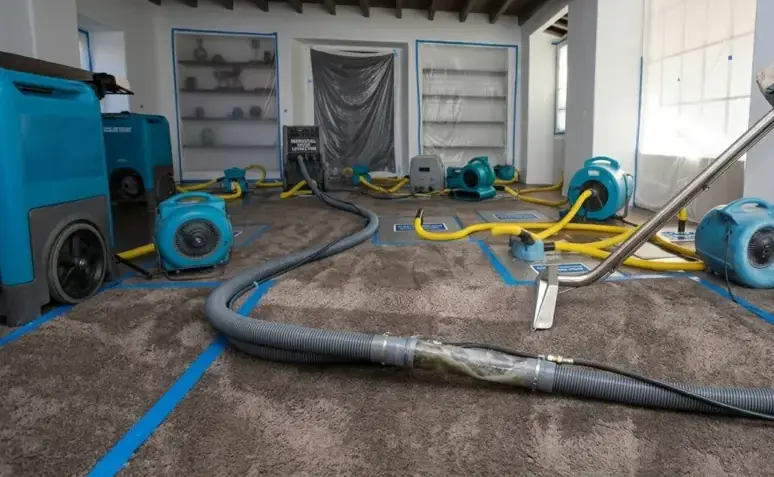
Extraction is the step that decides everything after it. Every gallon pulled out is a gallon that does not have to be dried, so the extraction crew removes standing water and squeezes it out of carpet and pad before any drying equipment is placed.
What does water extraction and removal cost in Champlin, MN?
Water extraction in Champlin usually costs $400 to $1,000 for one room or hallway, $1,000 to $2,500 for a basement or several rooms, and $2,500 and up for deep or contaminated water.
One room or hallway
$400 to $1,000
- Portable extractors and wet vacs
- Clean water caught early
- Carpet often saved
Basement or several rooms
$1,000 to $2,500
- Truck-mounted and weighted units
- Carpet and pad over concrete
- Moisture map afterward
Deep or contaminated water
$2,500 and up
- Inches of standing water
- Submersible pumps first
- Category 2 or 3 handling
Ranges are typical, not a quote: the water category, square footage, material class and how fast drying started move the number most. Run the water damage cost calculator for a closer range.
Why Champlin water moves fast
Champlin sends runoff to the Mississippi River through the city storm sewer system, Elm Creek and Oxbow Creek, and the city notes that runoff from roofs, driveways and parking lots moves quickly and in large quantities. Water inside a basement spreads with the same speed once it escapes a pipe or a drain.
- Pumps drop deep water first
- Truck-mounted units pull large volumes
- Weighted extractors press water from carpet and pad
- Wet vacs reach corners, stairs and cabinet bases
The fastest route is the right one: pull the water out before it reaches flooring and drywall, because wicking starts the moment water touches a porous edge.
Category first, then equipment
Clean supply water, gray appliance water and contaminated water are handled differently. The tech who does the walkthrough identifies the source, because Category 3 water changes how the pump is used, where the discharge goes and which materials are removed.
Water that is only a few hours old from a supply pipe can usually be extracted and the carpet saved. Water that has sat for days is more likely to mean pad removal and a wider cut.
Carpet, pad and hard floors
On carpet, a weighted extractor presses out the water the carpet and pad can hold, which often saves the carpet itself when the water is clean. Pad is the weaker layer and is usually pulled and replaced, because it holds water against the floor.
On tile, vinyl, concrete and hardwood, extraction is faster, but water slips under seams and baseboards. Hardwood is checked early because boards can cup, and the crew may open a floor edge to let trapped water out.
What extraction leaves behind
Even the best extraction leaves materials damp, which is why structural drying in Champlin follows it. The crew records a moisture map once the standing water is gone and places equipment from those readings.
If extraction is the only work needed, the job ends with photos and notes for the insurer. If the water came from a failed pipe, the loss is closer to burst pipe water damage in Champlin.