First steps for water extraction and removal in Coon Rapids
- 1
Stop the source
Close the shutoff or leave the area if the water is contaminated, and keep power off to wet outlets.
- 2
Lift and photograph
Photograph the water level, then lift rugs, boxes and small furniture so the crew can reach the floor.
- 3
Pump the deep water
Submersible pumps clear standing water, and hoses carry it out of the house to the truck or outside.
- 4
Extract and map
Extractors pull moisture from carpet, pad and flooring, and a moisture map shows what still needs drying.
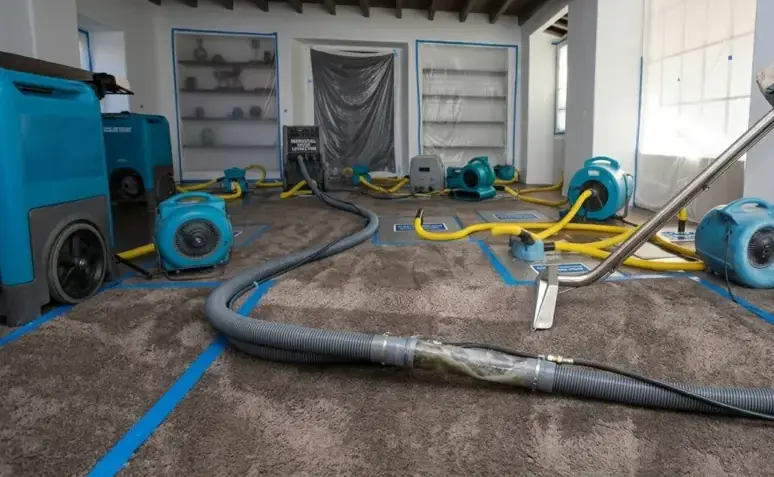
Extraction is the first real step of every water loss, and it matters because water that stays in carpet, pad and framing keeps spreading. The extraction crew removes standing water and as much stored moisture as the tools can reach, so the drying equipment has less to do.
Extraction removes liquid water, not the moisture inside materials, which is why it is always followed by drying.
What does water extraction and removal cost in Coon Rapids, MN?
A small area caught early usually runs $400 to $1,000. A basement or several rooms moves the job to $1,000 to $2,500, and deep or contaminated water starts at $2,500.
One room or hallway
$400 to $1,000
- Hallway, closet or one room
- Portable or truck units
- Clean water, caught early
A basement or several rooms
$1,000 to $2,500
- Carpet and pad over concrete
- Truck-mounted and weighted tools
- Moisture map after removal
Deep or dirty water
$2,500 and up
- Inches of standing water
- Pumps first, then extractors
- Category 2 or 3 handling
Ranges are typical, not a quote: the water category, square footage, material class and how fast drying started move the number most. Run the water damage cost calculator for a closer range.
Why standing water goes first
The Coon Creek Watershed District describes flat land and historically high water tables in the Anoka Sand Plain, and news coverage of the November 2025 water main breaks called Coon Rapids soil sandy. Whatever the source, standing water in a lower level is pumped out before it soaks into flooring and framing.
That is why a slab or a finished floor can look dry on top while the layers beneath stay wet.
Pumps first, then extractors
Submersible pumps handle water deep enough to cover the floor. Truck-mounted units then take over, pulling large volumes through long hoses so heavy equipment stays outside. Portable extractors reach rooms and stairs the truck hose cannot.
- Submersible pumps for inches of standing water
- Truck-mounted extractors for large areas and heavy carpet
- Weighted extraction tools that press water out of carpet and pad
- Portable units for stairs, closets and small rooms
A moisture map after extraction shows what the tools could not reach, which is where the drying equipment goes.
Carpet, pad and hard floors
Weighted tools pull water through the carpet, and the pad underneath is lifted when it is soaked, since it holds water far longer than the carpet does. Hardwood and laminate get extraction through specialty tools and readings of the subfloor, not just the surface.
Furniture legs are blocked off the carpet so they do not leave stains while the area dries.
When the water is not clean
Gray water and sewage change the method. The crew wears protective gear, avoids spreading the water and treats the area before drying. See sewage backup cleanup in Coon Rapids for the Category 3 steps, and structural drying for what follows extraction.