First steps for water extraction and removal in Andover
- 1
Locate the water
The tech walks the area, finds the deepest spots and the hidden pockets, and notes the water category before any tool is switched on.
- 2
Pump the depth
Submersible pumps drop the standing water first so the extractors work on wet material, not on a pond.
- 3
Extract the rest
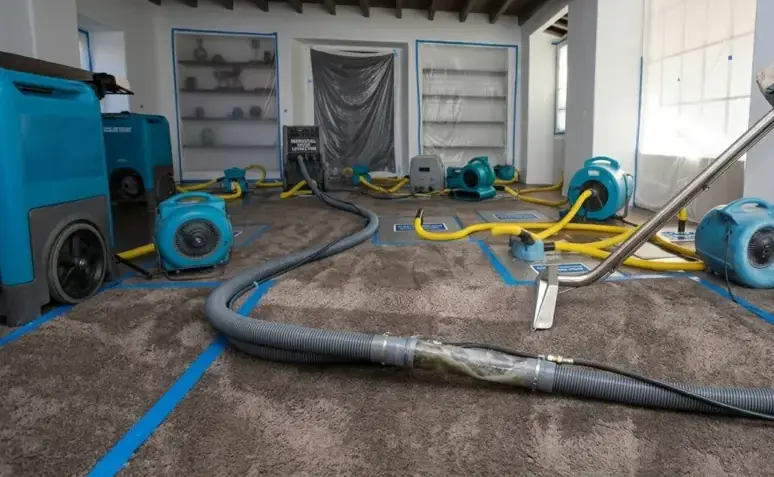
Wands and weighted tools draw water out of carpet, pad and floors while the truck-mounted unit supplies the suction, and the edges and corners get a second pass.
- 4
Map what remains
A moisture meter and thermal camera show where wicking continues, and that map sets up the drying plan.
Water that stays indoors keeps traveling. It soaks pad, climbs into drywall and settles into framing, so the size of a loss is set by how much liquid comes out before drying equipment is even unpacked.
What does water extraction and removal cost in Andover, MN?
Cleanup of a small clean area sits between $400 and $1,000, a basement or run of rooms between $1,000 and $2,500, and deep or contaminated water starts at $2,500 and climbs with the depth.
One room or hallway
$400 to $1,000
- A portable extractor is enough
- Clean water, caught early
- Pad checked before leaving
Basement or a run of rooms
$1,000 to $2,500
- Carpet and pad over a slab
- Truck-mounted suction needed
- Moisture map when done
Deep or contaminated
$2,500 and up
- Several inches standing
- Pumps ahead of extractors
- Containment when contaminated
Ranges are typical, not a quote: the water category, square footage, material class and how fast drying started move the number most. Run the water damage cost calculator for a closer range.
How Andover water gets indoors
Storm water in Andover moves through storm sewer mains, catch basins, sediment ponds and ditches that the Storm Sewer Department maintains. Anoka County's plan also points to flat terrain and storm systems overwhelmed in large storms, so water that cannot drain outdoors can end up inside.
- Standing water on a slab or floor
- Water held in carpet and pad
- Water trapped under flooring or in cabinet bases
- Water pooled in low spots and floor drains
Standing water goes first with submersible pumps, because every inch left on the floor keeps feeding the walls and carpet. Truck-mounted extractors follow, and weighted tools press carpet and pad to release the water they hold.
Choosing the extraction method
Small, clean losses use portable extractors, while basements and several rooms call for truck-mounted units with more suction. Floating floors and tight spaces get specialty tools, and the tech decides which material can be extracted in place.
Contaminated water changes the rules. Category 3 water is extracted with containment in place, and the tools are cleaned afterward, so the water is not spread to rooms that stayed dry. Pad that held it is removed instead of dried.
Handing off to drying
Once the standing water is gone, a moisture meter and thermal camera map what is still wet, because wicking continues in drywall, plates and subfloor. That map decides where the dehumidifiers and air movers go, and it becomes the first record in the file.
Extraction alone does not finish a loss. Structural drying in Andover takes over once the water is out, and the drying time estimator gives a first range for that phase.
Cost and scope
Small clean losses usually fall under about $1,000, and larger or contaminated jobs scale with the depth and area of the water. The water damage cost calculator helps size a job, and water extraction in Anoka follows the same method.