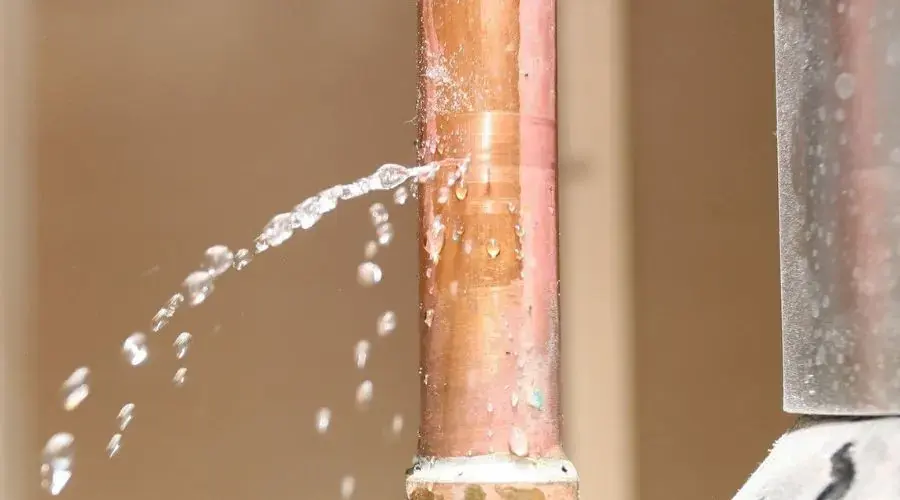
First steps for burst pipe water damage in Andover
- 1
Close the main
The main valve is shut, the pipes are drained and the failed section is found so the plumber can repair it.
- 2
Extract the water
Standing water comes off the floor first, using truck-mounted or portable extractors, and wet carpet and pad are lifted for a closer look.
- 3
Map and open up
Moisture readings and a thermal camera show how far the water ran, and wet drywall and insulation are opened where the readings say.
- 4
Dry both levels
The wall, the floor and the ceiling below are dried together until readings match the dry reference, with the log kept for the file.
A burst pipe is the fastest way to flood a home, because supply pipes hold pressure behind every wall. Andover's water system has two pressure zones, one capped at 55 psi on the lower west side and one serving most of the city at about 60 to 70 psi.
What does burst pipe water damage cost in Andover, MN?
Water limited to one wall or room sits between $1,300 and $3,000, a split that also wet the ceiling and floor below sits between $3,000 and $7,500, and a leak that ran for days begins at $7,500.
Single wall or room
$1,300 to $3,000
- Valve closed before it spread
- Small cut-out and extraction
- Fresh Category 1 water
Two levels wet
$3,000 to $7,500
- Ceiling and wall both opened
- Dry-out on both floors
- Moisture map of each level
Leak that ran for days
$7,500 and up
- Repeated soaking of one cavity
- Category 2 water and more removal
- A longer drying run
Ranges are typical, not a quote: the water category, square footage, material class and how fast drying started move the number most. Run the water damage cost calculator for a closer range.
First moves when a pipe lets go
Close the main valve, open a faucet on the lowest level to relieve the pipes, and switch off power to wet areas only from a dry panel. Then move rugs, boxes and electronics to dry ground and photograph the wet areas before anything else changes.
- A pipe that sprays inside a wall or above a ceiling
- A fitting or connector that fails under constant pressure
- A pipe weakened by corrosion or an earlier freeze
- A water heater or softener connection that lets go
Water from a clean supply pipe is Category 1, and it stays that way only briefly. Left for about 48 hours, it absorbs contamination from the materials it soaks and moves toward Category 2, which means more removal.
Opening and drying both levels
Water that sprayed inside a wall rarely stays there. It runs down the cavity, soaks the insulation, spreads along the bottom plate and drips into the ceiling or basement below. The tech maps all of it with a moisture meter and thermal camera before cutting anything.
Wet insulation and the lowest strip of drywall come out, a ceiling that is holding water is opened to release it, and flooring is extracted and checked. Wet materials left closed up are what turn a short leak into a long repair. The same drying plan runs for burst pipe water damage in Anoka.
Permits, plumbers and timing
The plumber repairs the pipe. When the failed part is a water heater or softener that has to be replaced, the city's plumbing permit rule applies to that replacement, and drying runs alongside it rather than waiting.
Hidden leaks are different from sudden bursts. A pipe that weeps for days soaks the same cavity again and again, and the job is then treated as Category 2 with more removal and a longer drying run.
After the drying is done
Readings repeat daily until every wet material matches the dry reference, and the logs, photos and moisture map are bundled for the adjuster. The water damage cost calculator gives a first range for the repair side.
A pipe that failed once may have company. Ask the plumber about the age of nearby fittings and the condition of the shutoff valves, and see frozen pipe water damage in Andover if cold weather played a part.