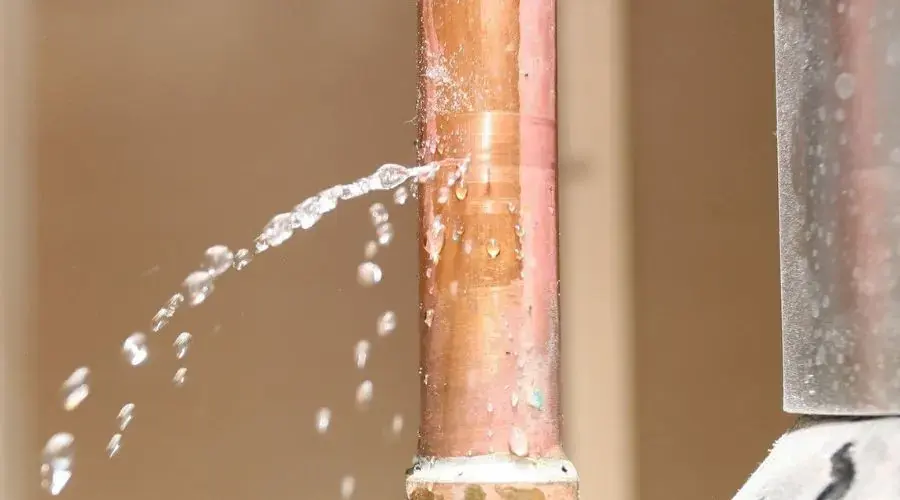
First steps for burst pipe water damage in Coon Rapids
- 1
Find the shutoff
Find the shutoff, usually where the supply enters the house, and turn it off. Run a faucet on the lowest level to drop the pressure.
- 2
Cut the power
Switch off breakers for wet rooms and ceilings from a dry spot, and keep away from fixtures that are dripping.
- 3
Catch and photograph
Place buckets under active drips, photograph the damage and the failed pipe, and keep the broken piece if there is one.
- 4
Start extraction
The team pumps and extracts the water, maps the wet path and sets drying equipment on every level the water reached.
A burst pipe inside a house is a private plumbing problem, and the damage grows while the water runs. It drops down the wall, soaks the ceiling below and spreads across the floor, so the job is as much about finding where the water went as stopping it.
Supply pressure is steady, so a split or a failed fitting keeps pushing water until the valve is closed, and a slow leak behind a wall can soak for days before a stain shows.
What does burst pipe water damage cost in Coon Rapids, MN?
A leak found and stopped fast usually runs $1,300 to $3,000 in Coon Rapids. Water that reaches the ceiling and floor below moves the job to $3,000 to $7,500, and a long-running leak starts at $7,500.
A single wall or room
$1,300 to $3,000
- Leak found and stopped quickly
- Small opening and extraction
- Clean Category 1 water
Two levels reached
$3,000 to $7,500
- Water crossed two levels
- Ceiling and lower drywall opened
- Drying on both floors
A leak that ran for days
$7,500 and up
- Water sat for days
- Category 2 handling, more removal
- Extended structural drying
Ranges are typical, not a quote: the water category, square footage, material class and how fast drying started move the number most. Run the water damage cost calculator for a closer range.
A main break is not a burst pipe
The Coon Rapids Utilities Division, part of Public Works, operates and maintains the city water system, and the utilities superintendent said the city typically responds to 20 to 30 water main breaks each year. A burst pipe inside a home is separate: the owner closes the shutoff, and the water that got loose has to be extracted and dried.
MinneapoliMedia reported that on Thanksgiving Day 2025 a 12-inch main broke near Hanson Boulevard and washed out sandy soil. That was a street problem. A pipe that fails inside a wall is a house problem, and the house is what needs drying.
How water travels after a burst
Water follows gravity and framing, and it rarely stays where the pipe let go.
- Down the wall cavity to the bottom plate and subfloor
- Across the floor toward a drain, vent or door
- Through the ceiling below, where it pools above drywall and insulation
- Along framing into walls that were never in the path of the leak
Tracing that path with a moisture meter and thermal camera is what keeps the tear-out limited to the places that are actually wet.
What the response team opens and what stays
Drywall that was only splashed is often dried in place. Drywall that sat in water, insulation that soaked it up and carpet pad that held it are removed. Openings are sized to the readings, not to a guess.
Hardwood and laminate get extra attention because they cup and buckle as they absorb water, and the team checks the subfloor beneath them before deciding what stays.
Drying both floors and closing out
Air movers and LGR dehumidifiers run on every level the water reached. A frozen pipe in Coon Rapids and a failed fitting are handled the same way once the water is off, and water extraction comes first in both cases.
Daily readings decide when equipment comes out, and the photos, moisture map and logs are packaged for the homeowner and the adjuster.