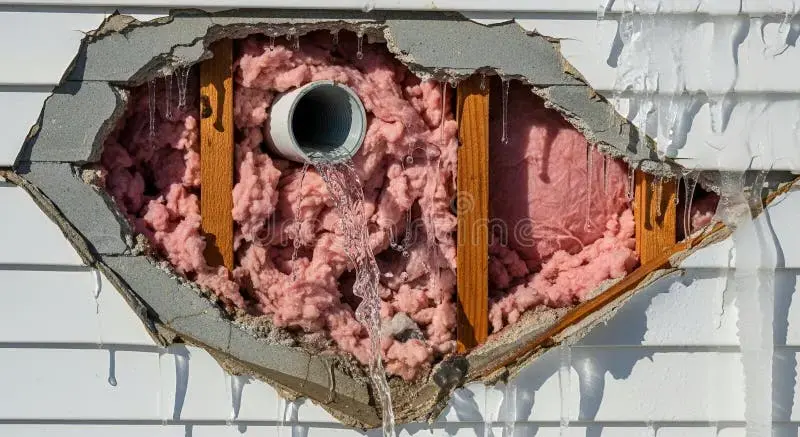
First steps for frozen pipe water damage in Coon Rapids
- 1
Close the main
Shut the main water valve, open a faucet on the lowest level to drain the pipes and keep power off to any wet wall or outlet.
- 2
Trace the wet path
Look for stains, bubbling paint or a sagging ceiling below the split, and note every place the water traveled.
- 3
Record and clear
Photograph each wet area, then lift small items off wet carpet and empty the cabinet base under the sink.
- 4
Let readings set the openings
Wall and ceiling openings are cut only where meter readings show wet material, which keeps the tear-out small.
Ice inside a pipe splits the metal or a joint, but nothing leaks while the pipe stays frozen. The water shows up when the pipe thaws and full supply pressure pushes through the crack. By then the wall, cabinet or ceiling below may already be soaked, and the first sign is often a stain or a sound behind the drywall.
A frozen pipe is also a reason to look at the other cold spots in the house, because a pipe that froze once usually sits next to others that nearly did.
What does frozen pipe water damage cost in Coon Rapids, MN?
One split pipe found fast usually runs $1,200 to $2,800 in Coon Rapids. Water that reaches the ceiling below moves the job to $2,800 to $7,000, and splits at several freeze points start at $7,000.
A single wall or cabinet
$1,200 to $2,800
- One split, found quickly
- Small opening in wall or cabinet
- Extraction, then cavity drying
Wall and the ceiling under it
$2,800 to $7,000
- Water ran through two levels
- Ceiling drywall and insulation removed
- Drying on both floors
Splits at several spots
$7,000 and up
- More than one pipe run split
- Finished basement wet as well
- Larger tear-out and drying
Ranges are typical, not a quote: the water category, square footage, material class and how fast drying started move the number most. Run the water damage cost calculator for a closer range.
Why the water arrives with the thaw
While the ice holds, it acts like a plug. When the temperature climbs or the heat comes back on, the plug melts and the split opens to the full flow of the supply. A hairline crack can empty a lot of water into a wall cavity before anyone notices.
The city ties water main breaks to frost and temperature swings in winter, and pipes inside a house face the same swings behind walls and under cabinets. The National Weather Service Twin Cities archive lists winter storms across the region on November 25 and 28 to 29, 2025 and on December 28, 2025.
Where split pipes hide
Pipes freeze where heat does not reach them, and a few places account for most of the surprises.
- Exterior walls where insulation is thin or has settled
- Garage and utility room walls that share a cold side
- Sink cabinets on outside walls, where warm air cannot reach
- Ceilings that sit under an attic or an unheated space
Water from a supply pipe starts as clean Category 1 water, so fast action can keep a small split from turning into a large tear-out.
What the work looks like
The shutoff comes first. Then the response team extracts water from the floor and checks the wall, the cabinet base and the ceiling below with a moisture meter and a thermal camera. Openings are cut only where readings show wet drywall or insulation.
Air movers and a dehumidifier then dry the cavity and the rooms on both levels, and the daily log shows when each area reaches its dry goal. A thermal camera also shows cold, wet patches that fresh paint can hide.
The pipe repair and the rest of the job
The restoration team handles the water, not the plumbing. A plumber repairs the split pipe, and the drying schedule is set around that visit so the wall can be closed as soon as the readings allow.
A pipe that fails without a freeze is a burst pipe in Coon Rapids, and water that reached the floor below often needs structural drying on both levels.