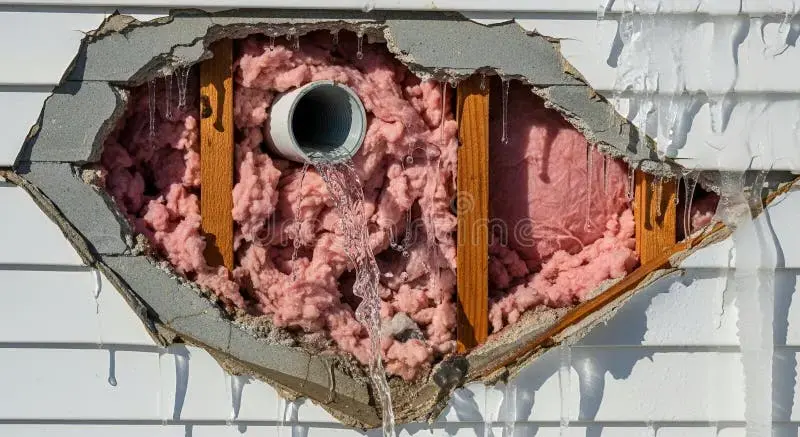
First steps for frozen pipe water damage in Champlin
- 1
Shut off the water
Close the main shutoff, then drain the taps. Never thaw a split pipe with an open flame, and keep the power off near any wet outlets.
- 2
Protect the power
Switch off breakers that feed wet outlets or ceiling lights, and keep everyone out of rooms where water is dripping through fixtures.
- 3
Contain what you can
Lift rugs and electronics out of the drip path and set buckets under stained ceilings. Do not poke a sagging ceiling.
- 4
Photograph, then call
Take photos of the split, the wet walls and every damaged item before cleanup starts, then call so extraction can begin.
A frozen pipe rarely announces itself. Ice splits the pipe wall, the ice plug holds the water back, and the leak starts only when the pipe warms up, usually inside a wall or above a ceiling nobody is watching. The Champlin water damage pros treat the thaw as the start of the loss.
What does frozen pipe water damage cost in Champlin, MN?
Frozen pipe cleanup in Champlin usually costs $1,200 to $2,800 for one wall or cabinet, $2,800 to $7,000 when a ceiling below is involved, and $7,000 and up when several pipe runs split.
One wall or vanity
$1,200 to $2,800
- A single split, shut off early
- One small opening, then extraction
- Cavity drying and readings
Ceiling below affected
$2,800 to $7,000
- Water crossed two levels
- Ceiling drywall and insulation removed
- Drying set up on both floors
Several freeze points
$7,000 and up
- More than one pipe run split
- Finished basement wet as well
- Wider removal and longer drying
Ranges are typical, not a quote: the water category, square footage, material class and how fast drying started move the number most. Run the water damage cost calculator for a closer range.
Where the thawed water ends up
Water follows gravity and framing. From a split in an exterior wall it runs down the stud bays, soaks the insulation and drips onto the ceiling or floor below. Four spots turn up again and again in winter losses:
- Kitchen and bathroom walls where supply pipes run close to the siding
- Garage ceilings and the finished rooms built above them
- Basement ceilings under a bathroom on an outside wall
- Soffits and attic knee walls where insulation is thin
Ice also works as a plug, so one run of pipe can split in several places. The tech who does the walkthrough follows the full run with a moisture meter instead of stopping at the first stain.
Why the first day decides the scope
Clean supply water is the easiest water to recover from. Left in insulation and drywall for a day or two it turns gray, and mold growth can begin inside the 24 to 48 hour window the trade works against.
So the order is shutoff, extraction, then small openings. The extraction crew removes standing water, and the team cuts inspection holes only at the wet edges, which keeps demolition small and the drying run short.
While waiting for the crew, keep the heat on, open the cabinet doors under sinks and leave the main shutoff closed. If the pipe failed under pressure instead of freezing, the loss is closer to burst pipe water damage in Champlin.
Shared walls and winter storms in Champlin
The city counted 1,186 townhomes and 685 apartment units in 2016, so a split in one unit can reach a neighbor's ceiling. The National Weather Service Twin Cities archive lists regional winter storms in late November 2025 and on March 14 to 15, 2026.
Those are regional events, and not every Champlin water damage loss follows a storm. Whatever the date, a split in one unit calls for photos, readings and notes for each affected owner before anything is removed.
Mississippi Drive area streets were built between 1984 and 1989, and the city expects its biggest housing challenge as 1980s homes need reinvestment. Any house with supply pipes in an exterior wall carries the same winter risk, whatever its age.
How the dry-out is measured
After extraction, air movers push dry air through the opened cavities while LGR dehumidifiers pull moisture out of the room. Readings from the framing, drywall edges and ceilings below go into a daily log.
Equipment leaves when the numbers match the dry reference, not when the room feels dry. The finished log goes to the claim file, and structural drying in Champlin explains the standard behind it.