First steps for burst pipe water damage in Champlin
- 1
Close the main
Turn the main shutoff clockwise until the water stops, then open a faucet on the lowest floor to relieve pressure.
- 2
Kill nearby power
Switch off breakers serving wet rooms and avoid any ceiling fixture that is holding water.
- 3
Move valuables up
Lift furniture legs onto blocks, pull rugs and carry electronics and papers to a dry room before the water spreads.
- 4
Document and call
Photograph the failed pipe, the wet areas and damaged belongings, then call so extraction starts while the water is still clean.
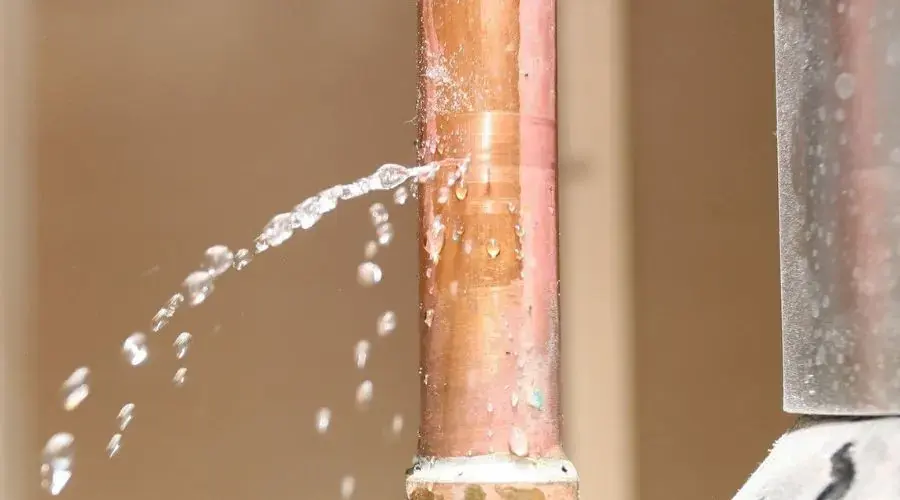
A burst pipe differs from a slow drip because the volume comes all at once. A supply pipe under pressure can soak a room, run through a ceiling and reach the floor below before the leak is even found. The extraction crew starts with the water already on the move.
What does burst pipe water damage cost in Champlin, MN?
Burst pipe water damage in Champlin usually costs $1,300 to $3,000 for one wall or room, $3,000 to $7,500 when water reaches the floor below, and $7,500 and up for a leak that ran for days.
One room, caught fast
$1,300 to $3,000
- Leak found and stopped early
- Small opening, then extraction
- Mostly Category 1 water
Ceiling and floor below
$3,000 to $7,500
- Water crossed two levels
- Ceiling and wall drywall opened
- Drying on both floors
Leak that ran for days
$7,500 and up
- Water sat in framing
- Category 2 handling, more removal
- Extended drying and checks
Ranges are typical, not a quote: the water category, square footage, material class and how fast drying started move the number most. Run the water damage cost calculator for a closer range.
What city records say about pipes
As of August 1, 2024, the city's inventory of 7,966 water service pipes found no lead, no galvanized pipes needing replacement and no unknown materials. That inventory runs from the water main to the meter inside the property, so it says nothing about the pipes beyond the meter.
Inside the house the story is different. The city expects its biggest housing challenge when homes built in the 1980s need reinvestment, and a failed supply pipe or fitting in an aging home is a plausible cause of a burst. A frozen pipe water damage split follows the same path after a thaw.
Where the water goes after a burst
A burst rarely stays in one room. Water runs along joists, drops through light fixtures and soaks insulation above and below. Common paths include:
- Down stud bays into the wall base and the basement ceiling
- Across subfloors toward the lowest corner of the room
- Through ceiling cavities to rooms and closets next door
- Into the unit below in a townhome or apartment building
Because supply water starts clean, speed matters. Left to sit, it picks up dirt from framing and insulation and moves from Category 1 toward Category 2, which widens the removal.
Finding the shutoff before the leak
Every household should know where the main shutoff sits before a pipe fails. During the Mississippi Drive area street and utility project in spring 2024, crews replaced deteriorated water main gate valves and announced shutdowns by door hanger at least 24 hours ahead.
A planned shutdown is a handy moment to find the valve and test that it turns. If a pipe bursts, closing it first limits the volume the extraction crew has to remove.
Drying after the leak is stopped
Once the pipe is closed and repaired, the team maps wet drywall, insulation and flooring with a moisture meter and thermal camera. Only materials that fail the readings are cut out, and the rest is dried in place.
Air movers and dehumidifiers then run on both floors when water crossed a ceiling, and water extraction in Champlin comes before any drying equipment is set. Daily readings decide how long the machines stay.