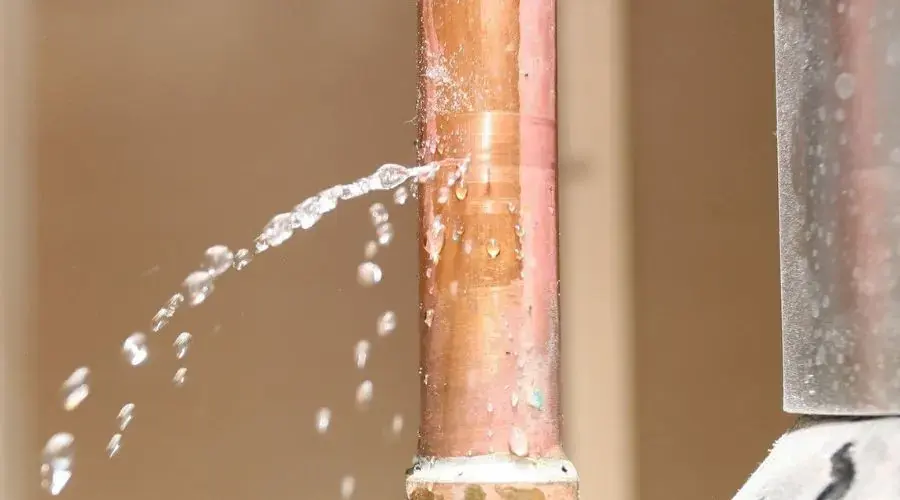
First steps for burst pipe water damage in Dayton
- 1
Close the main valve
Shut the main water valve and open a low faucet to relieve pressure, then check that the meter has stopped moving.
- 2
Switch off nearby power
If water is near outlets or a ceiling light fixture, turn off that circuit at a dry panel or wait for an electrician.
- 3
Contain the water
Move rugs and furniture, lay towels along the wet area and set a bucket under any drip before it spreads further.
- 4
Photograph and list
Photograph the pipe, the wet rooms and damaged items, then list belongings so the insurer has the full picture.
A burst pipe is the fastest way to turn an ordinary day into a restoration job. Supply pipes run at full pressure, so a split in a wall or ceiling can release a large volume before the valve is closed. The mitigation team traces the water through every layer it reached and dries all of it, not just the room with the stain.
What does burst pipe water damage cost in Dayton, MN?
Burst pipe cleanup in Dayton usually runs $1,300 to $3,000 for one wall or room and $3,000 to $7,500 when water reached the ceiling and floor below, with leaks that ran for days starting at $7,500.
One wall or room
$1,300 to $3,000
- Leak found and stopped quickly
- Small opening and extraction
- Clean supply water
Ceiling and floor below
$3,000 to $7,500
- Water crossed two levels
- Ceiling and lower wall opened
- Drying on both floors
Long-running leak
$7,500 and up
- Water sat for several days
- Category 2 handling
- Extended structural drying runs
Ranges are typical, not a quote: the water category, square footage, material class and how fast drying started move the number most. Run the water damage cost calculator for a closer range.
Know your side of the meter
The city says leaks at the water meter connections and the plumbing around the meter are the homeowner's responsibility, while the city replaces a damaged meter. That makes the shutoff the owner's first job, even on a quiet weekend.
- Shut the main valve first, then watch the meter to confirm it has stopped turning
- The city's web portal sends alerts about potential leaks or unusual water use for customers on city water
- Properties on private wells depend on a pump and pressure tank instead of a city meter
- Keep the plumber's receipt with the drying records, since the insurer will want both
Whichever setup applies, the repair belongs to the plumber and the owner, while the drying team handles the water that escaped. Both can work at the same time as long as the valve stays shut.
How far the water travels
Water follows framing, pipe openings and ceiling cavities. A split in an upstairs wall can wet the drywall below, run into insulation, soak the ceiling of a finished basement and settle under flooring, which is why moisture mapping covers every level before anything is closed up. A small stain on a ceiling can sit above a much larger wet area.
Clean supply water is Category 1 at first, but it does not stay that way. After a day or two in carpet and wall cavities it picks up contamination and is treated as Category 2, which changes what must be removed. That is the main reason the first hours matter.
Homes of every age
City housing figures list 175 homes built in 1949 or earlier, 551 from the 1970s and 899 built in 2010 or later. Pipe layouts differ across those decades, so the crew follows the moisture rather than assumptions about where a pipe should be. A newer home can have a burst fitting as easily as an older one.
Apartments add another layer. In a building with shared floors, a burst pipe can reach the unit below, and the drying team keeps records for each space so every owner and insurer has a clean file.
From shutoff to dry
After the valve is closed, extraction starts, openings are made where readings call for them and equipment runs until the logs show dry. The plumber's repair and the drying schedule are kept separate so neither slows the other.
More on the process is in water extraction, and winter splits are covered in frozen pipe water damage. Photos of the burst and the opened walls are saved for the file.