24/7 water damage help for Anoka and the river cities Dried to the IICRC S500 standard Basements, frozen pipes, sewer backups Call (888) 432-4933
Dayton standing water removal

Water Extraction and Removal in Dayton, MN

Standing water in Dayton can come from river high water, heavy rain or a failed pump. The extraction crew pulls it out first, before it wicks into flooring and drywall and the repair grows.

(888) 432-4933Send the Dayton extraction crew
Truck-mounted extractionWeighted floor extractors 24/7 Dayton dispatch
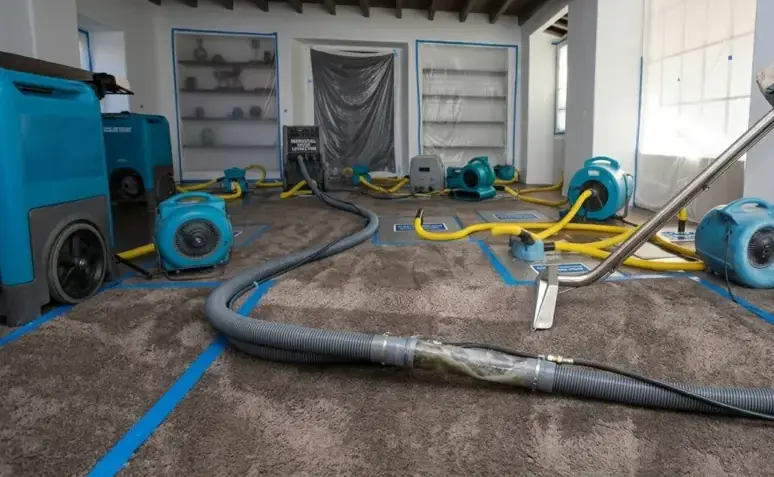
Extraction wand drawing water out of soaked carpet while air movers run across the room, water extraction in Dayton, MN
Typical range$400 to $2,500 and up
EquipmentPumps and extractors
Water sourcesRiver, rain, failed pumps
Next stepMoisture map, then drying

First steps for water extraction and removal in Dayton

  1. 1

    Make the area safe

    Keep out of standing water near outlets or appliances, and have power cut to the area from a dry spot.

  2. 2

    Stop the source

    Close the valve, clear the drain or shut off the pump circuit if you can reach it safely.

  3. 3

    Protect what is dry

    Raise furniture onto blocks, move rugs and contents to dry ground and keep wet items separate.

  4. 4

    Record the water level

    Photograph the standing water with a tape measure beside it if possible, plus each wet surface.

Extraction is the step that decides how big a water loss becomes. Every gallon pulled out of the carpet, pad or slab is a gallon the dehumidifiers never have to handle, and water that is removed early has less time to wick into drywall, trim and framing.

What does water extraction and removal cost in Dayton, MN?

Water extraction in Dayton usually runs $400 to $1,000 for one room or hallway and $1,000 to $2,500 for a basement or several rooms, with deep or contaminated water starting at $2,500 and climbing with depth.

Single room or hallway

$400 to $1,000
  • Portable or truck extractor
  • Clean water, removed early
  • Moisture map afterward

Deep or contaminated water

$2,500 and up
  • Inches of standing water
  • Pumps first, then extractors
  • Category 2 or 3 handling

Ranges are typical, not a quote: the water category, square footage, material class and how fast drying started move the number most. Run the water damage cost calculator for a closer range.

Where Dayton standing water comes from

Three sources account for most of the standing water the crew sees in Dayton, and each calls for slightly different handling.

  • River high water near the Crow River and the Mississippi, treated as flood water
  • Heavy rain that overwhelms poorly drained low spots and then seeps into basements
  • A failed sump pump or a plumbing break that releases clean supply water

The source sets the water category, and the category decides which materials can be dried and which must come out. A clean supply break and a river rise can leave the same depth on a floor and call for very different cleanups.

Standing water in a Dayton building?

The Dayton response team dispatches day or night.

(888) 432-4933Send the extraction crew

Pumps first, then extractors

Deep water goes to submersible pumps first, since an extractor wand only works once the surface is shallow. Truck-mounted units then pull water from carpet and pad, while portable and weighted extractors work the rest of the floor and tight spaces.

Extraction continues until the surface stops giving up water, not until the room looks dry. Readings from a moisture meter confirm what is left, and that number decides how much equipment the drying stage needs.

Soils and low spots

Dayton's soil survey names Glencoe, Cordova, Nessel, Lester, Hamel overwash and Angus loams as the main soils, and poorly drained low spots with wetland plants are common. Water that collects there is slow to leave, which makes early extraction more important.

Eight lakes sit within the city, among them Diamond Lake, French Lake, Dubay Lake and Laura Lake, and the land is divided into five watersheds. All of it feeds one lesson for property owners: water finds low ground fast.

After the water is out

A moisture map shows what the extractors could not reach, and the team sets air movers and dehumidifiers to finish the job.

Drying is covered in structural drying, and larger losses move into basement flooding cleanup. Photos taken before and after extraction document how much water the crew removed.
How it works

How water extraction and removal is handled in Dayton

1

Pump the depth

Submersible pumps clear the deep water so the extractors can reach the floor surface.

2

Extract the surface

Truck-mounted and weighted extractors pull water out of carpet, pad and the slab surface.

3

Map what remains

Moisture meters and a thermal camera show what is still wet behind and below the surface.

4

Hand off to drying

Air movers and dehumidifiers are set from the map, and the logs begin the same visit.

What you get

What every water extraction and removal job in Dayton includes

Rapid local response

Active water in Dayton is treated as urgent around the clock, holidays and subzero nights included.

IICRC S500 drying

The drying team sizes air movers and LGR dehumidifiers to the class of loss, then dries to readings, not looks.

Claim-ready file

Moisture maps, daily psychrometric logs and timestamped photos are built as the job runs.

Local water know-how

Wet springs, hard freezes and high river water set the drying plan in Dayton.

Service area

Water Extraction and Removal across Dayton and nearby cities

The Dayton response team covers this service day and night.

Dayton, MN

Extraction work covers Dayton ZIP codes 55327 and 55369, from the Historic Village and Northeast Dayton to Southwest Dayton, Riverwalk and Territorial Grove, plus the Fernbrook Lane and Highway 169 corridors.

The same service nearby: water extraction and removal in Anoka, Champlin, Ramsey.

Water damage restoration in Dayton ›
Water Extraction and Removal in Dayton right now? (888) 432-4933
FAQ

Water Extraction and Removal questions in Dayton, MN

How much water can be pulled out of carpet?

Most of it. Truck-mounted and weighted extractors pull water from carpet and pad, though some remains in the pad and subfloor, which is why a moisture map and drying follow extraction.

Is extraction enough without drying?

No. Extraction removes liquid water, but moisture still sits in framing, drywall and concrete. Air movers and dehumidifiers finish the job, and readings confirm it.

Can carpet be saved after extraction?

Clean water caught early often allows carpet to be lifted, dried and reset. Gray water or sewage means carpet and pad are removed instead.

What equipment handles deep standing water?

Submersible pumps start the work because an extractor wand needs a shallow surface. Once the depth is gone, extractors and weighted tools pull water out of carpet and the slab.

Why does extraction need to start early?

Water wicks upward into drywall, trim and framing, and clean water that sits can pick up contamination. Early removal limits the spread and the amount of material that needs to come out.

Does the crew handle river high water?

Yes. River water is Category 3, so the work shifts to flood cleanup with containment, removal of porous materials and antimicrobial treatment, covered under river and spring flood cleanup.

Dayton dispatch, 24/7

Pumped, extracted and mapped

The Dayton extraction crew pulls standing water first, checks what remains with moisture readings and hands the space to the drying team for the next stage.

(888) 432-4933Reach the extraction crew
Anoka Water Damage Restoration Anoka, MN (888) 432-4933 Open 24 / 7 / 365
Call (888) 432-4933 · 24/7 dispatch