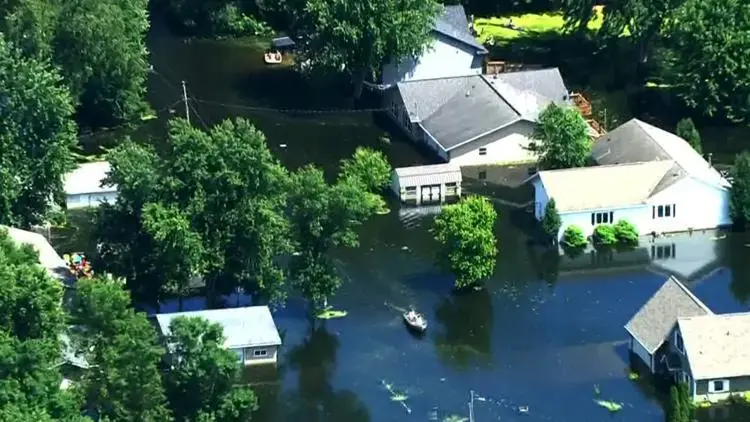
First steps for river and spring flood cleanup in Dayton
- 1
Stay out until it is safe
Stay out of flood water until the power is off from a dry spot, since contaminated water can hide hazards and carry current.
- 2
Skip the shop vacuum
Do not run household appliances or vacuums in the water, and wait for pumps and extractors built for the job.
- 3
Protect hands and health
Wear boots and gloves around flood water, wash hands often and keep children and pets away from the affected area.
- 4
Photograph the waterline
Photograph the waterline on the walls, the debris and the damaged contents before cleanup starts, and note when the water went down.
River and spring flood water is not clean, because it carries mud, bacteria and whatever it picked up on the way. That makes it Category 3 water and turns the job from a pump-out into a full cleanup: removal of contaminated materials, washing, antimicrobial treatment and long structural drying. The scale is larger and the safety steps are stricter than for a plumbing leak.
What does river and spring flood cleanup cost in Dayton, MN?
River and spring flood cleanup in Dayton usually runs $4,000 to $8,000 for an unfinished basement and $8,000 to $20,000 for a finished one, with losses that reach the floor above starting at $20,000 and rising from there.
Unfinished basement
$4,000 to $8,000
- Inches of water on concrete
- Mud-out, washing, antimicrobial
- Slab and wall drying
Finished basement
$8,000 to $20,000
- Carpet, drywall, insulation out
- Category 3 cleaning
- Extended structural drying
Lower floor reached
$20,000 and up
- Water above the basement
- Two levels of removal
- Contents and full drying
Ranges are typical, not a quote: the water category, square footage, material class and how fast drying started move the number most. Run the water damage cost calculator for a closer range.
Dayton's two rivers
Dayton sits where the Crow River meets the Mississippi River, and the Mississippi forms the city's northern border. Water here has several ways in.
- The Crow River, which joins the Mississippi at the Historic Village
- Elm Creek, Diamond Creek and Rush Creek, which round out the city's five watersheds
- Eight lakes, including Diamond Lake, French Lake, Dubay Lake and Laura Lake
- Poorly drained low spots with wetland plants across the city
None of this means every property floods. It means the crew understands why river high water, heavy rain and saturated ground can all end up in the same basement, and that understanding shapes which materials are pulled and how long drying runs.
What the record shows
In September 2016 heavy rain caused flash flooding in the Maple Grove and Osseo area, and Hennepin County closed a road at Elm Creek in Dayton because of flooding. Reports from April 2023 describe sandbagging ahead of an expected river crest, without naming flooded Dayton homes. Both records are about roads and preparation, not damaged houses.
The Crow River also flooded a road in neighboring Rogers in June 2014, and the Minnesota Department of Transportation closed it. That report does not name a Dayton road, so it shows how the river behaves rather than a Dayton event.
How flood cleanup differs
Porous materials that touched flood water, such as carpet, pad, insulation and drywall, are removed rather than dried. Hard surfaces are shoveled or washed clean of silt, treated with antimicrobial and then dried, and the slab and wall bases get the longest equipment runs. Mud-out comes first because silt left in place holds moisture and odor.
Because the water is Category 3, the crew wears protective gear and moves debris out of the building along one route. Photos of the waterline, the removed materials and the readings back up the claim, which often runs through a flood policy rather than a standard one.
Watersheds and building rules
The city's water management plan, completed in October 2018, recommends overflow routes for extreme storms and final high water levels for buildings next to ponding areas and floodplains. Those recommendations show how seriously the city treats low ground.
The Elm Creek Watershed Management Commission oversees surface water in Dayton. After the cleanup, structural drying finishes the job and basement flooding cleanup covers the lower level.