First steps for sewage backup cleanup in Dayton
- 1
Stop using water
Stop running sinks, showers, dishwashers and toilets, since every flush or drain adds to what is already backing up into the home.
- 2
Keep everyone out
Keep children, pets and anyone with a weak immune system away from the affected rooms, and avoid walking through the water.
- 3
Skip the home cleanup
Do not vacuum or scrub the area, and do not run a household fan, which can spread contamination through the air.
- 4
Find the blockage, then record
Have a plumber find the blockage, and photograph the backup and the affected rooms before the crew starts removal.
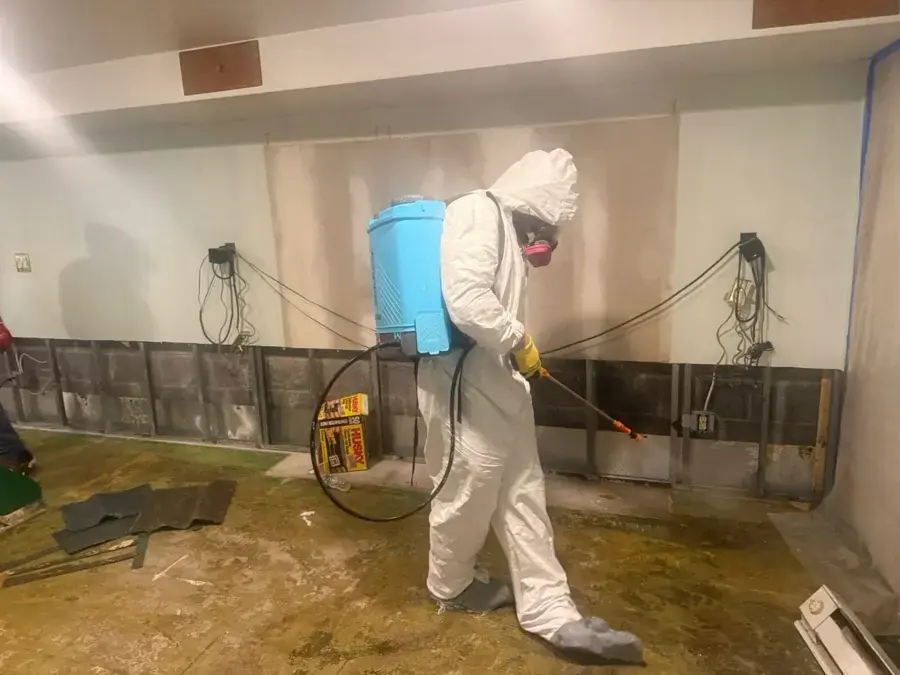
A sewage backup turns a basement into a health problem as well as a water problem. The first rules are simple: keep people and pets out, stop running water and touch nothing. The cleanup crew then works behind containment so the contamination stays in one place until it is removed, instead of riding along on boots, hoses and air currents.
What does sewage backup cleanup cost in Dayton, MN?
Sewage backup cleanup in Dayton runs $2,500 to $4,500 for a small backup on bare concrete and $4,500 to $12,000 in a finished basement, with large or repeat backups that spread across the level starting at $12,000.
Small, bare concrete
$2,500 to $4,500
- Backup near the floor drain
- Removal, disinfection and drying
- Little porous material to remove
Finished basement
$4,500 to $12,000
- Carpet, pad and drywall removed
- Containment and HEPA air scrubbing
- Antimicrobial, then drying
Large or repeat backup
$12,000 and up
- Water spread across the level
- Contents and full tear-out
- Extended drying and checks
Ranges are typical, not a quote: the water category, square footage, material class and how fast drying started move the number most. Run the water damage cost calculator for a closer range.
Who owns which pipe
Dayton's sewer responsibility splits at the property edge: the city covers the sewer from the junction where a private sewer pipe joins the city main, and the owner maintains the private pipe up to that junction. That split decides who calls a plumber and who calls the city, though it does not change the cleanup.
- A backup at one drain often points to the private pipe on the property
- Several drains backing up at once can mean a blockage beyond the private pipe, which is worth reporting to the city
- A plumber's camera inspection shows where the blockage sits and what caused it
- The insurer will ask for the plumber's findings alongside the cleanup records
Cleanup does not wait on that question. Whoever owns the pipe, the water on the floor is the same Category 3 material, and the removal and disinfection steps are the same. Photos taken before removal show the insurer how far the water spread.
What the city says about wipes
Dayton moves sewage through 10 lift stations, force mains and gravity pipe, and the city warns that wipes, facial tissues and similar items clog lift station pumps. Those clogs can cause raw sewage backups into homes or overflows into streets. Nothing but toilet paper belongs in a toilet.
The city has no public treatment plant of its own, and treatment is managed by Otsego and the Metropolitan Council, so a Dayton flush is treated outside the city. For an owner, the practical point is simpler: what goes down a drain here can come back up if a pump clogs.
Septic homes and shared systems
Homes outside the sewered areas use private septic systems, and the city requires a permit before one is installed, replaced, altered or repaired. Many Dayton soils are poorly suited to septic systems, and poorly drained low spots are common, so a saturated drain field and a slow drain can show up together.
Stonehearth Ridge is one example of a shared setup: a single private community septic system serves 11 homes there. A shared system raises its own questions about who maintains what, while the cleanup inside the house follows the same steps.
How the cleanup runs
Containment goes up first. Porous materials such as carpet, pad, drywall and insulation are removed, surfaces are cleaned and disinfected, and HEPA air scrubbers run until the air is clear. Hard surfaces like concrete and block are washed rather than discarded.
Drying follows once the contamination is gone. The next steps are covered in structural drying and basement flooding cleanup, and photos of the removed materials go into the file.