First steps for sewage backup cleanup in Champlin
- 1
Leave the area
Keep everyone out of the wet zone, stop using sinks and drains, and switch off basement power only from a dry spot.
- 2
Notify the city
Reach the city's sewer department by the route it names for weekdays or after hours, so the public main gets checked.
- 3
Photograph before moving
Photograph the backup, the water level on walls and every affected item before anything is bagged, moved or cleaned.
- 4
Leave cleanup to the crew
Do not use a household vacuum, bleach mixes or fans on sewage. Contaminated air and spray spread the problem, and a crew has the containment gear.
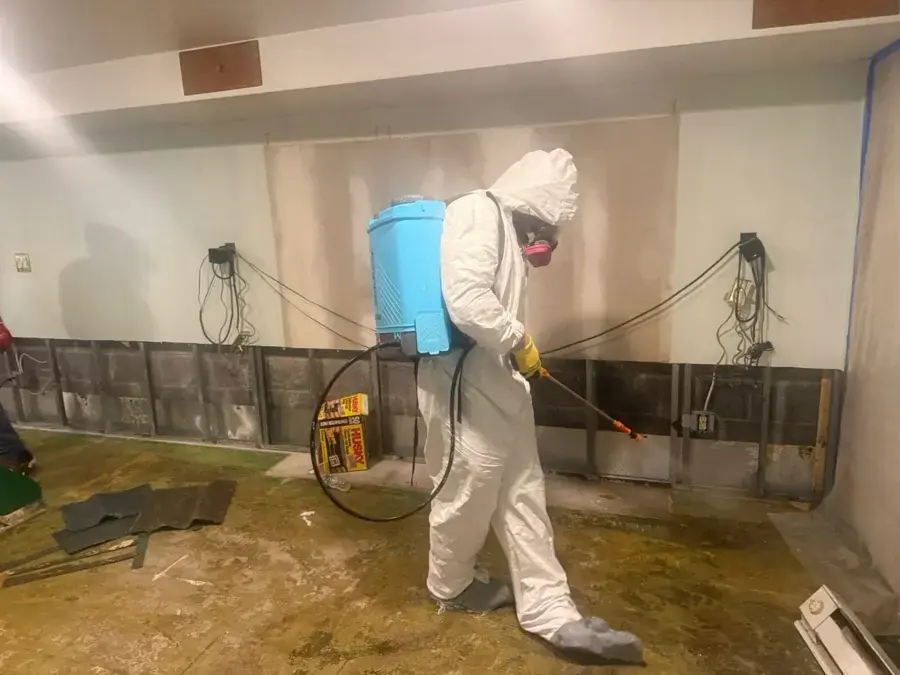
Sewage in a basement is a health problem before it is a cleanup problem. The water carries bacteria from the drain, so carpet, pad, drywall and insulation it touched are removed instead of dried. The Champlin water damage pros work in protective suits behind plastic containment.
What does sewage backup cleanup cost in Champlin, MN?
Sewage backup cleanup in Champlin usually costs $2,500 to $4,500 for a small backup on bare concrete, $4,500 to $12,000 for a finished basement, and $12,000 and up for a large or repeat backup.
Small backup, concrete
$2,500 to $4,500
- Backup at the floor drain
- Removal, disinfection, drying
- Few porous materials
Finished basement
$4,500 to $12,000
- Carpet, pad and drywall cut out
- Containment with air scrubbing
- Antimicrobial, then drying
Large or repeat backup
$12,000 and up
- Sewage spread across the level
- Contents lost, full tear-out
- Long drying and re-checks
Ranges are typical, not a quote: the water category, square footage, material class and how fast drying started move the number most. Run the water damage cost calculator for a closer range.
What the city asks residents to do
For a sewer backup in a basement, the city asks residents to call the Utilities Department on weekdays and Hennepin County Dispatch after hours. The report matters because the blockage may sit in the public sewer main rather than inside the house.
- Stop running sinks, showers, washers and dishwashers
- Keep children and pets out of the basement
- Photograph the backup before anything is moved
- Tell the Utilities Department if a sewer service pipe was just cleaned
That last step has a reason. When a service pipe is cleaned or roots are cut, the department can inspect the main for debris left by the work.
Where Champlin's sewage travels
Apart from one area, Champlin's sewage flows through the Metropolitan Council Environmental Services CAB Interceptor, built in 1985, to the Metropolitan Wastewater Treatment Plant in St. Paul. The Charest-Woodlawn Addition is the one area that drains to the Maple Grove system.
The city sewer plan counts 2,552 manholes and 8 lift stations, and the Utilities Department maintains the sewer, storm sewer and lift stations. From December 2024 to February 2025, Hydro-Klean restored parts of the public sanitary sewer main with cured-in-place pipe, without excavation.
How sewage is removed from a finished basement
Plastic sheeting seals the work area, and a HEPA air scrubber runs so airborne particles stay out of the rest of the house. Sludge is shoveled out first, then affected carpet, pad and the lower drywall are cut away and bagged.
Hard surfaces are washed, treated with an antimicrobial and then dried with dehumidifiers and air movers. Framing that stayed in place is cleaned and tested with a moisture meter before any new drywall goes up.
Why sewage is never just dried
Drying removes water but not bacteria, so Category 3 material cannot be dried in place and saved. Carpet, pad, insulation and soft drywall are the usual discards, while concrete, block and most framing can be cleaned and kept.
Insurance treats a sewer backup differently from a burst pipe, and some policies need an endorsement, so the insurer should hear about it early. When groundwater came in with it, the loss overlaps with sump pump failure cleanup in Champlin.
The same containment steps apply to a Champlin basement flooding cleanup when drain water is involved.