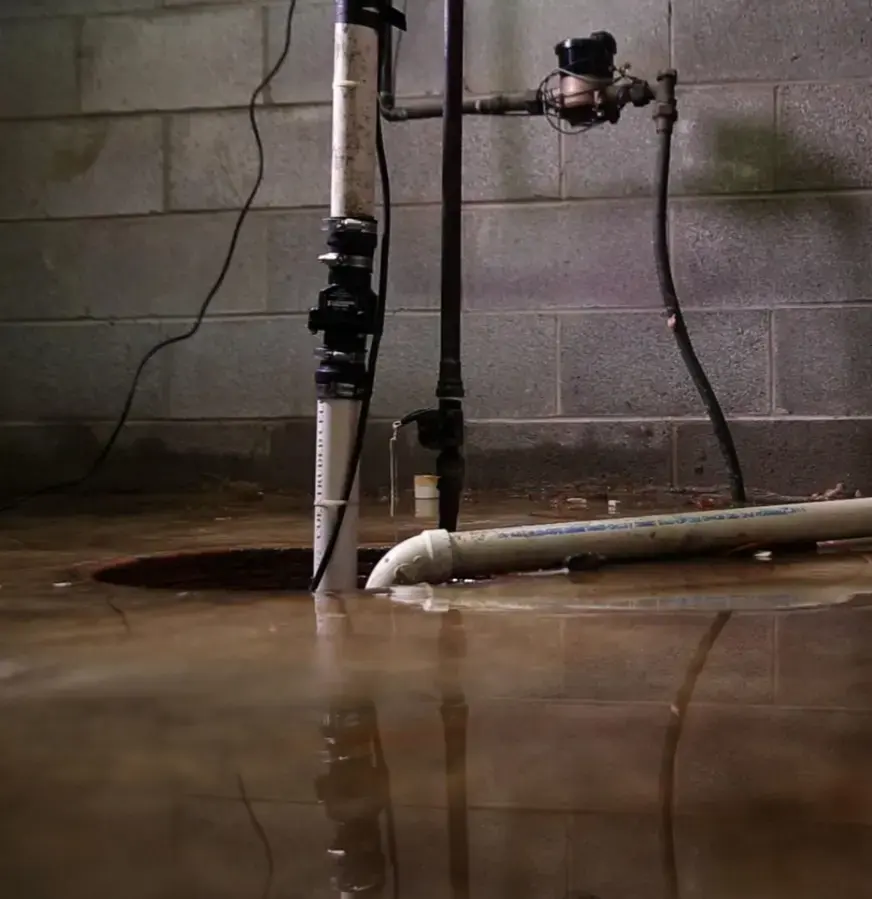
First steps for sump pump failure cleanup in Champlin
- 1
Cut power near the water
Turn off the basement breakers before stepping into standing water, and unplug the pump only from a dry spot.
- 2
Check the pit
From a dry spot, look at the float, the discharge pipe and the outlet. A tripped breaker or frozen pipe is a quick clue to share with the crew.
- 3
Protect what is dry
Lift boxes, rugs and electronics off the floor and open doors to the wet area. Do not run a wet vac on standing water near outlets.
- 4
Photograph and call
Photograph the pit, the high-water mark on the walls and each damaged item, then call so pump-out can begin before the floor soaks further.
A sump pump has one job, and it tends to fail when the job is hardest: during a storm outage, after a long soaking rain or when a float switch jams. The Hennepin County Soil Survey lists high ground water levels among the building limits in parts of Champlin, so one dead pump can put water across an entire basement.
What does sump pump failure cleanup cost in Champlin, MN?
Sump pump failure cleanup in Champlin usually runs $1,200 to $2,800 for shallow overflow, $2,800 to $7,500 once carpet and drywall are reached, and $7,500 and up when a floor drain backs up too.
Water near the pit
$1,200 to $2,800
- Bare concrete floor, little carpet
- Pump-out, silt removal, drying
- Mostly Category 1 or 2 water
Finished basement
$2,800 to $7,500
- Carpet, pad and drywall wet
- Removal, then structural drying
- Moisture map kept for the claim
Deep or mixed water
$7,500 and up
- Floor drain backed up as well
- Category 3 handling required
- Wider tear-out, longer drying
Ranges are typical, not a quote: the water category, square footage, material class and how fast drying started move the number most. Run the water damage cost calculator for a closer range.
How a sump pit fails
Groundwater does not arrive in one rush. The pit fills, the pump falls behind, and the water climbs over the rim and across the floor. Four breakdowns cause most of it:
- A tripped breaker or storm outage stops the motor
- A float switch jams against the pit wall
- A clogged or frozen discharge pipe sends water back down
- An undersized pump falls behind a long, heavy inflow
After the floor is wet, the question is how far the water traveled. Carpet edges, bottom plates and the base of finished walls wick moisture upward, so the crew probes them before calling the room safe.
Heavy rain is not the only trigger. A slow trickle from a stuck pump can run for days while nobody is home, which turns a clean water loss into a Category 2 one.
Sump water and the city sewer
The city sewer plan names sump pumps, foundation drains and rain leaders among the ways clearwater enters the sanitary sewer. In a heavy storm the pit and the sewer can both run high, so a pit failure sometimes comes with a floor drain problem.
That matters because the two waters are handled differently. Groundwater from the pit is extracted and dried. If sewage came up through the drain, the job becomes sewage backup cleanup in Champlin, with containment and disinfection.
Finished basements and what comes out
On bare concrete the job is mostly pumping, shoveling silt and drying. In a finished basement the crew checks carpet, pad, baseboards and drywall one layer at a time, saving what readings show is still dry and removing what is not.
Carpet pad is the usual loss because it holds water against the floor, while drywall often needs only a short flood cut at the base. Each cut is photographed, which keeps the claim file tied to real measurements.
Items that sat in water, such as cardboard boxes and particleboard shelving, are sorted into keep, clean and discard piles before anything leaves the house. Photos of the discard pile support the contents claim.
Drying a basement over high ground water
Concrete and block walls drink water slowly and give it back slowly. LGR dehumidifiers and air movers work for days, and a basement in an area of high ground water may need extra readings to be sure the walls are not rewetting from outside.
Before the equipment leaves, the pump is tested and the pit is checked. The city's 2026 fee schedule lists a plumbing fee for sumps, so a plumber can confirm what applies to a replacement.
Dry-out ends with numbers, not a guess. Floor, block and framing readings are recorded at each visit, and equipment is pulled only after they match the dry reference. The Champlin basement flooding cleanup follows the same checks.