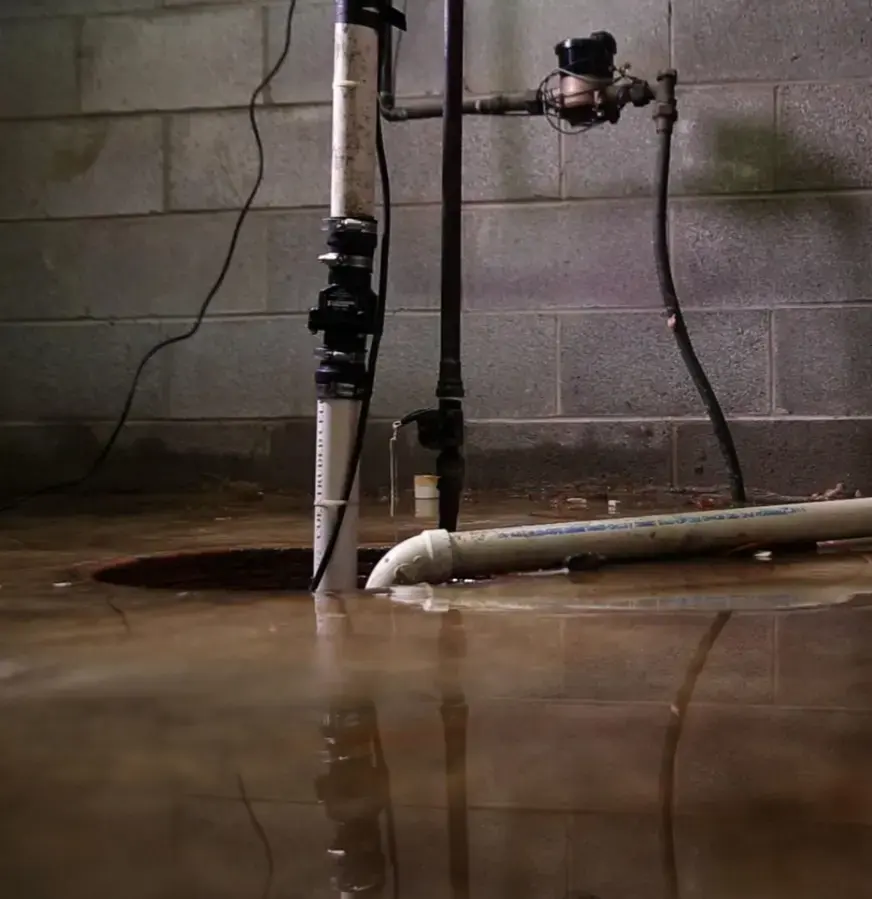
First steps for sump pump failure cleanup in Coon Rapids
- 1
Look at the pit
From a dry spot, check whether the pump is running. If it is silent, check the breaker and cord, and never reach into water near live power.
- 2
Protect what is dry
Move boxes, rugs and furniture onto blocks or higher shelves, and keep appliances and the electrical panel out of any standing water.
- 3
Photograph the loss
Take pictures of the pit, the water level and wet belongings, and write down roughly when the pump stopped.
- 4
Call for pump-out
The crew pumps out the basement, washes the silt from the slab and dries the structure while a plumber looks after the pump.
A sump pump is a single point of failure. A tripped breaker, a stuck float, a clogged intake or a motor that simply wore out can leave the pit to fill and spill onto the slab. The water that reaches the floor is often gritty, and it leaves silt behind that has to be washed up before the slab can dry.
Most failures happen during the same storms and thaws that fill the pit fastest, which is why the first sign is often water already across the floor.
What does sump pump failure cleanup cost in Coon Rapids, MN?
A shallow overflow on bare concrete usually runs $1,200 to $2,800. Water that reaches carpet, pad and drywall moves the job to $2,800 to $7,500, and deep or mixed water starts at $7,500.
Small overflow, bare slab
$1,200 to $2,800
- Water near the pit only
- Pump-out, silt cleanup and drying
- Usually Category 1 or 2
Carpeted or finished level
$2,800 to $7,500
- Carpet, pad and drywall reached
- Removal and structural drying
- Moisture map for the file
Deep water or mixed sources
$7,500 and up
- Floor drain backed up as well
- Category 3 handling
- Larger tear-out and drying
Ranges are typical, not a quote: the water category, square footage, material class and how fast drying started move the number most. Run the water damage cost calculator for a closer range.
Why pits work hard on the sand plain
The Coon Creek Watershed District describes the Anoka Sand Plain as flat land with historically high water tables. In ground like that, a pit can fill more often and more quickly, so the pump that runs for long stretches is the one most likely to wear out when it is needed most.
A pump has a limited life, and a battery backup or a second pump gives the pit a way to keep working through a storm outage.
What the city says about sump water
Chapter 13-700 of the City Code bars storm water, surface water, subsurface drainage, cooling water and unpolluted industrial process water from any sanitary sewer, and the city inspects for violations when a water meter is changed.
The 2040 plan lists foundation drains and sump pumps tied into sanitary sewer service as a challenge, and says the city will consider penalties for owners who send sump pump water there.
The restoration team does not inspect plumbing connections. A pump that discharges into a drain inside the house is noted in the file, so the owner can ask a plumber about it.
What gets cleaned and what gets removed
Sump water is usually the mildest water a basement sees, but it is rarely spotless.
- Silt and grit are washed from the slab, corners and the base of the walls
- Carpet and pad that sat in the water are checked, then lifted or removed
- Bottom drywall is probed with a moisture meter before any cut is made
- Boxes and furniture that touched the water are sorted dry from wet
Hard floors and block walls are washed and treated, then dried with air movers, because silt left behind can hold moisture against the concrete.
If the floor drain backed up as well, the water is treated as Category 3 and the job moves to the sewage backup cleanup process.
After the pump-out
A plumber or pump specialist replaces or repairs the pump. Meanwhile, air movers and dehumidifiers dry the slab and any wet walls, and the daily readings show when the basement can be closed back up. Basement flooding cleanup in Coon Rapids follows the same drying record.
Photos of the pit, the discharge pipe and the damage, taken before cleanup, give the adjuster a clear starting point, and the daily readings keep the file current.