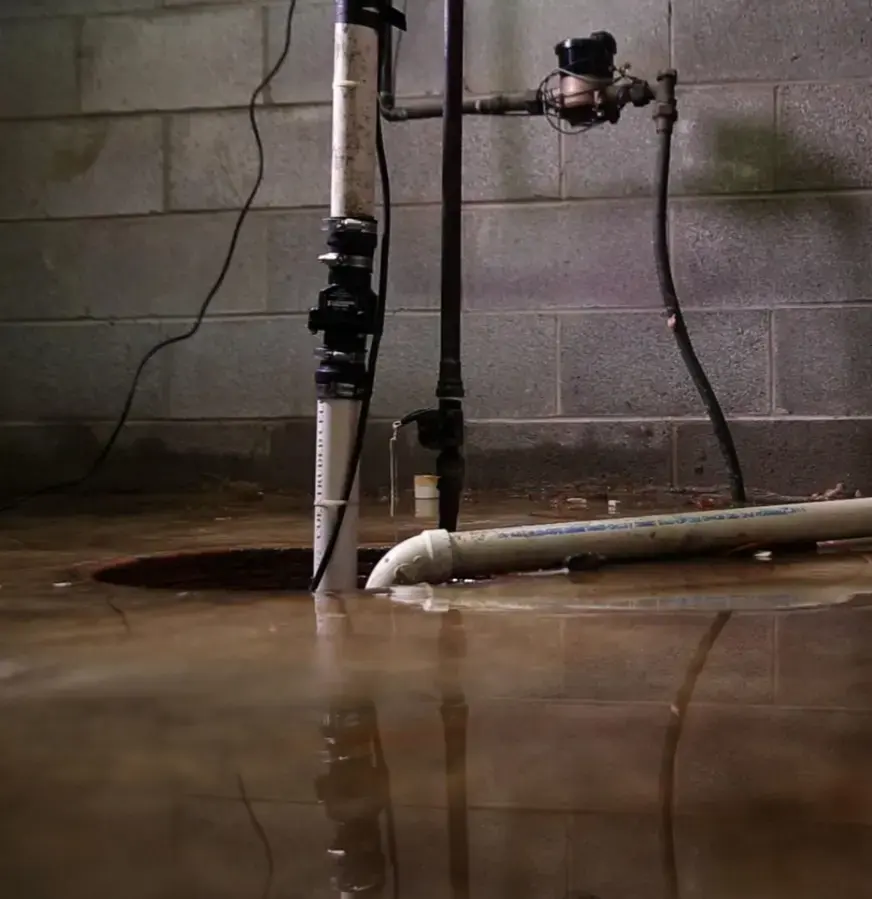
First steps for sump pump failure cleanup in Dayton
- 1
Check the pit
Look at the pit and the float without touching any wiring, and note whether the pump is silent, running or humming.
- 2
Stay out of the water
Standing water near outlets, a furnace or a panel can carry current, so keep out until power to the area is off.
- 3
Move what is dry
Lift boxes, electronics and papers to a higher level, and set furniture legs on blocks or foil.
- 4
Document the failure
Photograph the pit, the pump, the discharge pipe and the waterline, and keep any failed part for the adjuster.
A sump pump has one job, and the day it fails is usually the day the pit needs it most. The response team treats a failure as two problems: the water already on the floor and whatever kept the pump from moving it. Extraction and cleanup come first, then drying, with a clear note of the cause for the claim file. Newer homes and older ones share the problem, because every pit depends on power, a working float and a clear discharge path.
What does sump pump failure cleanup cost in Dayton, MN?
Sump pump failure cleanup in Dayton often runs $1,200 to $2,800 for a shallow overflow on bare concrete and $2,800 to $7,500 once carpet and drywall are wet, and deeper or mixed water from $7,500.
Shallow overflow
$1,200 to $2,800
- Water around the pit only
- Pump-out, silt removal, drying
- Clean to lightly gray water
Finished basement
$2,800 to $7,500
- Carpet, pad and drywall reached
- Removal and structural drying
- Moisture map for the claim
Deep or mixed water
$7,500 and up
- Floor drain backed up as well
- Category 3 handling
- Wider tear-out and drying
Ranges are typical, not a quote: the water category, square footage, material class and how fast drying started move the number most. Run the water damage cost calculator for a closer range.
Why sump pumps fail
Most failures trace back to a short list of causes, and a storm tends to expose several at once.
- A power outage during the storm that filled the pit
- A float switch stuck against the pit wall, or a clogged inlet screen
- An old motor that finally burns out under a long run
- A discharge pipe that is blocked, disconnected or frozen
Silt carried in with the water settles on the slab and in carpet fibers, which is why a simple pump-out is rarely the end of the job. The crew removes the sediment, then washes and dries the floor. Floor drains and the pit can share a low corner, so the crew checks both for backflow before drying starts.
Where Dayton's sump rules come in
City code bars roof, surface, sump pump and footing tile water from the sanitary sewer, so discharge has to leave the house through a pipe that runs outside. New dwellings with sump pumps permitted after January 1, 2009 must have that outside discharge in place before a certificate of occupancy is issued. The rule keeps sump water from newer homes out of the sewer from the start.
The city's sewer plan goes further and lists non-compliant sump connections among the sources of extra water entering the sewer system. A pump in trouble therefore usually has one place to send its water, outdoors, and the basement takes the overflow when that path is blocked. The plan also names floor drains of flooded structures as an inflow path, so a flooded basement matters beyond the house itself.
Cleanup after a pit overflow
Water from a sump pit is often clean or only mildly dirty, but it carries silt and can pick up contamination as it crosses the floor. Carpet and pad that sat in it are usually removed, while drywall is cut back only where meters show water above the baseboard. Gray or contaminated water changes that sorting, and any sign of sewage sends the job to Category 3 handling.
The tech who does the walkthrough records where the water entered and how high it rose, then maps moisture through the lower walls. That map decides how much comes out and where the dehumidifiers go. The pit depth and the discharge route are noted for the plumber as well.
After the pump is fixed
A plumber or pump installer repairs or replaces the equipment, and the drying team keeps working in parallel so the basement does not wait on the repair.
A battery backup and a tested discharge path make a repeat less likely. Wider damage is covered under basement flooding cleanup and water extraction.