First steps for sewage backup cleanup in Ramsey
- 1
Keep everyone out
Keep children, pets and everyone else out of the affected area, and never use a household vacuum on sewage or wade through the water.
- 2
Stop using drains
Stop running water, flushing toilets and using washers, because every fixture in the house may feed the same blocked drain.
- 3
Report the backup
Tell the city's Utilities Department on a weekday, or Anoka County Central Dispatch after hours, so the city can check its mains.
- 4
Photograph and call
Photograph the water and affected items before cleanup, notify your own insurer, then call the restoration team for containment and removal.
A sewer backup is a health problem first and a cleanup job second. In Ramsey the owner maintains the sewer pipe from the city main to the home, while the city wants to hear about the backup and inspect its own mains. The restoration team handles everything inside the house.
What does sewage backup cleanup cost in Ramsey, MN?
A small backup on bare concrete costs between $2,500 and $4,500. A finished basement runs $4,500 through $12,000, and a large or repeated backup starts at $12,000 once contents and full tear-out are involved.
Small backup on concrete
$2,500 to $4,500
- Limited to the floor drain area
- Removal and disinfection
- Few porous finishes
Finished basement
$4,500 to $12,000
- Carpet and drywall bagged out
- Sealed work area, HEPA filtered air
- Disinfect, then dry
Large or repeated backup
$12,000 and up
- Contamination across the whole level
- Contents and full demolition
- Longer drying with rechecks
Ranges are typical, not a quote: the water category, square footage, material class and how fast drying started move the number most. Run the water damage cost calculator for a closer range.
What the city asks residents to do
Weekday reports go to the city's Utilities Department, and after-hours or weekend reports go to Anoka County Central Dispatch. The city wants to check its sewer mains even when the blockage sits in a private pipe, so a report is worth making either way.
- Clean up promptly, using a commercial cleanup service
- Tell your own insurer about the backup
- List damaged items, with photos and receipts
- The city says it reports the backup to the League of Minnesota Cities Insurance Trust and that an adjuster will contact the resident
Those are the city's own steps. The restoration team leaves the city's process and any claim decisions to the parties involved. It removes contaminated material, disinfects and dries, and records the work so everyone sees the same facts.
Black water handling inside the home
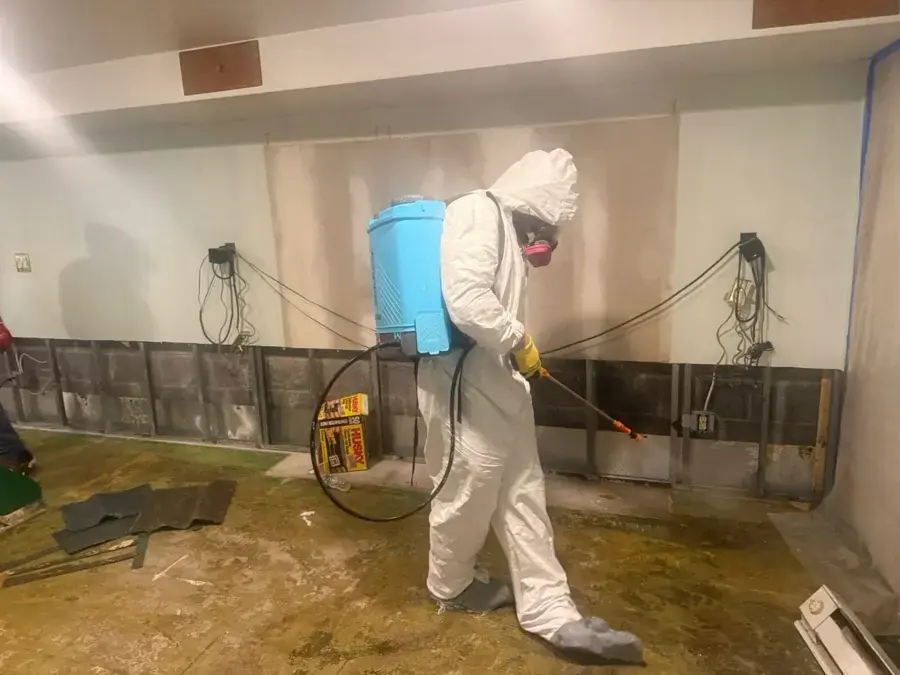
Sewage is Category 3, so the crew wears protective suits, gloves and respirators, seals the area with poly sheeting and runs air scrubbers with HEPA filtration. Carpet, pad, insulation and drywall that touched the water are bagged and removed, because porous material cannot be made safe in place.
Concrete, block and framing that stay are cleaned, treated with an antimicrobial and left to dry under dehumidifiers and air movers. Contents are sorted: hard items can often be cleaned, while soft items that sat in the water usually cannot. Photographs of each discarded item go into the file.
City sewer or septic
Backups often show first at the lowest drain, usually a basement floor drain, shower or toilet. Not every Ramsey home sits on city sewer. The city counts about 4,200 individual septic systems, and a septic problem follows a different path than a city main backup. Ramsey's own system has ten lift stations and more than 1,500 manholes, and Metropolitan Council Environmental Services treats the wastewater.
Drying and the claim file
Once cleaning is done, structural drying starts with a moisture map, and readings are logged daily until the structure matches an unaffected reference. Photos, material lists and equipment logs go into one file. If water also came in from a failed pump, see sump pump failure cleanup.