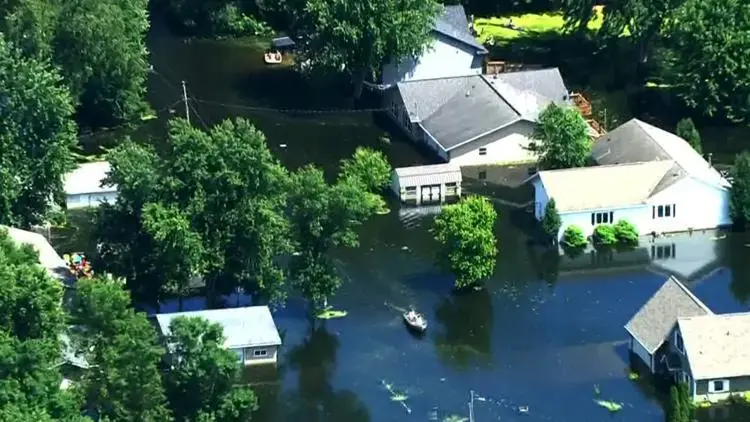
First steps for river and spring flood cleanup in Champlin
- 1
Stay out and stay dry
Do not wade into flood water. Switch off power only from a dry spot and keep children and pets away from contaminated water.
- 2
Check the river data
Watch the USGS and National Weather Service river pages and the city's text or email alerts before returning to a wet basement.
- 3
Protect belongings
Carry dry items upstairs, wear boots and gloves, and bag soaked clothing and bedding separately for washing or disposal.
- 4
Record and call
Photograph water marks, damaged items and the surrounding yard, then call so mud-out and pumping can begin.
Flood water is not rain water. It carries mud, runoff and whatever the river or creek picked up on the way, so it is treated as contaminated from the first inch. The Champlin water damage pros handle it in sequence: remove the mud, wash every surface, disinfect, then dry.
What does river and spring flood cleanup cost in Champlin, MN?
River and spring flood cleanup in Champlin usually costs $4,000 to $8,000 for an unfinished basement, $8,000 to $20,000 for a finished one, and $20,000 and up when water reaches the floor above.
Unfinished basement
$4,000 to $8,000
- Inches of water on concrete
- Mud-out, washing, disinfecting
- Floor and wall drying
Finished basement
$8,000 to $20,000
- Carpet, drywall, insulation out
- Category 3 cleaning throughout
- Extended structural drying
Lower floor reached
$20,000 and up
- Water above the basement
- Two levels of removal
- Contents and full drying
Ranges are typical, not a quote: the water category, square footage, material class and how fast drying started move the number most. Run the water damage cost calculator for a closer range.
Champlin's two flood areas
The city plan names two flood areas. One follows Elm Creek, where a floodway and flood fringe extend south of the channel toward the river. The other is small areas along the Mississippi River, mostly in its northwest stretch.
- The city rebuilt the Elm Creek Dam in 2016
- A FEMA map revision took effect on February 16, 2018
- About 60 acres left the Elm Creek floodplain
- A USGS gauge on the Champlin-Anoka bridge reports river data
The city says the FEMA letter is the proof owners give lenders and insurers that a property may no longer be in the 1 percent annual chance floodplain. That is a paperwork matter for owners, lenders and insurers, while the cleanup follows the same contaminated-water steps either way.
What recent river events did and did not do
In April 2023 the Mississippi River spilled its banks in Champlin, and a riverfront park near the Elm Creek Dam stayed underwater for several days, according to CBS Minnesota. In late June 2024 the high, fast river carried heavy debris past the Mississippi Crossings docks, and the city added staff to keep them clear.
Those reports describe a park and docks, not flooded homes, and CCX Media found much milder effects in the northwest suburbs in June 2024. They show how fast the river can run, which is why watching the gauge and the city's text and email water alerts is useful.
Mud, silt and Category 3 cleaning
River water leaves silt in carpet, behind baseboards and inside block cores. The crew shovels and washes it out first, because drying over a film of mud only locks the contamination in place.
Carpet, pad, insulation and drywall that sat in flood water are removed, while concrete, block and sound framing are cleaned, treated with antimicrobial and dried. Contents are sorted into clean, restore and discard.
Insurance and flood records
Flood is usually separate from a standard homeowners policy, so the insurer should be asked early whether a flood policy or endorsement applies. Dated photos, moisture readings and a removal log make either kind of claim easier to document.
Where river water also pushed sewage up a drain, the job overlaps with sewage backup cleanup in Champlin, and a wet basement is handled like Champlin basement flooding.