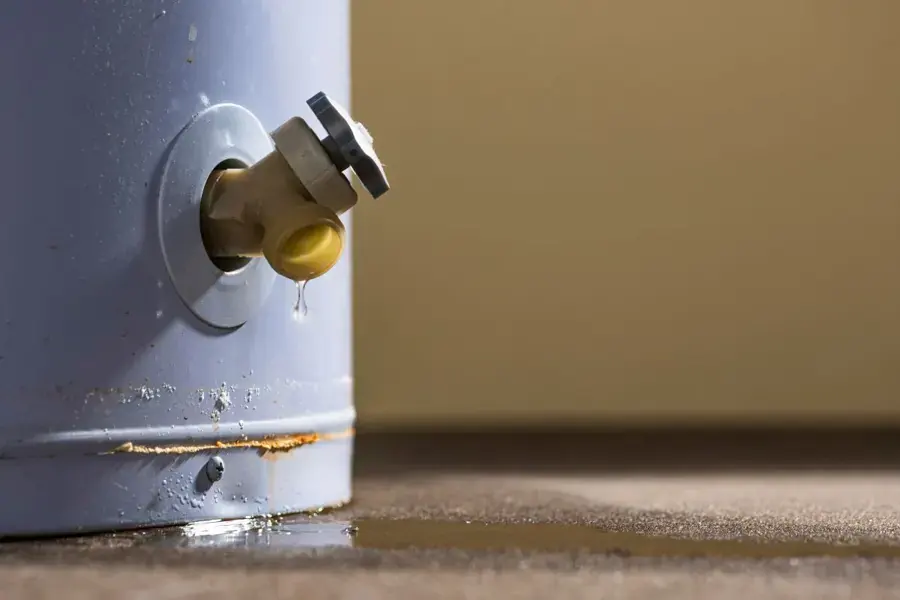
First steps for water heater leak cleanup in Coon Rapids
- 1
Shut the supply
Close the cold water valve above the tank, and turn off the gas or the breaker so the heater is not running dry.
- 2
Stay out of hot water
Water from the tank or the relief valve can be hot, so keep children and pets away and wear shoes with grip.
- 3
Record the damage
Photograph the tank, the floor and any wet walls, then lift boxes and rugs off the wet area.
- 4
Call for extraction
The crew extracts the water, checks the wall base and nearby carpet with a moisture meter and sets drying equipment.
A water heater leak is either a slow weep that soaks a subfloor for weeks or a sudden failure that empties the tank across the floor. Either way the water starts clean, and it turns into a bigger job the longer it sits in carpet, drywall and bottom plates.
Gas and electric units both need their fuel or power shut off before anyone works near the tank, because a dry-fired element or a running burner can fail.
What does water heater leak cleanup cost in Coon Rapids, MN?
A leak that stays in the utility room usually runs $1,000 to $2,200. Water that reaches carpet and finished rooms moves the job to $2,200 to $5,500, and a leak that ran for days starts at $5,500.
Contained in the utility room
$1,000 to $2,200
- Water on concrete near the tank
- Extraction and floor drying
- Clean Category 1 water
Reached finished rooms
$2,200 to $5,500
- Wet carpet, pad and bottom plates
- Cuts only where readings call
- Drying across the whole level
Weeks of slow leaking
$5,500 and up
- Leak ran unnoticed for days
- Category 2 handling
- More removal, longer drying
Ranges are typical, not a quote: the water category, square footage, material class and how fast drying started move the number most. Run the water damage cost calculator for a closer range.
How a tank leak spreads
Water from a failed tank heads for the lowest spot and the first opening it finds. On a concrete floor it spreads thin and wide, and under a wall it soaks the bottom plate and the back of the drywall before anyone sees a stain.
- A corroded tank that finally splits at a seam
- A drain valve or fitting that drips until the floor is soaked
- A relief valve that discharges and is never noticed
- A supply connector that loosens or cracks at the top of the tank
Utility rooms, walls and carpet
A tank in a Coon Rapids townhome or apartment may sit a wall away from a neighbor or a floor above another unit, while a tank in a single family home usually has only its own rooms to soak.
Hot water adds a wrinkle. Water straight from a tank can be hot, so the area is approached carefully, and warm moisture drives humidity up fast in a closed utility room.
What the drying includes
Extractors remove the standing water first, then the team checks the floor, the wall base, any carpet and the drywall behind the tank with a moisture meter. Carpet over a concrete slab is often lifted and dried, and bottom drywall is cut only where the readings call for it.
Stored items matter too. Cardboard boxes and paper wick water upward, so they are sorted and moved before the floor is dried.
Air movers and a dehumidifier then dry the utility room and the rooms next to it under the structural drying plan, and the log shows when each area reaches its dry goal.
After the cleanup: the tank itself
A plumber or the heater's installer repairs or replaces the tank. The drying team stays out of that work and times the equipment around it, and appliance and water softener leaks in Coon Rapids are handled with the same readings and records.