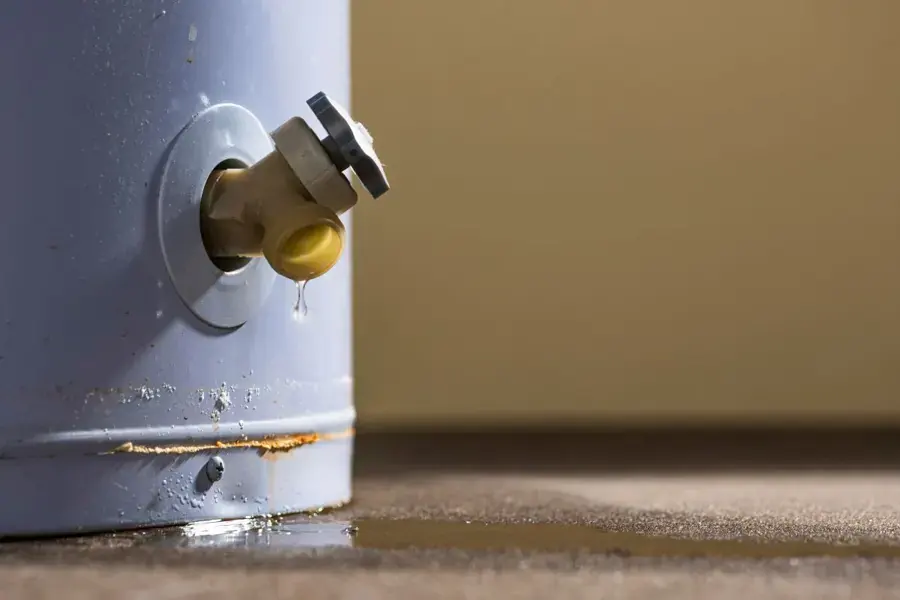
First steps for water heater leak cleanup in Andover
- 1
Close the inlet
The cold water inlet to the tank is closed and the leak source is identified, so the water stops growing before extraction begins.
- 2
Extract the water
Portable and truck-mounted extractors clear the slab and flooring, and stored boxes are moved to a dry area and sorted.
- 3
Probe the walls
Baseboards come off and a moisture meter checks the drywall and bottom plates, so cuts are made only where water has wicked.
- 4
Dry and record
Drying equipment stays until every reading matches a dry reference, and the photos and logs go into the claim file.
A water heater holds dozens of gallons under constant pressure, so a failing tank, a leaking drain valve or a loose connection can put water on the floor for hours or days before it is noticed. The cleanup depends on how long it ran and what was sitting nearby.
What does water heater leak cleanup cost in Andover, MN?
Water kept to the utility room lands between $1,000 and $2,200, water that spread into finished rooms between $2,200 and $5,500, and a leak that went unnoticed for days begins at $5,500 and rises with the damage.
Contained to the utility room
$1,000 to $2,200
- Puddle on the slab by the tank
- Extraction, then fan drying
- Fresh Category 1 water
Spread to finished rooms
$2,200 to $5,500
- Wet carpet and lower walls
- Cuts only where readings demand
- Basement-wide drying
Slow leak that ran for days
$5,500 and up
- Hidden by stored items
- Category 2 water handling
- More removal, longer drying
Ranges are typical, not a quote: the water category, square footage, material class and how fast drying started move the number most. Run the water damage cost calculator for a closer range.
Where tank leaks spread
In a basement or utility room the water runs to the floor drain or the lowest corner, soaks the bottom of the walls and wicks into boxes, flooring and anything else on the slab. Extraction comes before anything gets pulled apart, the same order used for water heater leak cleanup in Anoka.
- A rusted or cracked tank that seeps at the base
- A dripping drain valve or relief valve
- A loose or corroded supply connection on top
- A pan or drain that is blocked and overflows
A slow leak is often found by a damp spot on the floor or a rusty ring under the tank. Water that has run for days is treated as Category 2 because it has been sitting in wet materials.
Extraction and drying steps
The cold water inlet to the tank is closed first, then the crew pulls the water off the slab and any flooring. Baseboards come off, a moisture meter probes the wet drywall, and the lowest section is cut out only if the readings demand it.
Stored boxes, cardboard and carpet remnants are moved to a dry area and sorted. Fans and a dehumidifier then work on the floor, the bottom plates and the base of the walls until the readings match a dry spot elsewhere in the house.
Permits and replacing the tank
Andover requires a plumbing permit to replace a water heater. That belongs to the plumber and the new tank, while the drying team handles the water that already escaped, so neither task waits on the other.
If the failure also involved a water softener that is being replaced, the same permit rule applies to it. See appliance and water softener leaks in Andover for that side.
After the leak is dry
Readings repeat until the slab, plates and lower drywall match the dry reference, and the file gets photos, readings and receipts. The water damage cost calculator gives a first range for a leak like this one.