First steps for appliance and water softener leaks in Andover
- 1
Stop the leak
The appliance supply is shut off at its valve, or the main valve is closed, so the source is controlled before cleanup starts.
- 2
Extract and lift
Extractors clear floors and cabinet bases, toe kicks are pulled, and flooring is lifted or probed to see where water traveled.
- 3
Read and open
Moisture readings on cabinets, subfloor and the ceiling below decide what is opened, replaced or dried in place.
- 4
Dry and document
Directed air and dehumidification continue until the cabinet bases, subfloor and floor match the dry reference, with logs kept for the file.
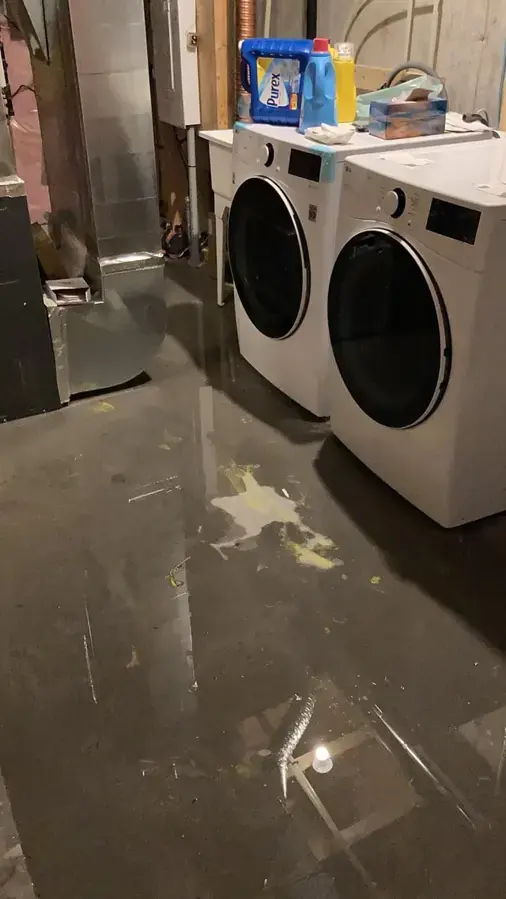
Appliance leaks are quiet. A washer hose weeps behind the machine, an ice maker supply hose drips inside a wall and a softener drain overflows onto the slab, and the damage is often found by smell or by a stain below. The water is clean when it starts, but it turns gray as it sits in flooring and cabinet bases.
What does appliance and water softener leaks cost in Andover, MN?
A hard floor caught fresh stays between $800 and $1,800, water under cabinets or flooring lands between $1,800 and $5,000, and a slow leak or one that reached the level below starts at $5,000 and moves up from there.
Caught fresh, hard floor
$800 to $1,800
- Tile, vinyl or sealed concrete
- Extraction, then fast drying
- Clean or gray source
Water under cabinets
$1,800 to $5,000
- Wet cabinet bases and subfloor
- Toe kicks removed for airflow
- Floor covering tested first
Slow leak or two levels
$5,000 and up
- Ceiling below also wet
- Swollen cabinets or flooring replaced
- Longer equipment run
Ranges are typical, not a quote: the water category, square footage, material class and how fast drying started move the number most. Run the water damage cost calculator for a closer range.
Where appliance water goes
Water from a kitchen or laundry leak runs under cabinet bases, across hard flooring and down through the subfloor to the ceiling below. Toe kicks are pulled and the flooring is probed first, since the surface can look dry while the layers below stay wet.
- Washer supply hoses that bulge, crack or loosen
- Dishwasher inlet, drain hose and door seal leaks
- Ice maker supply tubing behind a refrigerator
- Softener drain hoses, brine tanks and fittings
Andover's city water averages 13 grains of hardness, and homes that treat it with a softener have one more set of fittings, a drain hose and a brine tank where water can escape.
Drying cabinets and floors
Cabinet bases and the toe-kick void are dried with small directed air and a dehumidifier, and flooring that is glued down is read before it is judged. Tile and vinyl over a dry subfloor usually stay; laminate and engineered boards that have swollen are replaced.
If water reached the basement ceiling below, the job becomes a two-level dry-out: the ceiling is probed, insulation is checked, and openings are cut only where the readings and any sag demand them.
Permits and replacements
Andover requires a plumbing permit for water softener replacement, along with water heaters and irrigation backflow preventers. The permit belongs to the plumbing work, so drying and cleanup can begin the moment the leak is stopped.
For a leaking tank, water heater leak cleanup in Andover follows the same extraction and drying order.
Records and next steps
The file holds photos of the appliance and the wet areas, moisture readings, daily drying logs and receipts. The water damage cost calculator gives a first range for the repair side. For leaks elsewhere in the county, see appliance leak water damage in Anoka.