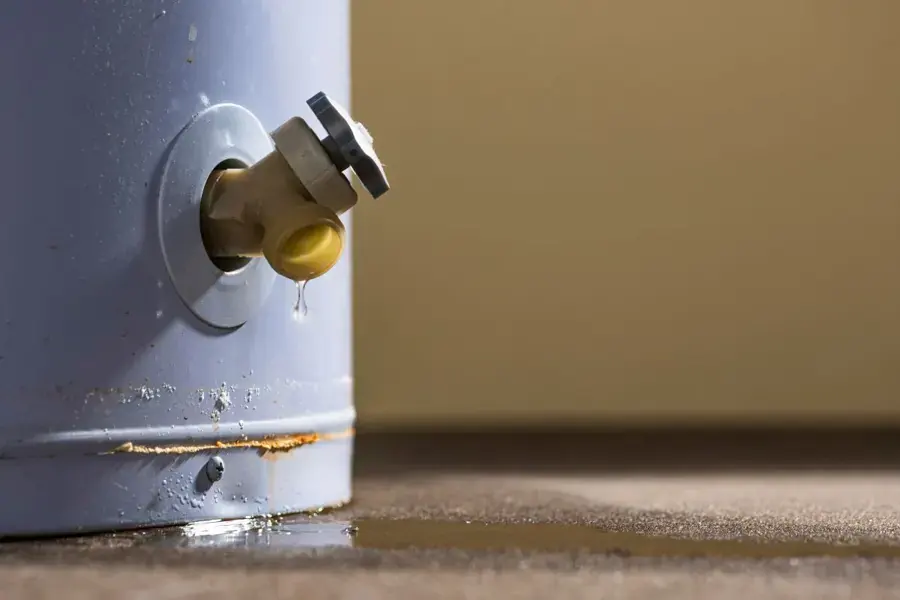
First steps for water heater leak cleanup in Champlin
- 1
Turn off fuel and power
Switch off the heater's breaker or close the gas valve, then close the cold water valve above the tank.
- 2
Do not touch hot water
Tank water can be scalding. Stay out of the puddle near the burner or element and keep children and pets away.
- 3
Move belongings
Lift rugs, boxes and electronics off wet floors, open doors to let air move and wipe up what you safely can with towels.
- 4
Take photos, then call
Photograph the tank, the failed fitting, the wet floor and damaged items, then call so extraction can begin.
A water heater leak starts quietly and then gets large. A tank that corrodes at the base, a loose connection or a stuck relief valve can release the water inside, plus whatever the cold supply keeps feeding in, across a utility room floor and into whatever sits next to it.
What does water heater leak cleanup cost in Champlin, MN?
Water heater leak cleanup in Champlin usually costs $1,000 to $2,200 when water stays in the utility room, $2,200 to $5,500 once it reaches finished rooms, and $5,500 and up for a leak that ran for days.
Utility room only
$1,000 to $2,200
- Water on bare concrete near the tank
- Extraction and floor drying
- Clean Category 1 water
Spread into finished rooms
$2,200 to $5,500
- Wet carpet, pad and wall bases
- Cuts only where readings call
- Drying through the whole level
Leak that ran for days
$5,500 and up
- Hidden water behind finishes
- Category 2 handling required
- Larger removal, longer drying
Ranges are typical, not a quote: the water category, square footage, material class and how fast drying started move the number most. Run the water damage cost calculator for a closer range.
What the city says about water heaters
The city's utilities page says discolored hot water may mean a water heater needs to be drained, which is a good reason to look at the tank's base and valves when the color changes. The city's 2026 fee schedule also lists a plumbing fee for water heaters. Early warning signs include:
- Rust-colored water at the hot tap
- Damp insulation or rust streaks at the tank base
- A drip pan that keeps refilling
- A hissing or dripping relief valve discharge pipe
Any of these deserves a plumber's look before the tank fails. After a failure the restoration crew starts where the plumber stops: extraction first, then drying.
Where the water goes from a utility room
When a tank sits on a concrete floor, the first water spreads across hard flooring and finds the nearest drain or low point. That is the best case, and extraction clears it quickly.
The harder case is a tank in a closet, a laundry room or an upper-floor unit. Water leaves through the wall base, soaks carpet, pad and bottom plates, and can drip through the ceiling below. In a townhome or apartment, that ceiling may belong to a neighbor.
Why slow leaks cost more
A drip pan that overflows or a weeping fitting can run for days before anyone sees a stain. Water that sits that long turns gray, soaks the bottom of the wall and may reach Category 2, which means wider removal.
Long-running leaks are also where mold turns up first, usually behind a baseboard or inside a cabinet beside the tank. The crew checks those hidden spots with a meter before closing out the dry-out.
Drying around the tank
Once the tank is shut off and drained, the team extracts the water, lifts wet carpet and pad, and opens the base of any wall the meter flags. Air movers and an LGR dehumidifier then dry the room.
Plumbers replace the tank, and the crew sets equipment around the new install. The same moisture checks used for an appliance leak in Champlin apply here, and a tank that fails in a basement can turn into basement flooding in Champlin when drains are slow.