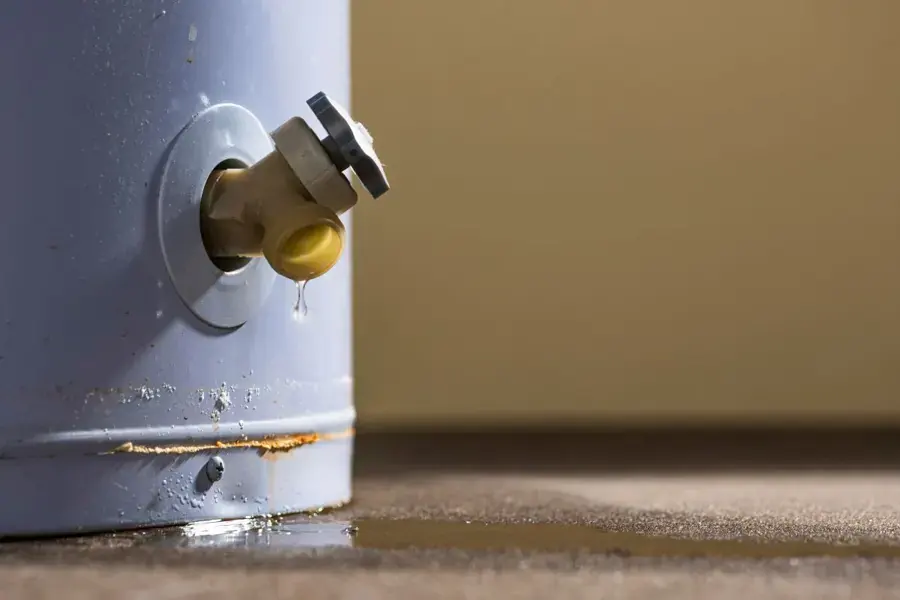
First steps for water heater leak cleanup in Dayton
- 1
Cut power and gas
Turn off the electric breaker or the gas valve to the heater, since a leaking tank near a live element or a burner is a hazard.
- 2
Close the supply valve
Close the cold water valve on top of the tank and, if it is safe, open a hot faucet nearby to relieve pressure.
- 3
Move what is stored
Lift boxes, paint cans and anything porous off the floor and pull rugs back from the wet area.
- 4
Photograph the tank
Photograph the tank, the fittings, the puddle and every wet item, and keep the old parts if the plumber removes them.
Water heater leaks usually start small, with a drip at a fitting or a slow weep from the tank, and they get noticed late because the heater sits in a corner. By then water may have moved under the wall plate and into the finished room beside the utility space, and the drying plan has to follow it. The first job is to learn how far it went.
What does water heater leak cleanup cost in Dayton, MN?
Water heater leak cleanup in Dayton usually runs $1,000 to $2,200 when the water stays in the utility room and $2,200 to $5,500 once it reaches finished rooms, with leaks that ran for days starting at $5,500 and rising from there.
Utility room only
$1,000 to $2,200
- Puddle on bare concrete
- Extraction and floor drying
- Clean supply water only
Into finished rooms
$2,200 to $5,500
- Carpet, pad and plates wet
- Flood cuts set by readings
- Drying across the whole basement
Long-running leak
$5,500 and up
- Leak ran for days unnoticed
- Category 2 handling of the water
- Larger removal and longer drying
Ranges are typical, not a quote: the water category, square footage, material class and how fast drying started move the number most. Run the water damage cost calculator for a closer range.
Where the water goes
Water from a tank spreads across the lowest point of the room, then looks for the edge of the slab or the base of a wall.
- Carpet and pad in a finished room next to the utility space
- Bottom plates and the lower part of the drywall
- Boxes, paint cans and holiday storage kept on the floor
- A floor drain or sump pit, which can carry the water away or back it up
A heater leak that has run for days is treated differently from a fresh one, because water that sits can pick up contamination and move into Category 2. Fresh tank water that is extracted early usually stays clean.
Spotting a slow leak
Some Dayton properties are on the city water system and some are on private wells. The city offers a web portal that sends alerts about potential leaks or unusual water use, which can flag a slow tank leak for customers on city water. Well homes have no such alert, so a damp floor is the first sign.
Either way, a rusty seam, a puddle that returns after mopping or a musty smell near the tank deserves attention before the floor is soaked. Catching it early keeps the repair small.
Cleanup in the utility room
The crew shuts off power and water to the heater, extracts the pooled water and checks the floor, plates and drywall with a moisture meter. Wet drywall near the floor is opened only as far as readings demand, and stored items are moved so the floor can dry.
Air movers and a dehumidifier then dry the room, while the tech who does the walkthrough logs readings. If the leak reached a finished basement, the work widens to basement flooding cleanup. Finished flooring is judged by readings.
After the tank is replaced
A plumber replaces or repairs the heater, and the drying team keeps its schedule separate so the repair does not interrupt drying. Equipment is placed so the plumber still has room to work.
Documentation for the insurer includes the moisture map, photos of the tank and its fittings and the drying logs. For wider spread see water extraction.