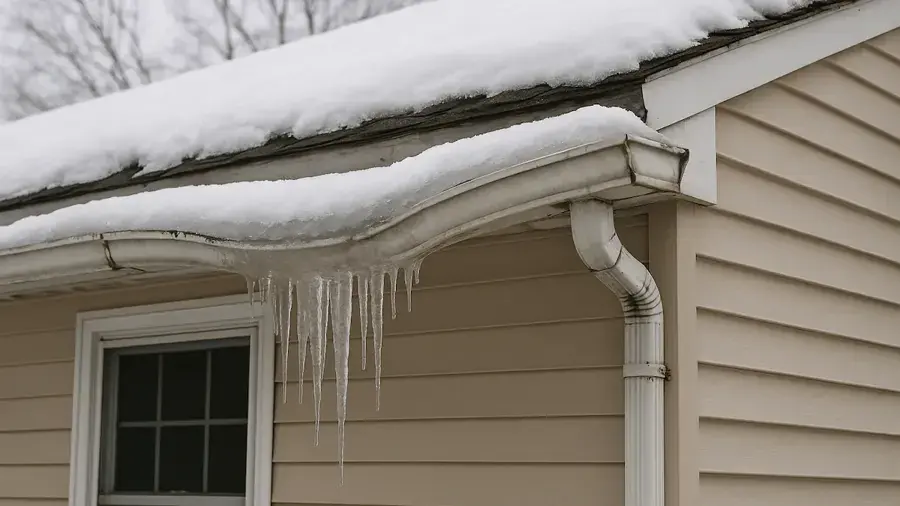
First steps for ice dam and roof leak water damage in Ramsey
- 1
Protect the room
Move furniture from under the stain, lay plastic over what cannot move and set a bucket under any drip.
- 2
Respect a sagging ceiling
If a ceiling sags with trapped water, stay clear of the spot and let the crew open it in a controlled way.
- 3
Stay off the roof
Do not climb onto an icy roof to chip at the dam. Leave roof work to a roofer and focus on keeping water out of the house.
- 4
Photograph the damage
Take pictures of the ceiling, the eaves and the attic insulation, and note when the stain first appeared.
An ice dam does its damage quietly. Heat escaping into the attic melts snow on the roof, the meltwater runs down and refreezes at the cold eaves, and the ice backs water up under the shingles. The first sign is often a stain on a ceiling near an exterior wall.
What does ice dam and roof leak water damage cost in Ramsey, MN?
One stained ceiling area costs between $1,000 and $2,500 to open and dry. When the attic and several ceilings are wet the range is $2,500 through $6,500, and water inside exterior walls starts at $6,500.
Single ceiling spot
$1,000 to $2,500
- Stain beside an exterior wall
- Small cut-out and drying
- Readings saved for the claim
Attic plus ceilings
$2,500 to $6,500
- Soaked insulation hauled out
- Several ceilings dried
- Dehumidifier upstairs
Water inside walls
$6,500 and up
- Exterior wall cavities wet
- Drywall and insulation removed
- Long structural drying
Ranges are typical, not a quote: the water category, square footage, material class and how fast drying started move the number most. Run the water damage cost calculator for a closer range.
What the water does inside
Water that gets past the roof deck soaks attic insulation first, then drips onto ceiling drywall or runs down inside the top of an exterior wall. Wet insulation loses its value and holds water against framing, so it usually has to come out.
- Ceiling stains or bubbles near exterior walls
- Wet or compressed insulation in the attic
- Water running inside the top of a wall
- Peeling paint or damp trim around windows
Heavy snow raises the odds. Anoka County logged 6 to 8 inches on February 2, 2016 and 4 to 8 inches on December 9, 2025, though those are county-wide numbers, not Ramsey readings, and any snow that sits on a warm roof can start the cycle.
Hail and wind leaks look different
Roof leaks that start after a storm follow another pattern. Hail up to 3.00 inches fell in Ramsey on May 25, 2008 and August 5, 2019, and stones that size can bruise or crack shingles and open a path for the next rain. The leak then shows up where the roof is damaged rather than along the eaves.
Either way the drying work is the same: find the wet materials, remove what cannot dry, and dry the rest. The roofer repairs the roof, and the restoration team handles the water inside.
Drying attics, ceilings and walls
The tech scans ceilings with a thermal camera and confirms with a moisture meter, then opens the drywall where readings are high. Wet insulation is bagged out, and air movers and dehumidifiers dry the joists and the top of the wall. Attics are ventilated, not sealed, so dehumidifiers work on the rooms below.
Ramsey's permit list includes re-roofing and replacement windows, so owners planning roof or window work after a leak should confirm the permit step with the city. Drying should be complete before ceilings are closed or the roof is finished.
Documenting meltwater damage
Photograph the ceiling stains, the ice at the eaves and any attic insulation that is wet, and keep the roofer's report with the moisture log. If the water reached the walls and floors below, see water extraction and structural drying.