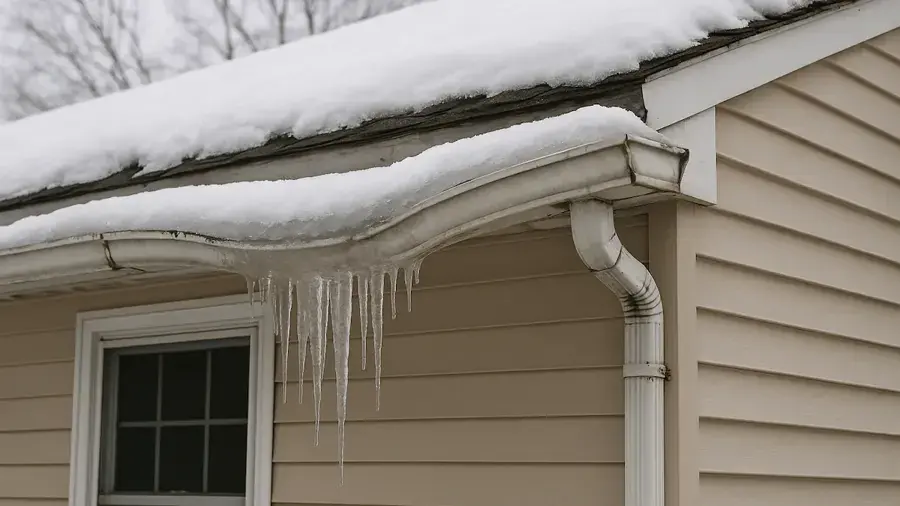
First steps for ice dam and roof leak water damage in Andover
- 1
Control the leak
Any active drip is caught, and a tarp or temporary patch is recommended so the next melt does not rewet the same ceiling.
- 2
Map the moisture
A moisture meter and thermal camera trace the water through the attic, ceilings and upper walls, so cuts are made only where they are needed.
- 3
Remove wet material
Soaked insulation comes out, bowed ceilings are opened to drain, and wet drywall is cut back to dry edges.
- 4
Dry and verify
Air movers and dehumidifiers dry the rooms below, the attic is ventilated, and readings repeat daily until every surface reaches its goal.
An ice dam forms when heat from the house melts the snow on a roof and the meltwater refreezes at the cold edge. The ridge of ice holds water back, and water that cannot drain finds a way under the shingles, through the sheathing and into the attic, ceilings and exterior walls.
What does ice dam and roof leak water damage cost in Andover, MN?
One stained ceiling near an outside wall sits between $1,000 and $2,500, wet attic insulation with several ceilings between $2,500 and $6,500, and water inside exterior walls begins at $6,500 and climbs with the wall area.
Single ceiling patch
$1,000 to $2,500
- Stain beside one exterior wall
- Small opening, then drying
- Readings kept on file
Attic plus several ceilings
$2,500 to $6,500
- Soaked insulation removed
- Rooms below dried
- Dehumidifiers on upper floors
Exterior walls involved
$6,500 and up
- Water behind the drywall
- Insulation and drywall cut out
- Long structural drying run
Ranges are typical, not a quote: the water category, square footage, material class and how fast drying started move the number most. Run the water damage cost calculator for a closer range.
Where roof water ends up
Any Minnesota roof with snow on it, a warm attic below and a cold eave can build an ice dam, so the cause is the roof and the weather, not the neighborhood. The water usually shows first as a stain on a ceiling near an exterior wall or a drip at a window.
- Wet attic insulation that sags or stays damp
- Ceiling stains, bubbling paint or sagging drywall
- Water inside the top of an exterior wall
- Drips or stains around a window frame
Water that gets into insulation and framing can stay hidden for weeks, so the tech checks the attic and the upper walls with a moisture meter and thermal camera instead of trusting the stain.
Removing and drying wet material
Wet insulation is removed first, because it holds water against the sheathing and ceilings and will not dry quickly in place. Ceilings that are bowed or holding water are opened to release it, and small inspection openings are cut where readings point to a hidden wet spot.
Drying on an upper floor is a different job from a basement. Air movers and LGR dehumidifiers go in the rooms below the leak, and the attic is ventilated or dried so moisture is not simply pushed from one layer into another.
The roof repair is separate
The restoration team does not repair shingles or flashing, which is a roofer's job. Andover requires a building permit for work such as re-roofing, so a full replacement roof is a permit item.
Drying can start before the roof work does, as long as the leak is controlled with a tarp or temporary patch. Leaving the roof open lets the next melt undo the drying.
Drying logs and mold timing
Wet insulation and drywall left in place for 24 to 48 hours can start growing mold, so airflow and removal come before repairs. Daily readings show when the ceilings and wall tops reach the dry goal.
For a rough range before the walkthrough, use the water damage cost calculator, and for roof leaks elsewhere in the county see ice dam and roof leak damage in Anoka.