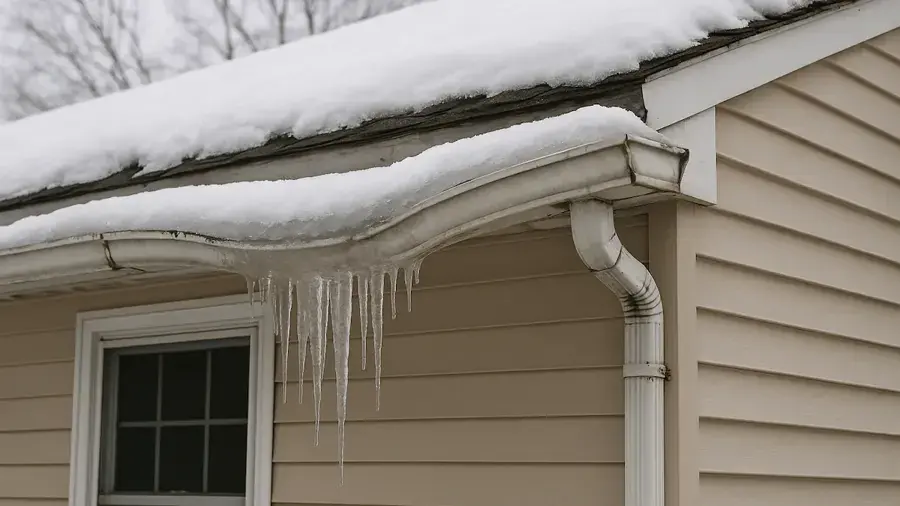
First steps for ice dam and roof leak water damage in Coon Rapids
- 1
Keep clear of the edge
Stay off the roof and out from under hanging ice, and do not chip at an ice dam with a hammer, which can break shingles.
- 2
Catch the drip
Set buckets under active drips and move furniture and rugs out from under the stained area.
- 3
Photograph the stains
Photograph ceilings, walls and the roof edge from the ground, and note the date the stain first appeared.
- 4
Call for a moisture check
The drying team reads the ceilings, walls and attic insulation, removes what is wet and sets drying equipment below.
An ice dam forms when snow melts on a warm roof and refreezes at the cold edge. The ridge of ice holds meltwater behind it, and that water can work up under shingles and into the attic, the ceiling and the top of the wall below.
Ice dams show up after a stretch of cold followed by a thaw, and the damage often appears days later, once the melt has soaked through.
What does ice dam and roof leak water damage cost in Coon Rapids, MN?
One stained ceiling near an exterior wall usually runs $1,000 to $2,500 in Coon Rapids. Wet attic insulation and several ceilings move the job to $2,500 to $6,500, and water inside exterior walls starts at $6,500.
A single ceiling
$1,000 to $2,500
- A stain by one exterior wall
- Small opening, then drying
- Readings logged for the claim
Attic plus several ceilings
$2,500 to $6,500
- Wet insulation removed
- Several ceilings dried
- Dehumidifier running upstairs
Water inside walls
$6,500 and up
- Exterior wall cavities wet
- Drywall and insulation out
- Longer structural drying
Ranges are typical, not a quote: the water category, square footage, material class and how fast drying started move the number most. Run the water damage cost calculator for a closer range.
How the water gets in
Heat leaking from the living space warms the roof deck, snow melts and runs to the unheated eave, and the water freezes again at the edge. Pooled meltwater has nowhere to go but under the shingles.
- Wet attic insulation that stops insulating and holds water against the ceiling
- Ceiling drywall that stains, bubbles or sags near an exterior wall
- The top of exterior walls, where water runs down inside the cavity
- Window and door casings that drip when a thaw hits
The stain is often small and the wet area is not, so a moisture meter and thermal camera check the surrounding ceiling and wall before any opening is made.
Winter weather in the region
The National Weather Service Twin Cities archive lists a historic December storm on December 15 to 16, 2021 and a March 14 to 15, 2026 storm it calls the largest of the winter. Those are regional events, so what melts and refreezes on any one Coon Rapids roof depends on its own insulation, ventilation and sun.
Roof work belongs to a roofer
Roof repair, flashing and shingle work are a roofer's job. The city's building inspections page offers roofing and siding handouts and points residents to an online permit portal, BS&A Online.
The drying team works from the inside: wet insulation out, ceilings and walls dried, and readings logged until the roofer's repair is done and the area stays dry.
Attic, ceilings and walls
Wet attic insulation is removed because it cannot dry in place and keeps water against the ceiling below. Ceilings and exterior walls are opened only where readings call for it, and air movers and a dehumidifier dry the rooms underneath.
Insulation and ventilation decide whether a roof grows ice dams again, and that is a question for a roofer or an insulation contractor, not for the drying crew.
Water that follows a frozen pipe in Coon Rapids or other winter damage is dried the same way, and structural drying records the readings.