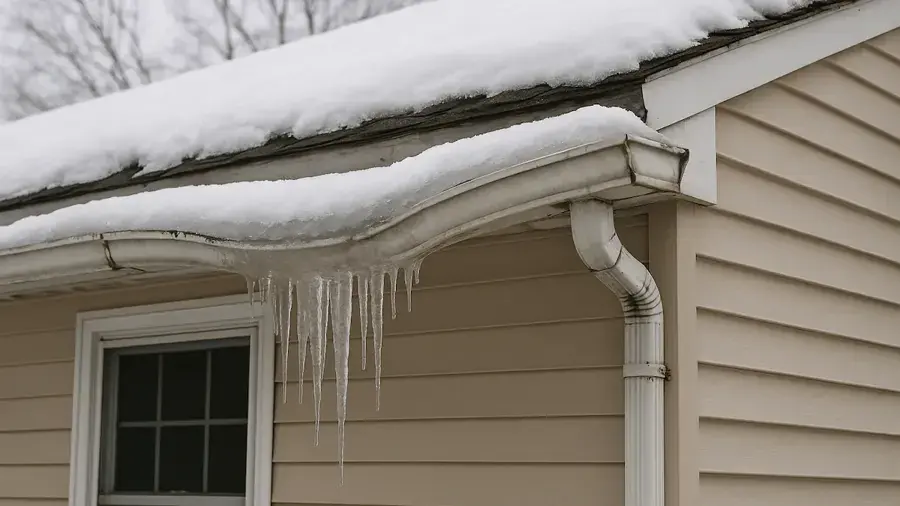
First steps for ice dam and roof leak water damage in Champlin
- 1
Catch the drips
Set buckets under every drip, move furniture and electronics away and lay towels at the edge of the stain.
- 2
Switch off power
Turn off breakers for any ceiling light or fan that is wet, and keep the attic hatch clear for the crew.
- 3
Leave the ice alone
Chipping at ice can tear shingles and gutters. A roofer can clear it safely while the crew handles the interior.
- 4
Record the damage
Photograph stains, wet insulation and damaged belongings, note the date the leak started, then call for the dry-out.
An ice dam does not need a hole in the roof to cause a leak. Snow melts over the warm part of the house, refreezes at the cold eave and traps the next batch, so the meltwater backs up under the shingles and soaks the attic floor, the ceiling and the top of the wall.
What does ice dam and roof leak water damage cost in Champlin, MN?
Ice dam and roof leak damage in Champlin usually costs $1,000 to $2,500 for one ceiling area, $2,500 to $6,500 when attic insulation and several ceilings are wet, and $6,500 and up once walls are involved.
One ceiling stain
$1,000 to $2,500
- A stain by one outside wall
- Small opening, quick drying
- Readings kept for the file
Attic and ceilings
$2,500 to $6,500
- Soaked insulation bagged out
- Several ceilings dried
- Upper floor dehumidified
Wet exterior walls
$6,500 and up
- Water inside the wall cavity
- Drywall and insulation removed
- Longer structural drying
Ranges are typical, not a quote: the water category, square footage, material class and how fast drying started move the number most. Run the water damage cost calculator for a closer range.
How ice dam water finds its way indoors
Water that slips past the shingles lands on the sheathing, drips into the attic and soaks the insulation, which then holds it against the ceiling drywall. Indoors the damage tends to show up as:
- A brown stain on a ceiling near an exterior wall
- Paint bubbling at the top of a wall below the eave
- Drips around a window or a recessed light
- Wet, matted insulation along the attic eave
Water enters from above and from the side, so the tech who does the walkthrough checks the attic, the ceiling and the exterior wall cavity, not only the visible stain, and pooled water goes out through Champlin water extraction first.
Wet insulation and the dry-out
Compressed or soaked insulation holds water against the ceiling and stops insulating. It is usually bagged and removed, and the framing and sheathing underneath are dried so they do not stay damp into the next cold snap.
Damp attic wood left alone for days can grow mold, which is why the crew moves quickly even though the leak came from above. The 24 to 48 hour window applies in an attic as much as in a basement.
Winter storms, townhomes and shared roofs
The National Weather Service Twin Cities archive lists winter storms across the region in late November 2025, on December 28, 2025 and on March 14 to 15, 2026. Those are regional events rather than Champlin records, but any heavy snow followed by melt can build ice at the eaves.
In a townhome row or a condominium building such as Emery Village, a roof leak can wet more than one unit. Each unit needs its own photos, readings and notes, and the association or landlord should hear about the leak early.
Drying the ceiling and the wall below
After the source is stopped, the team pulls any standing water, opens only the wet ceiling and wall sections, dries the cavity with air movers and a dehumidifier, and keeps upper-floor air moving so moisture does not settle into the next room.
A roofer repairs the cause, because dry framing can be re-wet by the next melt. The restoration team supplies readings and photos that follow the same daily log used for Champlin structural drying jobs.