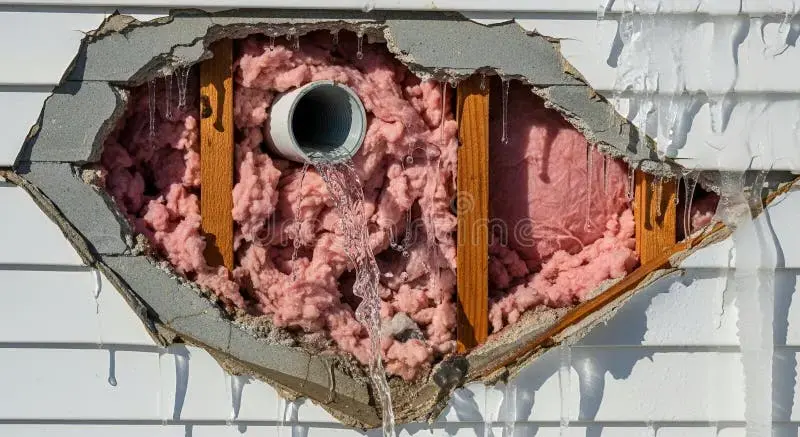
First steps for frozen pipe water damage in Ramsey
- 1
Shut off the main
Close the main water valve at once and open a faucet on the lowest level so pressure drops and the split stops running.
- 2
Keep the heat on
Leave the heat on so the rest of the pipe run does not freeze, and never use an open flame or a torch on a frozen pipe.
- 3
Protect and photograph
Move furniture and boxes off wet floors, photograph the split and the wet surfaces, and note when the water was found.
- 4
Bring in both trades
A plumber repairs the pipe while the drying team extracts water and opens the walls and ceilings the readings point to.
In a Ramsey winter a pipe does not need to burst on the coldest night to cause a flood. The damage often shows up at the thaw, when ice that had plugged a split melts and the supply starts running into a wall, a ceiling or a finished basement. By then the water has usually been moving for a while.
What does frozen pipe water damage cost in Ramsey, MN?
A single split in one wall or cabinet lands between $1,200 and $2,800. Water that reaches the ceiling below moves the job to $2,800 through $7,000, and several split pipe runs start at $7,000.
Single wall or cabinet
$1,200 to $2,800
- One split found quickly
- Small opening, water pulled out
- Cavity and cabinet drying
Wall and ceiling below
$2,800 to $7,000
- Water ran down two levels
- Ceiling drywall and insulation removed
- Dry-down on both floors
Multiple split pipes
$7,000 and up
- More than one pipe run failed
- Finished basement soaked too
- Wider tear-out and drying
Ranges are typical, not a quote: the water category, square footage, material class and how fast drying started move the number most. Run the water damage cost calculator for a closer range.
Where freeze damage starts
Pipes lose heat first where the house leaks it. In a Minnesota cold snap that means a few predictable places, and a plumber or the drying team will usually check these before anything else.
- Supply pipes in exterior walls with thin or settled insulation
- Pipes in a garage, entry or porch that is not heated
- Kitchen and bath cabinets built against outside walls
- Hose bibs and short pipe runs near the foundation
Winter storms bring the hard cold that tests exterior-wall pipes. Anoka County recorded 6 to 8 inches of snow on February 2, 2016 and 4 to 8 inches on December 9, 2025; those are county totals rather than Ramsey measurements.
Why a thaw leak spreads so far
A split supply pipe under pressure can release a large volume of water, and it follows studs, wiring holes and floor joists before it shows anywhere. By the time a stain appears on a ceiling, the insulation above it is usually soaked and the framing is wet.
Townhomes and apartments add a second risk, since Ramsey has an estimated 1,929 attached homes and a leak can drop through a ceiling into the unit below. Cabinet bases and finished basement walls hide water the longest, so readings matter more than what the surface looks like.
Drying the cavity and the floor below
The mitigation team finds the wet path with a moisture meter and thermal camera, handles water extraction, then opens the wall or ceiling only as far as the readings demand. Wet insulation comes out because it holds water against framing, and air movers then dry the exposed cavity.
A plumber repairs the pipe, and the drying team works around that visit. Ramsey lists plumbing alterations among work needing a city permit, so a repair that changes the pipe layout is worth confirming with the city first, before walls are closed again.
Records and the next cold snap
Dated photos of the split, the wet materials and the drying equipment give an adjuster a clear sequence, from the thaw to the final dry check. Keep the plumber's invoice with the moisture log so the cause is documented.
To lower the odds of a repeat, keep cabinet doors open on outside walls during hard cold, heat the garage or entry, and shut off and drain exterior hose bibs before winter. If the water already spread, see burst pipe water damage for the wider process.