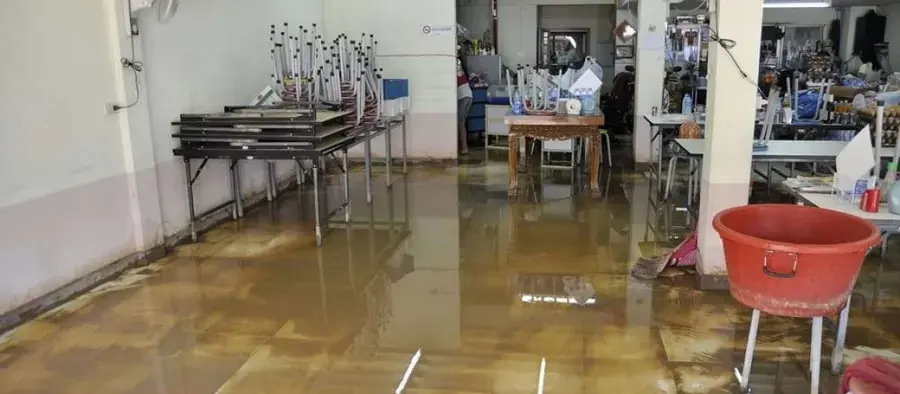
First steps for commercial water damage in Ramsey
- 1
Stop the source
Close the nearest shutoff, the sprinkler riser or the supply valve, and tell the building manager what is wet.
- 2
Make the space safe
Keep staff and customers out of wet areas and away from outlets, equipment and lighting that water may have reached.
- 3
Protect stock and records
Lift inventory, files and electronics off wet floors and photograph affected areas before anything is moved.
- 4
Call for scheduling
Tell the crew the suites affected, the business hours and any tenants who need to keep operating so work can be phased.
Ramsey's commercial buildings include three business parks, Energy Park, Business Park 1995 and Gateway Park, plus The COR downtown development. A leak in any of them affects tenants, inventory and operations, so the work is organized by space, not just by room.
What does commercial water damage cost in Ramsey, MN?
One suite or storefront costs between $3,000 and $8,000 when the water is clean. Several suites or a whole floor runs $8,000 through $25,000, and a backup or multi-floor loss starts at $25,000.
Single suite or shop
$3,000 to $8,000
- Clean water in one space
- Extraction, then drying
- Work after closing time
Several suites or a floor
$8,000 to $25,000
- Water crossed shared walls
- Drying phased by suite
- Separate tenant records
Backup or multi-floor loss
$25,000 and up
- Contamination or several levels
- Containment and removal
- Long drying program
Ranges are typical, not a quote: the water category, square footage, material class and how fast drying started move the number most. Run the water damage cost calculator for a closer range.
What commercial losses look like
Sprinkler leaks, roof failures after storms, burst supply pipes and sewer backups are the usual sources. Storm reports show what a commercial corridor faces: hail damaged all 140 vehicles at a Ramsey RV dealership on September 21, 2005, and winds blew a wall out of a furniture store along U.S. Highway 10 on September 16, 2006.
- After-hours extraction so the space can open on schedule
- Phased drying that keeps unaffected suites working
- Separate moisture logs and photos for each tenant
- Coordination with the building manager and adjuster
Phased drying means the crew dries the worst-hit suite first, then moves equipment outward as readings improve, so one tenant's leak does not shut down the whole building.
Care facilities and shared buildings
The Anoka County hazard plan lists two assisted living facilities with memory care units in Ramsey. In buildings where residents cannot simply move out, drying and cleanup are planned in sections, with noise, humidity and access managed so daily care continues.
Employers, parks and neighbors
The city names Connexus Energy as its lead employer, and Ramsey and Anoka share a 1,000-acre business park, according to the City of Ramsey. Offices, light industry and retail sit side by side in those parks and in The COR, so one leak can touch several businesses with different owners and different insurers.
Documentation for owners and insurers
Commercial claims need clear records. The drying team logs readings by suite, photographs affected inventory and finishes, and keeps equipment records so a landlord, a tenant and an adjuster can all work from the same file. For the drying method, see structural drying, and for the first stage see water extraction.