In the Northdale Addition, sewer trouble usually starts on private property, not under the street. City officials said in December 2025 that camera inspections found the public mains structurally sound, while the private service pipes feeding them were often in far worse condition.
Key takeaways
- City officials tie most Northdale Addition sewer disruptions to roots and blockages in private service pipes, not to failures in the public mains.
- Water that backs up through a floor drain or toilet is Category 3 water, so soaked carpet, pad and lower drywall are removed instead of dried.
- The city asks owners to call Public Works after a drain contractor cleans a service pipe, because roots pushed into the main can cause problems for others.
- Officials noted that backups can damage flooring, walls and appliances in a basement or other lower level living space.
- A drain contractor clears the blockage. Extraction, removal, disinfecting and drying are a separate job that should start before the water wicks into framing.
Why Northdale backups start on private property
The Northdale Addition is an older Coon Rapids neighborhood, largely developed in the late 1960s and early 1970s. Clay and early concrete sewer pipes were commonly installed in that era.
At its December 16, 2025 meeting, the City Council discussed aging sewers in the neighborhood. Closed circuit television inspections showed the city maintained public mains to be structurally sound, while private service pipes were often in far worse condition.
Officials tied the disruptions mainly to root intrusion and blockages in private connections rather than failures in the mains.
Early signs of a root problem in a private pipe tend to show at the lowest fixtures first.
- Gurgling: a toilet that gurgles when the washer drains.
- Bubbling: a floor drain that bubbles or smells when water runs upstairs.
- Slow drains: the lowest bathroom or laundry sink drains slowly before anything else does.
- Water at the drain: wastewater appears at a basement floor drain after a toilet is flushed.
How roots get into older clay and concrete pipe
Roots look for moisture. A small crack or an open joint in an older pipe lets a few hair thin roots in, and they thicken as they feed on the flow.
Over time the mass of roots catches paper, grease and wipes. The pipe narrows and then closes, and the wastewater rises to the lowest opening in the house, usually a basement floor drain.
The city works on the public side of the problem. It has lined clay sewer pipes with an epoxy resin that is cured in place with hot water, which avoids tearing up streets and helps keep tree roots out of clay pipes.
It also cleans its sewer pipes section by section so the whole city is covered every three years, and it spot checks manholes monthly.
Water that has already reached the house is a different job, handled by water damage restoration in Coon Rapids.
The first calls after a backup
A backup is a plumbing problem and a water problem at the same time, and each one needs a different crew.
The drain contractor
A drain cleaning company clears the blockage and can often show where the roots got in. That work does not remove the water already on the floor.
The city asks owners to call Public Works after a contractor cleans a service pipe, because roots pushed into the main can cause problems for others.
The restoration team
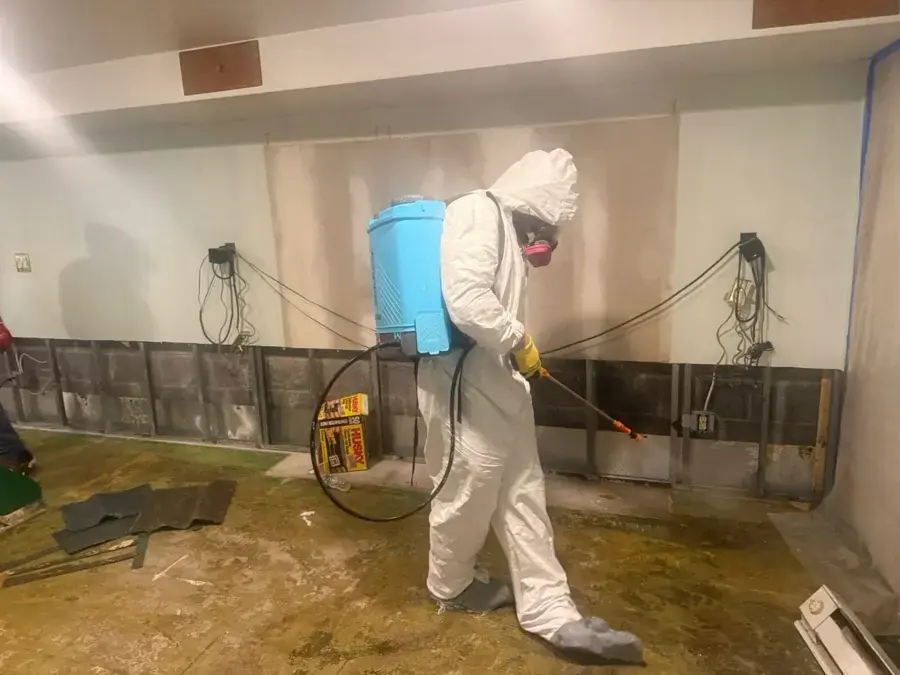
The restoration team handles the water and the damage: extraction, removal of porous materials, disinfecting and drying. A sewage backup cleanup in Coon Rapids starts as soon as the area is safe to enter.
The team starts by mapping how far the water traveled, then sets up extraction and a work zone so contamination is not carried upstairs. Moisture readings on the walls and slab mark the edge of the wet area.
Until the cleanup starts
- Stop using water: sinks, toilets and washers all feed the same drain.
- Stay out of it: keep children and pets away from any water that touched sewage.
- No household vacuum: never run one on standing water.
- Electrical caution: if water is near outlets or the panel, stay clear and call an electrician.
What cleanup of sewage water involves
Water that comes up through a drain carries waste, so it is treated as Category 3 water under the IICRC S500 standard.
Washing does not make carpet pad or drywall clean again, so everything porous that the water touched is a candidate for removal.
Crews wear protective suits, gloves and respirators for this work, which is why it is not a mop and bucket job.
- Extraction: standing water is pumped and pulled with wands before it spreads.
- Removal: soaked carpet, pad, baseboard and lower drywall come out, with insulation cut away where it wicked water.
- Disinfecting: concrete, framing and other surfaces that stay are cleaned and treated with an EPA registered antimicrobial.
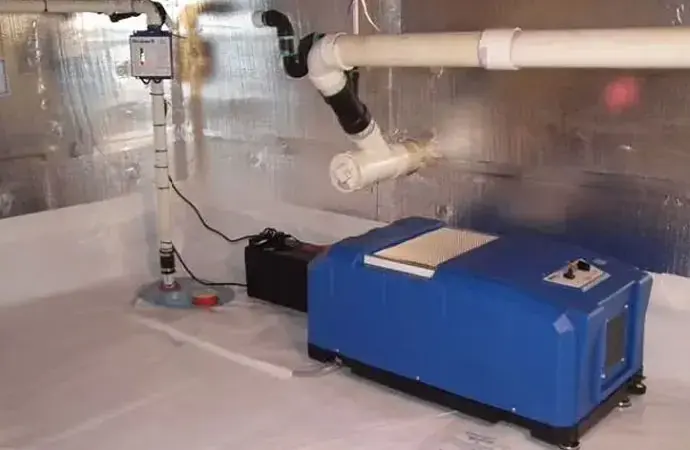
- Drying: air movers and dehumidifiers run while moisture readings track the framing and slab down to dry.
- Disposal: removed material goes out in sealed bags.
Flooring, walls and appliances in a lower level
Officials noted that sewer backups can damage basements and lower level living spaces, including flooring, walls and appliances.
What survives depends on the material and on how long it stayed wet.
Flooring
Carpet and pad that soaked up sewage water are removed. Tile, sealed concrete and vinyl can often be cleaned and kept, but the subfloor or slab under them is checked before anything goes back.
Walls
Drywall is cut above the height the water reached, with some margin, and insulation behind it comes out. The studs are cleaned and dried, and a full basement flooding cleanup in Coon Rapids follows the same order.
Appliances
Washers, dryers, freezers and furnaces that stood in the water are inspected before anyone plugs them in or runs them. Wet electrical parts are a safety question for a qualified technician.
Heading off the next backup
No home can stop every root, but a few habits cut the odds. A backup that reaches the whole lower level follows the same steps as sewage backup cleanup in Anoka.
- Toilet paper only: wipes, even ones sold as flushable, catch on roots and joints.
- Grease stays out: kitchen grease hardens inside pipes and holds roots in place.
- Camera check: after a root related backup, ask a plumber to look at the private pipe on camera and talk through repair choices.
- Tell Public Works: let the city know when a contractor cleans a service pipe.
- Clear the floor: keep stored items off the floor around the lowest drain.
- Know the cleanout: find the cleanout fitting so a drain contractor can reach the private pipe without tearing into a finished wall.
Questions
Who maintains the sewer pipes in the Northdale Addition?
The Coon Rapids Utilities Division, part of Public Works, operates and maintains the city sanitary sewer system. Officials described the private section of a service pipe as the weak spot in Northdale, so questions about a specific property are best put to Public Works.
Is water from a sewer backup dangerous?
It should be treated as contaminated. It is Category 3 water, so people and pets stay out of it and the porous materials it soaked are removed.
How long does drying take after a sewage cleanup?
Removal and disinfecting come first. Drying then often takes several days, with readings taken until the framing and concrete are dry.
Can a drain cleaning company handle the damage too?
A drain cleaner clears the blockage. Extraction, removal of soaked materials, disinfecting and drying are the restoration team's work, and the two jobs are usually done by different crews.
Where does Coon Rapids sewage go after it leaves the house?
All wastewater from Coon Rapids flows through Metropolitan Council interceptors to the Metropolitan Wastewater Treatment Plant in St. Paul. The city has 16 lift stations that serve small isolated areas.
Do the city's lining and cleaning programs protect a private service pipe?
Those programs work on the public mains. Officials separated the two conditions when they talked about Northdale, calling the mains structurally sound and the private service pipes the weaker part, so an older private pipe still deserves its own camera check.