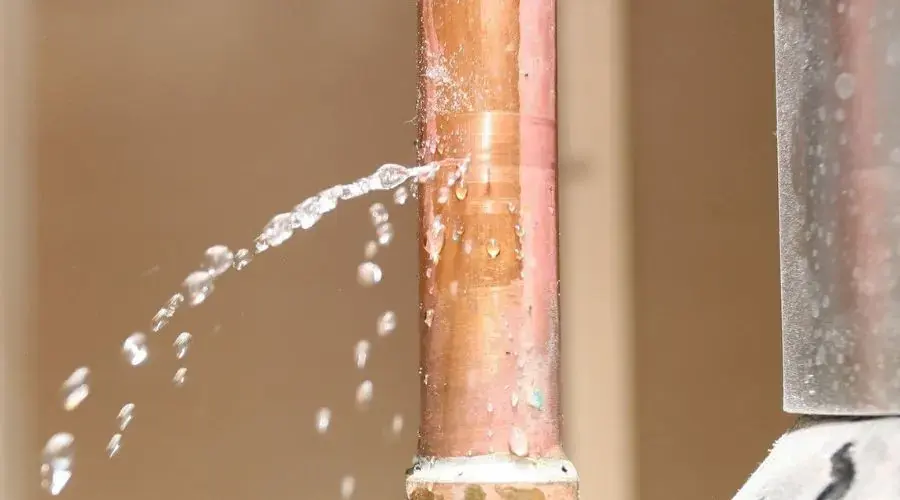
Andover's city water runs in two pressure zones, and most of the city sits in the higher one at about 60 to 70 psi. When a supply pipe splits at that pressure, the water does not trickle, and a floor can be covered fast.
Key takeaways
- Andover has two pressure zones: a lower west side zone capped at 55 psi and a higher zone serving most of the city at about 60 to 70 psi.
- Higher pressure pushes more water through a split pipe, hose or fitting, so shutting off the supply early limits the damage.
- Everyone in the house should know where the main shutoff is before an emergency, and where each fixture shutoff sits.
- Replacing a water heater or water softener after a leak needs an Andover plumbing permit, and finishing a basement needs a building permit.
- Extraction comes first. Then wet wall and ceiling cavities are opened so the framing and subfloor can dry.
Two pressure zones in one city
The city water system has two pressure zones. The lower west side zone is capped at 55 psi, and the higher zone that serves most of the city runs at about 60 to 70 psi.
The system has two water towers: a 0.5 million gallon tower in Rose Park on the west side and a 1 million gallon tank next to City Hall at Hanson Boulevard and Crosstown Boulevard.
Pressure is not the only thing that decides how much water a failure releases, but it is one of the factors built into the system. A homeowner can ask the city which zone serves a property.
- West side: capped at 55 psi.
- Most of the city: about 60 to 70 psi.
- Water towers: a 0.5 million gallon tower in Rose Park and a 1 million gallon tank beside City Hall.
What pressure does when a supply pipe splits
A supply pipe is under pressure all the time, even when no tap is open. When it splits, the water leaves at that pressure until someone closes a valve.
A small opening can still release a lot of water. A pinhole is slow for a day, but a failed hose or a split along a pipe can empty the supply into the house for as long as the valve stays open.
Where supply failures start
- Washer hoses: braided hoses age and burst behind the machine.
- Fittings: a loose or corroded connection under a sink or at the water heater lets go.
- Sink and toilet connectors: flexible connectors can crack, loosen or corrode where they meet the valve.
- Ice maker tubing: a thin tube can run for a long time before anyone sees the floor.
- Pinholes: a tiny hole in a pipe inside a wall sprays a fine mist into the cavity.
- Frozen pipes: a pipe split by ice leaks only after it thaws.
Where the water goes
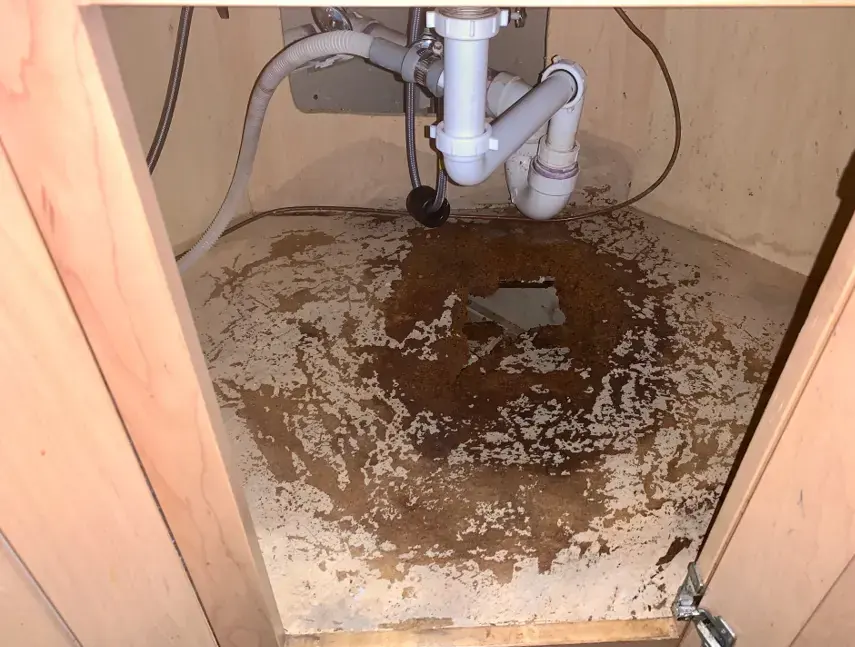
Water follows framing. It runs down wall cavities to the floor, soaks the bottom plate and the drywall, and drops through floor openings to the level below.
In a two story house, a split pipe upstairs often appears as a ceiling stain in the room underneath.
The first steps when a pipe splits
The most useful single step is closing the main shutoff, and it is far easier to find it today than in the middle of a flood. One closed valve limits the damage, and a water damage restoration crew in Andover can take it from there.
- Main shutoff: close it, then open a faucet at the lowest level to drain the pipes.
- Water heater: if the split is near the tank or involves hot water, switch off the power or the gas control.
- Electricity: stay away from wet outlets, cords and the panel.
- Protect: lift furniture, boxes and electronics off wet floors.
- Photograph: record the source, the wet areas and any damaged items.
If the water is coming through a ceiling
A ceiling that bulges is holding water. Keep people out from under it, leave the lights off in that room if the fixture is wet, and let the restoration team release the water in a controlled way.
If the split is in the basement
Water collects at the lowest point, often around a floor drain or the sump pit. Do not wade in if the water is near outlets or the panel, and wait for the power to be shut off.
Extraction, then the walls and ceilings
Water extraction in Andover comes first, because standing water keeps soaking into carpet pad, baseboard and the bottom of the drywall.
Once the surface water is out, the drying team checks the cavities: wall bays, ceilings below the leak and the floor system. Small holes or removed baseboard let air reach wet framing.
A burst pipe water damage cleanup in Andover usually runs in the order below.
- Extract: pump and pull standing water.
- Open: remove baseboard or cut small access holes where moisture readings stay high.
- Remove: take out drywall, insulation or pad that cannot dry in time.
- Dry: run air movers and dehumidifiers with daily readings.
- Close: repairs wait until the readings show the framing is dry.
Permits after a leak: water heaters, softeners and basement finishes
Andover requires a plumbing permit for water heater or water softener replacement, and for irrigation backflow preventer installation.
The city also requires a building permit for work such as roof replacement, siding replacement, basement finishes, decks, sheds and garages.
If the leak came from a tank or a softener, the replacement carries its own plumbing permit, so the plumber and the drying schedule should be coordinated. A basement gutted by water and then rebuilt is close to a basement finish, so it is worth asking the city whether the rebuild counts.
A permit is separate from the cleanup. The drying team documents moisture readings so repairs do not start on wet framing, which is a point worth raising with any contractor.
- Water heater or softener replacement: plumbing permit.
- Irrigation backflow preventer: plumbing permit.
- Basement finishes: building permit.
- Roofing, siding, decks, sheds and garages: building permit.
Cutting the odds before a pipe lets go
Most supply failures give a warning if someone looks. For the wider picture of supply failures across the area, see burst pipe water damage in Anoka.
- Look at hoses: replace washer and dishwasher hoses that bulge, crack or show rust at the ends.
- Know the valves: turn the main shutoff and the fixture shutoffs once a year so they work when needed.
- Check the pressure: a plumber can read the pressure at the house with a gauge and say whether a regulator is worth adding.
- Watch the meter: a meter that moves while every tap is closed points to a leak.
- Protect cold spaces: insulate pipes in garages and outside walls before winter.
- Replace on a schedule: swap supply hoses every few years instead of waiting for a bulge.
Questions
What is normal water pressure in Andover?
The city describes two zones: a lower west side zone capped at 55 psi and a higher zone that serves most of the city at about 60 to 70 psi. A plumber can measure the pressure at a specific house.
Does higher pressure make a burst pipe worse?
More pressure pushes more water through the same opening, so the flow is stronger and the floor floods sooner. The size of the opening and how long the water runs matter as well.
Does replacing a water heater after a leak need a permit in Andover?
Yes. Andover requires a plumbing permit for water heater or water softener replacement.
Does a rebuilt basement need a permit?
Andover requires a building permit for basement finishes. Anyone rebuilding after water damage can ask the city whether the rebuild falls under that permit.
What gets removed first after a split supply pipe?
Standing water is extracted first. Then wet carpet pad, baseboard and the lowest drywall are checked, and whatever cannot dry in place is removed.
Where does a leak from an upstairs pipe usually show?
Often as a ceiling stain or a damp wall in the room below, because water follows framing downward.