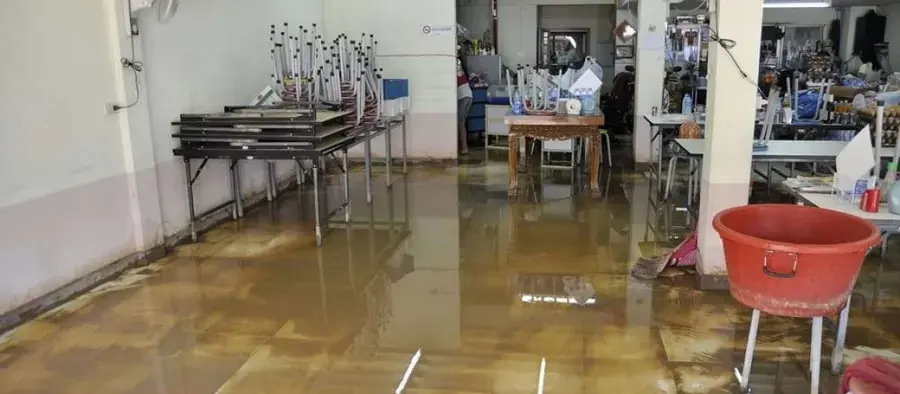
Shops and offices around Downtown Main Street in Anoka work in some of the city's older blocks. When water starts, the owner has to make decisions about stock, staff and customers while the drying is only beginning.
Key takeaways
- Stop the water at its source first, then make the space safe to enter.
- Tell the landlord and any neighbors or tenants early, because water can move through shared floors, ceilings and walls.
- Phased drying can keep part of a business open: the worst room is isolated and dried first while the rest stays in use.
- Photographs, a list of damaged stock and daily moisture readings become the claim file.
- Older buildings can hold plaster, wood floors and layered finishes that dry more slowly than new drywall and carpet, so readings matter more than appearances.
The first decisions
The first moments after water appears decide how large the loss becomes. The order is simple: source, safety, stock, then help.
A shop owner often feels pressure to keep the doors open and save stock. Safety still comes first: water near electrical gear, a sagging ceiling or sewage means that area closes, whatever the day's sales look like.
- Source: close the shutoff for a pipe failure, or tarp and contain a roof leak if that can be done safely.
- Safety: keep customers and staff out of wet areas, and stay clear of outlets, cords and the panel.
- Stock: lift inventory, records and equipment off the floor and out of the wet zone.
- Help: call the restoration team and the landlord.
- Notes: photograph the source, the wet areas and anything damaged before it moves.
Who needs a call
A storefront loss involves more people than a house does. The owner, the landlord or property manager, neighbors on either side, tenants above or below, and the insurer all have a stake.
The restoration team can start on the owner's authorization while the others are reached. A short written log of who was called, and when, keeps the story straight later.
- Owner or manager: authorizes the work.
- Landlord or property manager: knows the building's shutoffs and systems.
- Neighbors and tenants: may be affected through shared walls and floors.
- Trades: a plumber, roofer or electrician for the source of the water.
- Insurer: notified early so the claim file starts clean.
How water moves through an older downtown building
Water takes the easiest path, and in older buildings that path is often longer than the owner expects.
Anoka was founded in 1844 and incorporated in 1878, and the older blocks around Main Street can carry layered finishes such as plaster, wood floors and later coverings.
Down
Water drops through floor openings, pipe chases and gaps around fixtures to the level below. A lower shop or a basement can end up wetter than the room where the pipe failed.
Sideways
Water travels along joists and through wall bays into the next room or the next unit. A wall that looks dry on one face can be wet inside.
Up
Drywall and plaster wick water upward above the visible stain, and a ceiling can hold water until it sags.
Phased drying that keeps the doors open
Drying a business is a scheduling problem as much as a moisture problem. The goal is to dry the worst room first, isolate it, and keep the rest of the space working.
A commercial water damage cleanup in Anoka is usually planned in phases around business hours.
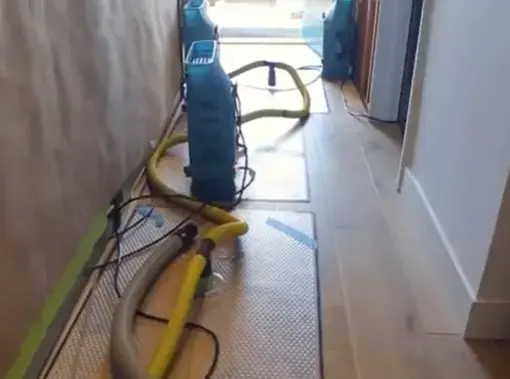
Containment matters in a working shop. Plastic barriers and air handling keep dust and moisture inside the work zone, and equipment is placed so aisles and entrances stay clear.
- Phase one: extraction, removal of wet finishes and equipment in the worst room.
- Phase two: drying equipment holds that zone while work moves outward, with containment protecting the rest.
- Phase three: readings confirm dry framing, floor and ceiling, and then the rebuild starts.
- Hours: loud work can be scheduled early or late so the shop stays open at midday.
- Power: equipment needs circuits, so the plan checks what the building can supply.
Stock, fixtures and records
Inventory is both a loss and a record. Every item that is moved, dried, cleaned or thrown away should be written down.
Structural drying in Anoka leaves its own paper trail: daily moisture readings that show where the water went and when the building reached dry.
- Photograph before moving: the whole room first, then the details.
- List the stock: description, quantity and condition for each wet item.
- Keep receipts: emergency purchases, rented equipment and temporary storage.
- Hold evidence: keep samples or photographs of anything discarded until the claim is closed.
- Separate wet from dry: box salvageable goods by category so sorting is quick.
Three common sources of water in an older business
The source changes the plan, because clean supply water, rain and sewage are handled in different ways.
A supply or drain failure
A split supply pipe or a failed fitting releases clean water, which is easiest to handle when it is stopped quickly. A drain failure carries soiled water and changes the plan.
A roof or flashing leak
Rain that enters at a roof seam or flashing runs through insulation and ceiling tiles before it shows. The wet area can be far from the roof opening, so moisture readings follow the water instead of the stain.
A sewer or floor drain backup
Backups carry waste and are treated as Category 3 water. The affected area is closed off, porous materials are removed and surfaces are disinfected, and the rest of the business can often stay open behind containment.
Preparing for the next time
Most storefront losses begin with something small, such as a failed supply hose, a clogged drain or a roof seam. A few habits make the next one smaller, and water extraction in Anoka is far simpler when the shutoffs are already known.
The restoration team works across Anoka, from Downtown Main Street and Whiskey Flats to the Rum River neighborhood, and a burst pipe in a basement storeroom is handled like burst pipe water damage in Anoka.
- Shutoffs: label the main and the branch shutoffs and keep a tag or map at the counter.
- Roof and drains: have the roof and the floor drains checked before winter and again before spring.
- Stock height: keep inventory off the floor in storerooms.
- Contacts: keep a short list of the landlord, the plumber and the restoration team near the register.
- Equipment: check water heaters, ice machines and dishwashers, which are common starting points for leaks.
Questions
Can a store stay open during drying?
Often in part. Phased drying isolates the wet zone and keeps the rest of the space in use, though equipment noise and power needs can limit the hours.
What should a tenant do when the water comes from another unit?
Shut off what can be shut off, photograph the damage, tell the landlord or property manager in writing and call the restoration team. The source unit and every wet neighbor get readings.
Which records matter for a business claim?
Photographs, an inventory of damaged stock and equipment, receipts for emergency costs, and the daily moisture readings from the drying work.
How long does a commercial dry out take?
It depends on the materials and on how long they stayed wet. Carpet and drywall often dry in a few days, while plaster, wood and concrete can take longer, and readings decide when it is finished.
Does older construction change the drying plan?
It can. Plaster, solid wood floors and layered finishes dry differently from modern drywall and carpet, so the team relies on readings rather than appearance.
When does a business need to close instead of staying open?
A sewage backup, a sagging ceiling over the sales floor or wet electrical equipment calls for closing that area, and sometimes the whole shop. Customers and staff stay out of any space where contamination or electrical risk is possible.